

FinMin wraps up budget debate, vows to incorporate proposals in Finance Bill 2026
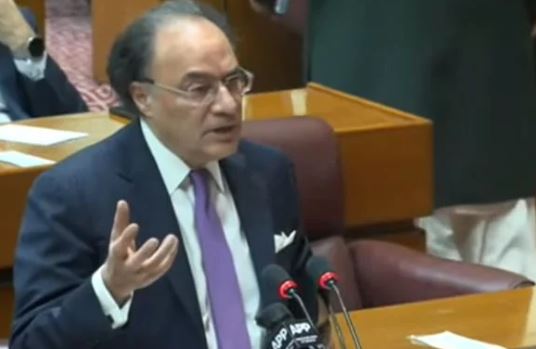
ISLAMABAD: Finance Minister Muhammad Aurangzeb has rejected the opposition’s objections to the federal budget, saying that allegations of discrepancies in budget documents were based on “incorrect interpretation”.
While wrapping up the days-long budget debate in the National Assembly on Saturday, the finance czar said that the GDP and other key economic indicators were presented before the National Accounts Committee, which includes representation from all provinces, the federal government, and relevant institutions.
He said some parliamentarians had expressed reservations over the budget, but added that the overall process was conducted transparently.
Aurangzeb thanked lawmakers for their participation in the budget debate, including Opposition Leader Mehmood Khan Achakzai, as well as Finance Committee heads Saleem Mandviwala and Naveed Qamar in the Senate and National Assembly, respectively.
He said the standing committees had reviewed budget proposals “with sincerity” and forwarded recommendations for improvement, some of which would be incorporated into the Finance Bill 2026.
The finance minister also presented a positive outlook on the economy, stating that industries were operating smoothly, the current account was in surplus, export performance was improving, and IT exports had increased by 20%.
He added that the government has collected $14 billion in additional revenue over the past two years, calling it a record since 1988.
Referring to the agriculture sector, he said it is the backbone of the economy, and the government is providing Rs300 billion in interest-free loans to small farmers. He added that around 750,000 small farmers would benefit from this initiative.
According to the federal minister, Prime Minister Shehbaz Sharif had set the economic direction in the previous budget, which had helped stabilise the economy.
Last week, the finance minister presented the FY27 budget with a total outlay of Rs18,771 billion. According to the details, the largest share — Rs8.054 trillion — is earmarked for mark-up payments, followed by Rs3 trillion for defence and Rs1 trillion for the federal development programme.
For the financial year 2026-27, the government has set the economic growth target at 4%, while the average inflation rate is projected to remain at 8.2%.
Opposition calls for adoption of Senate proposals
Earlier in the day, the opposition lawmakers also called for incorporating key proposals aimed at easing inflation and providing relief to the public.
Speaking on the Senate’s recommendations, JUI-F MNA Aliya Kamran backed reducing the advance tax on telecom services under Section 236 of the Income Tax Ordinance, 2001, from 15% to 8%, saying it would benefit mobile and internet users and help expand digital access in education, business, and employment.
She also backed reductions in GST on essential items, including food, medicines, education materials, and agricultural inputs, saying lower taxation would ease pressure on low-income households.
On the energy sector, she supported targeted electricity subsidies for low-consumption users, reforms to address capacity payments and circular debt, and a cap on the petroleum levy with greater transparency in its collection and use.
She stressed that Balochistan required special attention in development funding and project execution.
PTI Chairman and MNA Gohar Ali Khan stressed the need for a permanent and well-funded disaster management system. He called for joint federal and provincial contributions to a dedicated disaster risk fund, saying recent floods had exposed serious gaps in district-level preparedness and the country’s largely reactive response system.
MNA Asad Qaiser opposed the proposed 9% tax on tobacco crops, saying that it would burden farmers instead of manufacturers. He said taxation should instead be imposed on finished tobacco products, while supporting higher taxes on cigarettes.
Related News
Govt cuts petrol price by Re0.66, raises diesel by Re0.52 per litre
ISLAMABAD: The federal government on Friday slashed the price of petrol by Re0.66 per litreRead More

Pakistan Post committed to delivering modern, reliable postal services: PMG Faisal Gondal
RAWALPINDI, Oct 09 (DNA):Pakistan Post plays a pivotal role in socio-economic development, public serviceRead More
Comments are Closed