

Iran threatens war ‘beyond the region’ if US attacks
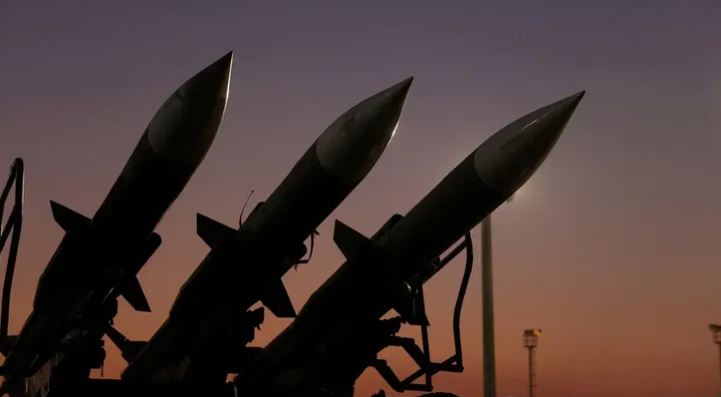
TEHRAN, MAY 20: Iran threatened on Wednesday to spread war beyond the Middle East if the United States attacks again, after President Donald Trump said he had come within an hour of restarting the military campaign.
Six weeks since Trump paused Operation Epic Fury for a ceasefire, talks to end the war have largely stalled.
Iran submitted a new offer to the United States this week, but its public accounts of it repeat terms previously rejected by Trump, including demands for control of the Strait of Hormuz, compensation for war damage, lifting of sanctions, release of frozen assets and the withdrawal of US troops from the area.
Trump said on Monday, and again on Tuesday, that he had come close to ordering a new bombing campaign but had put it off at the last minute to give more time for diplomacy.
“I was an hour away from making the decision to go today,” Trump told reporters at the White House on Tuesday.
Iran has repeatedly threatened to retaliate for any new attacks by striking countries in the Middle East that house US bases. On Wednesday it suggested it would also hit targets further afield.
“If aggression against Iran is repeated, the promised regional war will extend beyond the region this time,” the Islamic Revolutionary Guard Corpys said in a statement carried on state media.
Chinese tankers cross strait
Iran has largely shut the Strait of Hormuz to all ships apart from its own since the US-Israeli campaign began in February, causing the biggest disruption to global energy supplies in history. The United States responded last month with its own blockade of Iran’s ports.
Two giant Chinese tankers laden with around 4 million barrels of oil exited the strait on Wednesday, the latest signal that Iran is willing to ease its blockade for countries it considers friendly. Iran had announced last week, while Trump was in Beijing for a summit, that it had reached an agreement to ease rules for Chinese ships.
South Korea’s foreign minister said on Wednesday a Korean tanker was crossing the strait in cooperation with Iran.
Shipping monitor Lloyd’s List said at least 54 ships had transited the strait last week, around double the number from the week before. But that is still only a tiny fraction of the 140 or so each day that typically crossed before the war.
Pressure to end war
Trump is under pressure to end the war, with soaring energy prices hurting his Republican Party ahead of congressional elections in November. Since the ceasefire in late April, his public comments have veered from threats to restart bombing to declarations that a peace deal was at hand, often in the same breath.
On Tuesday he said the war would be over “very quickly.”
Vice President JD Vance, who led the US delegation last month at the only round of peace talks so far, also talked up progress: “We’re in a pretty good spot here,” Vance told a White House press briefing.
The fluctuating US stances have sent oil prices bouncing up and down from day to day, though they have risen week by week since early May. Benchmark one-month Brent crude futures eased about 1.5 percent on Wednesday morning, just below $110 a barrel but still well above last week.
“Investors are keen to gauge whether Washington and Tehran can actually find common ground and reach a peace agreement, with the US stance shifting daily,” said Toshitaka Tazawa, an analyst at Fujitomi Securities.
Ceasefire mostly holding
The US-Israeli bombing killed thousands of people in Iran before it was suspended in a ceasefire in early April. Israel has also killed thousands more and driven hundreds of thousands from their homes in Lebanon, which it invaded in pursuit of the Iran-backed Hezbollah militia.
Iranian strikes on Israel and neighboring Gulf states have killed dozens of people.
The Iran ceasefire has mostly held, though there was a spike in attacks on shipping and on Gulf states in early May when Trump announced a naval mission to reopen the strait. Trump called off that mission, Project Freedom, after just 48 hours.
This week saw a new volley of drones launched at Saudi Arabia and the UAE, which said they came from Iraq where militia allied to Iran operate.
Trump and Israeli Prime Minister Benjamin Netanyahu said when they launched the war that their aims were to curb Iran’s support for regional militias, dismantle its nuclear program, destroy its missile capabilities and make it easier for Iranians to topple their rulers.
But the war has yet to deprive Iran of its stockpile of near-weapons-grade enriched uranium or its ability to threaten neighbors with missiles, drones and proxy militias.
The Islamic Republic’s clerical leadership, which had faced a mass uprising at the start of the year, withstood the superpower onslaught with no sign of organized opposition.
Related News

Iran president says more war with US not in Tehran’s interest after fighting flares
TEHRAN, AUG 31: Iran’s president said Monday that more war with the United States wasRead More

Iran FM accuses Israel’s Netanyahu of tricking US into war
TEHRAN: Iran’s Foreign Minister Abbas Araghchi on Monday accused Israeli Prime Minister Benjamin Netanyahu ofRead More
Comments are Closed