

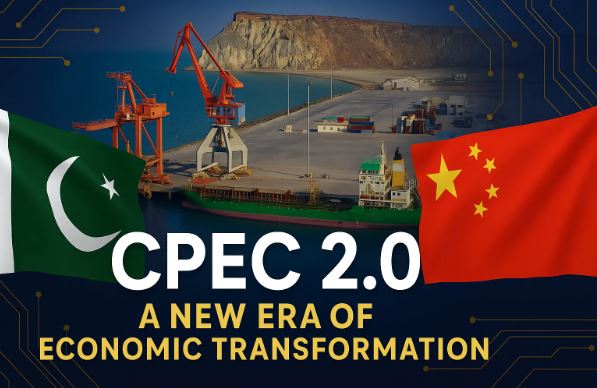
CPEC 2.0: The Next Phase of Pakistan’s Economic Transformation
T.M Awan
When the China-Pakistan Economic Corridor (CPEC) was launched in 2013, it was primarily viewed through the lens of infrastructure. Roads, power plants, transmission lines, and the development of Gwadar Port dominated public discourse. At the time, Pakistan was grappling with crippling energy shortages, inadequate transport connectivity, and an investment deficit that constrained economic growth. CPEC was designed to address these structural bottlenecks.
More than a decade later, the conversation is changing.
The emerging concept of CPEC 2.0 suggests a shift from building infrastructure to creating economic value. The focus is gradually moving from roads and energy projects toward industrial cooperation, technological innovation, agriculture modernization, digital connectivity, human resource development, and export-oriented growth. In many ways, CPEC 2.0 reflects both the lessons of the first phase and the realities of a rapidly changing global economy.
The first phase of CPEC undoubtedly delivered significant gains. Energy projects helped reduce Pakistan’s chronic electricity shortages, while new highways and transport networks improved connectivity across various regions. Gwadar, despite its challenges, established itself as an important symbol of Pakistan-China strategic cooperation. Yet infrastructure alone was never intended to be the final destination. It was meant to create the foundation for industrialization and economic transformation.
That transformation remains a work in progress.
Several factors slowed the momentum of the original CPEC roadmap. Political transitions, policy inconsistencies, economic instability, IMF-related fiscal constraints, and security concerns all affected implementation timelines. The result was that while many infrastructure projects moved forward, the industrial and investment dimensions lagged behind expectations.
Today, however, the international environment may be creating a new opportunity.
Global supply chains are undergoing a profound restructuring. Rising geopolitical tensions, trade disputes, technological competition, and the “China Plus One” strategy adopted by many multinational firms are encouraging businesses to diversify production locations beyond China. Countries capable of offering competitive labor, strategic geography, and improved infrastructure are increasingly positioning themselves as alternative manufacturing destinations.
This is where CPEC 2.0 becomes strategically significant.
Pakistan’s geographic location remains one of its most underutilized assets. Situated at the crossroads of South Asia, Central Asia, the Middle East, and Western China, Pakistan possesses the potential to become a regional hub for trade, logistics, and industrial production. The infrastructure built during the first phase of CPEC provides a platform upon which a more sophisticated economic model can be developed.
Recent discussions between Pakistani and Chinese officials suggest that the next stage of cooperation will place greater emphasis on agriculture, information technology, industrial cooperation, vocational training, and innovation-driven growth. Chinese officials have increasingly described CPEC 2.0 as a vehicle for translating earlier infrastructure investments into broader economic opportunities. The objective is no longer simply connectivity. It is productivity.
This transition is consistent with China’s own economic evolution. As labor costs rise in China and advanced manufacturing becomes a national priority, certain labor-intensive industries are expected to seek new destinations abroad. Pakistan has an opportunity to attract a portion of this investment, particularly if Special Economic Zones can be linked to export-oriented manufacturing and integrated into regional supply chains.
Agriculture presents another important frontier. Pakistan possesses vast agricultural potential but continues to struggle with low productivity, outdated farming practices, and inefficient resource management. Chinese expertise in agricultural technology, water management, seed development, and mechanization could contribute significantly to improving productivity and food security. Such cooperation would align closely with the broader objectives of China’s Global Development Initiative, which emphasizes sustainable and inclusive development.
The digital economy may prove equally important. The next phase of economic competition will not be determined solely by highways and ports but also by data, innovation, artificial intelligence, fintech, and digital infrastructure. If CPEC 1.0 focused on physical connectivity, CPEC 2.0 has the potential to focus on knowledge connectivity. Joint ventures in information technology, research collaboration, skills development, and startup ecosystems could generate long-term economic dividends that traditional infrastructure projects alone cannot provide.
However, optimism must be accompanied by realism.
Pakistan cannot expect CPEC 2.0 to succeed automatically. The challenges that slowed progress in the past have not disappeared entirely. Policy continuity, regulatory reforms, investor confidence, macroeconomic stability, and security remain essential prerequisites for attracting large-scale investment. Industrial zones cannot flourish without predictable policies, reliable governance, and a competitive business environment.
Moreover, Pakistan must avoid viewing CPEC solely through a geopolitical lens. While the corridor undoubtedly carries strategic significance, its long-term success will ultimately be measured by economic outcomes. Job creation, export growth, technology transfer, industrial competitiveness, and improvements in living standards are the indicators that matter most.
The broader regional environment also strengthens the case for economic cooperation. As global power centers shift and economic fragmentation increases, middle-income countries face growing pressure to build resilient partnerships and diversify growth strategies. For Pakistan, deepening economic engagement with China while simultaneously expanding connectivity with regional markets offers a pragmatic path forward.
The true significance of CPEC 2.0 lies not in the scale of investment alone but in the nature of transformation it seeks to achieve. The first phase focused on constructing the foundations of growth. The second phase must focus on generating growth itself.
If CPEC 1.0 was about building roads, power plants, and ports, CPEC 2.0 must be about building industries, skills, innovation, and competitiveness. The success of this transition will determine whether the corridor remains merely an infrastructure project or evolves into the economic transformation initiative that its architects originally envisioned.
——————————————————————————————————————————
The writer is a journalist, strategic communication and public diplomacy advisor based in Islamabad. X: @TMAwanOfficial
Related News

Why Houthis target Riyadh
Dr. Abdel Aziz Aluwaisheg The Houthis’ repeated attacks on Riyadh airport, resulting in hundreds ofRead More

Muslim Unity and the Designs of Great Powers
by Muhammad Mohsin Iqbal History is a stern teacher, but nations that refuse to learnRead More
Comments are Closed