

The Privatization of National Imagination: AI, Advertising and the Synthetic Pakistan
By S Shujahat Ali
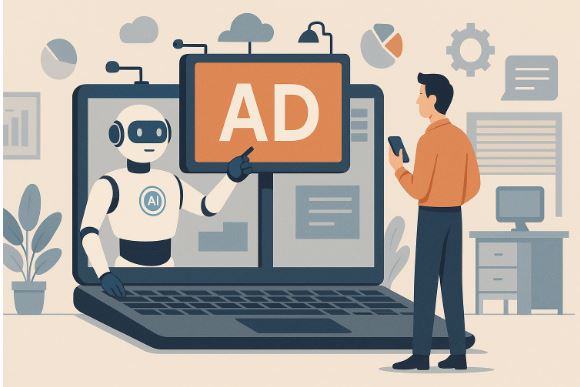
Turn on TV or go to youtube, Ads have been increasingly using AI and AI generated advertising does not merely sell products. Increasingly, it sells realities.
And those realities are constructed from the data on which algorithms are trained , not necessarily from the emotions, experiences and lived realities of the people they claim to represent.
The danger is not only misinformation in the traditional sense. It is subtler.
AI can slowly manufacture a synthetic Pakistan: polished, homogenized, algorithmically optimized and emotionally manipulative. A Pakistan that looks like suburban Spain, a global metropolis, or even a utopia, but not necessarily like the country itself. Corporations and algorithms are beginning to decide what Pakistan looks like.
The marketing director is becoming, in effect, the country’s unofficial minister of national heritage and cultural imagination. Which homes are shown? Which accents are considered acceptable? Which skin tones appear aspirational? Which cities look modern? Which citizens are visible, and which disappear into the background?
The Pakistan increasingly presented in AI-generated advertisements often resembles an abstract global metropolis more than the country we actually inhabit. Its streets are impossibly clean. Its cafés look Scandinavian. Its families speak in carefully neutralized accents. Its young people dance at open-air concerts beneath neon skies. Everyone is attractive, emotionally articulate, upper-middle-class and permanently well-adjusted.
But this is not merely harmless fantasy.
Advertising has always idealized reality. AI changes the scale and credibility of that idealization.
Over time, this has consequences.
A nation begins to internalize synthetic standards of beauty, success and belonging. AI systems trained largely on globalized datasets can reproduce the same visual hierarchies repeatedly: lighter skin, elite urban aesthetics, minimalist interiors, Westernized body language, imported lifestyles and sanitized emotional cultures.
AI has not merely accelerated the death of the internet. It may be contributing to the death of reality and of diversity. And, the result is not representation. It is the algorithmic filtering of national identity. Entire populations risk becoming culturally invisible.
Does an AI system know anything about the Hindko spoken around Qalandarabad, KP? Does it understand the cultural world of the Kalash valleys? Can it represent the working-class commuter travelling from College Road to Saddar in Rawalpindi? Does it know what life looks like in Pattoki, or the humour of a small-town wedding, or the particular chaos of a Pakistani roadside market?
The small town disappears because it is absent from the data. Regional textures disappear. Older faces disappear. Local humour disappears. Traditional, imperfect architecture disappears, unless it is aestheticized for elite consumption.
This is why the debate around AI advertising is not merely about technology.
It is about sovereignty over imagination. It is about societal representation and national identity. And, ultimately, it is about who gets to define what a country looks like to itself.
Who gets to define Pakistani modernity and identity?
If left entirely to corporations and optimization algorithms, national imagination itself becomes privatized. And unlike elected governments, algorithms are not accountable to citizens. Their incentives are engagement, aspiration and consumption, not cultural balance, psychological health or social cohesion.
This does not mean Pakistan should reject AI. Nor should art be reduced to state propaganda or rigid nationalism. Creativity requires freedom and freedom without awareness can slowly become dependency.
Pakistan urgently needs a broader public conversation around AI-generated advertising and synthetic media.
At a minimum, AI-generated and substantially AI-enhanced visuals in major advertisements should be transparently labelled. Regulatory bodies such as PEMRA should begin developing ethical standards around synthetic realism, manipulated representation and deceptive imagery.
But regulation alone will not be enough.
Pakistan also needs to begin collecting, preserving and organizing its own cultural data.
We need indigenous datasets that capture the country’s linguistic, regional and social diversity. We need to encourage the ethical collection and labelling of local images, voices, accents, architecture, clothing, music, humour and everyday life.
The answer to biased global datasets cannot simply be to import more technology.
We must also build the data that allows our own realities to be represented.
To this end, Pakistan should begin formulating national guidelines for AI-generated advertising and synthetic media.
These guidelines should establish clear standards for the labelling of AI-generated and substantially AI-enhanced advertisements. They should encourage transparency where synthetic imagery could materially mislead audiences. They should promote responsible data collection and the development of indigenous cultural datasets.
Most importantly, they should encourage media institutions and advertisers to ask a basic question:
Are we using AI to better represent Pakistan or to replace it?
Pakistan possesses extraordinary cultural diversity, linguistic richness and social complexity. AI should help preserve, explore and expand these realities. It should not flatten them into a generic algorithmic aesthetic imported from elsewhere. Because nations are eventually shaped by the stories they repeatedly tell themselves. And if Pakistan stops imagining itself honestly, someone else, or something else, will do the imagining for us.
By S Shujahat Ali
Civil Servant (Fulbright Scholar)
Related News

Sardar Ayaz Sadiq: Parliament’s Bridge Across the Political Divide
by Muhammad Mohsin Iqbal In Pakistan’s turbulent political landscape, Parliament remains the one institution whereRead More

China’s Rise and the Balance of Global Power
Dr. Muhammad Akram Zaheer China’s rise as a global superpower has been accompanied by aRead More
Comments are Closed