

Pakistan needs development-focused budget beyond short-term stabilization: Experts
ISLAMABAD, MAY 20 /DNA/ – The upcoming federal budget must move beyond short-term stabilization and focus on economic development, boosting exports, ensuring food security, promoting investment, and reducing inequality. However, without political will, authentic data, institutional coordination, and structural reforms to support these goals, the country may continue to face stagflation, rising poverty, and mounting balance-of-payments pressures.
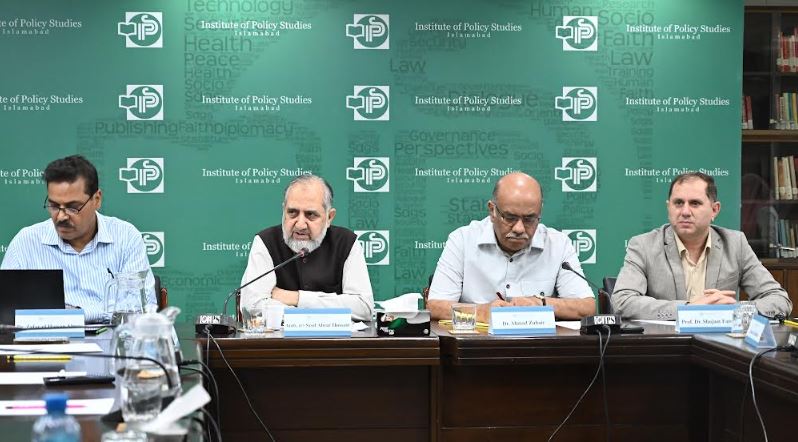
These views were expressed by economic and fiscal experts during a discussion organized by the Institute of Policy Studies (IPS), Islamabad, on the federal budget 2026-27 and Pakistan’s economic challenges.
The session was chaired by Dr. Ahmad Zubair, former chief economist, while the speakers included Dr. Zafar ul Hasan Almas, former joint chief economist; Dr. Shahid Naeem, consultant, Ministry of Poverty Alleviation & Social Safety; Prof. Dr. Shujaat Farooq, dean research, PIDE; Mehtab Haider, economic journalist; and Qanit Khalil Ullah, chartered accountant and economist. The session was joined by Amb (r) Syed Abrar Hussain, vice chairman, IPS, and members of academia and practitioners from various sectors.
Presenting an overview of the economy, Dr. Zafar ul Hasan cautioned that a substantial increase in consumable imports and emerging food security concerns could lead to higher food inflation in the near future. He noted that inflation is expected to reach 15% in the coming months, which may prompt an increase in the policy rate and require an additional Rs500-600 billion for debt servicing in the upcoming budget. He also highlighted persistent issues with data availability and authenticity, resulting in fragmented, inconsistent datasets and a lack of synergy among institutions. He warned that there is little room for further tax increases, while the balance-of-payments crisis may intensify due to stagnant exports.
Dr. Shahid Naeem observed that despite improvements in growth numbers, recent survey data indicate rising poverty and inequality, reflecting elite capture and the burden of exorbitant indirect taxation. He stated that many commodity prices have been delinked from the budget process through autonomous price-setting authorities, thereby reducing the budget’s importance and effectiveness. He further pointed out flaws in social protection programs, noting that multiple initiatives are functioning in silos without coordination. According to him, lack of political pressure and accountability in various domains has also weakened the effectiveness of government institutions and budgetary outcomes.
Dr. Shujaat Farooq highlighted that the budget has increasingly become ineffective from a regulatory perspective. He stressed that annual budgets should be aligned with five-year development plans, which currently remain neglected. He also pointed to weak coordination between federal and provincial institutions in economic planning, while noting that majority of the country’s districts do not contribute to exports. He observed that revenue targeting has overshadowed the broader objective of economic development. He added that the federal government has limited control over non-development expenditures and is operating heavily on borrowed resources.
Mehtab Haider stated that the salaried class remains the major contributor to tax revenues, while Pakistan continues to face stagflation. He argued that the IMF follows a “one-size-fits-all” stabilization approach, which may create additional economic challenges. According to him, prolonged stabilization policies are hurting economic growth, while wealthy segments of society remain outside the effective tax net. He pointed out that although legislation regarding agricultural taxation exists, implementation remains absent, as is the case with retailer taxation. He emphasized that political will is essential for meaningful reforms. He stressed that documenting the informal economy and promoting investment should be key priorities in the upcoming budget.
In his concluding remarks, Dr. Ahmad Zubair stressed that Pakistan must focus on development paradigms to increase per capita income and adopt innovative economic tools. He highlighted the importance of resource transfer mechanisms and warned that economic sovereignty is weakening while poor governance remains the core challenge. He further stated that, despite substantial tax collection, issues such as mounting circular debt in the energy sector and rising inequality persist.
Related News
Belarus General lauds Pakistan Navy’s maritime security efforts
RAWALPINDI, JUL 31 /DNA/ – A delegation of Republic of Belarus led by Chief ofRead More

Seven years post-Article 370: IIOJK ground realities shatter India’s claims of peace, development
ISLAMABAD: Despite the passage of seven years since the abrogation of Articles 370 and 35A,Read More
Comments are Closed