

Trump rejects Iran’s offer to reopen Hormuz
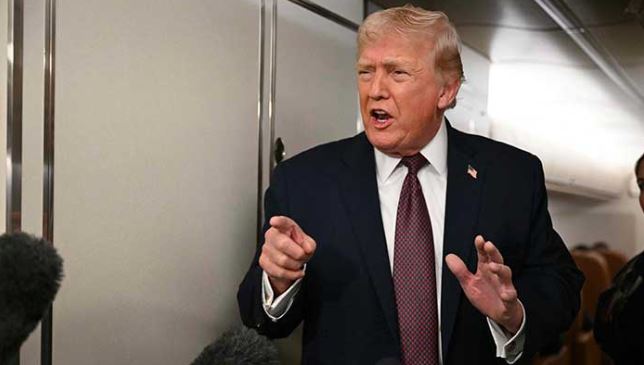
Trump dismissed the phased approach, viewing it as an attempt to relieve economic pressure on Iran without making meaningful concessions on its uranium enrichment and potential weaponization
DNA
Washington — President Donald Trump has rejected Iran’s latest proposal to reopen the Strait of Hormuz and lift the U.S. naval blockade, insisting that any agreement must first address Tehran’s nuclear program.
According to multiple sources, Iran — via Pakistani mediators — offered to reopen the strategically vital waterway and end the current standoff if the United States lifted its blockade and paused military operations, while postponing negotiations on Iran’s nuclear ambitions to a later stage.
Trump dismissed the phased approach, viewing it as an attempt to relieve economic pressure on Iran without making meaningful concessions on its uranium enrichment and potential weaponization.
In a direct interview, Trump told Axios he intends to keep the blockade in place until a comprehensive deal is secured that prevents Iran from acquiring a nuclear weapon.“The blockade is somewhat more effective than the bombing,” Trump said. “They are choking like a stuffed pig. And it is going to be worse for them. They can’t have a nuclear weapon.”
The U.S. naval blockade, imposed in mid-April, has severely restricted Iran’s oil exports, with estimates suggesting daily revenue losses for Tehran in the range of $400–500 million. Trump has previously described Iran as being in a “state of collapse” and claimed the regime is urgently seeking relief from the maritime restrictions.
The Strait of Hormuz, through which roughly one-fifth of global oil trade normally passes, has been at the center of the crisis. Iran’s initial closure of the strait in response to U.S. and Israeli strikes triggered a sharp spike in global energy prices. The U.S. responded with its own blockade targeting Iranian ports and vessels, creating a tense dual-blockade situation that continues to disrupt international shipping.
This development comes as Defense Secretary Pete Hegseth defended President Trump’s proposed $1.5 trillion defense budget request for fiscal year 2027 before the House Armed Services Committee, describing it as reflecting “the urgency of the moment” amid ongoing operations and the need to replenish munitions stockpiles depleted during the Iran conflict.
Lawmakers from both parties are closely watching the standoff, with concerns mounting over prolonged high energy prices, the cost of the war (previously estimated in the $25 billion range for direct U.S. spending), and the risk of escalation if negotiations remain stalled.
Iran has not yet issued an official public response to Trump’s latest comments, though regional mediators continue to shuttle proposals.
Taliban secret meeting at Qabdahar
Shamim Shahid
PESHAWAR: Supreme leader Mullah Haibat Ullah has instructed stern action against banned TTP militants but it was yet to be ascertained that whether they (Afghan Taliban) will do it or not.
According to credible Pakistani circles, the same Afghan Taliban—who for years faced allegations of sheltering militants—have now adopted a strict stance against their former allies, Tehrik-i-Taliban Pakistan (TTP).
Following a high-level and secret meeting in Kandahar, the Supreme Leader Hibatullah Akhundzada issued a firm directive, which is in fact is in according to Pakistan demands. The primary objective of this order is to completely eliminate the banned TTP hideouts from all over Afghanistan.
Pakistan media considering this move as a turning point, “not only for relations between Pakistan and Afghanistan, but also for the overall security of South Asia. The directive from the Kandahar meeting makes it clear that Afghanistan will no longer serve as a launchpad for proxy wars against any neighboring country.
The order further states that the Afghan Prime Minister has been instructed to identify all illegal foreign nationals present in the country and take them into immediate custody. This is widely interpreted as a direct reference to TTP militants. It also clearly emphasizes that Afghan territory must not be used for attacks against Pakistan or any other neighboring state. This directive is considered historic because, for the first time in the past four years, the Afghan Taliban have openly and actively opposed the TTP— a group they were previously believed to have sheltered due to ideological alignment.”
Related News
The 7th CICA Summit in Azerbaijan
By Saifullah Ansar The 7th Summit of the Conference on Interaction and Confidence Building MeasuresRead More
Russia appreciates Pakistan’s support at UN and multilateral forums
ISLAMABAD, OCT 14 /DNA/ – Prime Minister Muhammad Shehbaz Sharif received, Vladimir Kolokoltsev, Minister ofRead More
Comments are Closed