

The Real Revolution is Institutional Reform
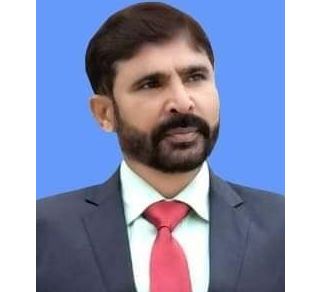
Dr. Muhammad Akram Zaheer
Political ideas often outlive the societies in which they were first developed. They survive because they address recurring questions about power, institutions and change. Few twentieth-century thinkers illustrate this better than Leon Trotsky. Although his theories emerged from revolutionary Russia, the debates he initiated continue to resonate wherever states struggle with institutional weakness, political fragmentation and the challenge of reform. For Pakistan, Trotsky’s writings are not a political blueprint to be followed, but they offer a useful lens through which to examine the country’s own institutional evolution.
Trotsky remains one of the most influential yet controversial figures in modern political thought. A leading figure in the 1917 Russian Revolution, Trotsky developed the theory of Permanent Revolution, arguing that societies experiencing incomplete political and economic transformation could not rely on gradual or isolated reforms. Instead, he believed political and social change was an ongoing process requiring continuous institutional development. While many aspects of his revolutionary programme remain subjects of historical debate, his broader concern with political stagnation, bureaucratic concentration of power and institutional decay continues to attract scholarly attention.
Perhaps even more significant than his theory of Permanent Revolution was Trotsky’s criticism of bureaucratic authoritarianism. Following the consolidation of power under Joseph Stalin, Trotsky argued that revolutionary ideals had been overshadowed by an expanding bureaucracy that increasingly concentrated authority in a narrow political elite. In his view, institutions become less effective when they cease to encourage accountability, open debate and public participation. Whether or not one agrees with his conclusions, his warning about excessive bureaucratic centralisation remains relevant to discussions of governance across the world.
Pakistan’s political experience differs fundamentally from the circumstances of early Soviet Russia. Pakistan is a constitutional parliamentary republic with its own legal traditions, democratic institutions and social complexities. Nevertheless, like many developing states, it has experienced recurring tensions between political continuity and institutional reform. Governments have changed, policies have shifted and economic priorities have evolved, yet structural governance challenges have often persisted.
One of Pakistan’s enduring difficulties is not the absence of constitutional institutions but the uneven performance of those institutions. Frequent political polarisation has diverted attention from long-term policy planning. Successive governments have launched ambitious programmes in education, health, taxation and economic management, yet implementation has frequently been inconsistent. Administrative continuity has often been interrupted by political transitions, reducing the effectiveness of otherwise promising initiatives.
Trotsky’s criticism of bureaucracy invites a broader question that extends beyond ideology: how can state institutions remain efficient, responsive and accountable? The answer lies not in revolutionary upheaval but in strengthening the rule of law, improving public administration and ensuring that institutions operate according to constitutional principles rather than political expediency.
Pakistan’s civil service remains one of the country’s most important state institutions. It possesses considerable professional expertise, yet concerns about administrative delays, overlapping jurisdictions and procedural complexity continue to affect governance. Modern states increasingly rely on efficient public administration, digital governance and evidence-based policymaking. Administrative reform therefore becomes not merely a managerial objective but an essential requirement for democratic stability and economic growth.
Another area where Trotsky’s analysis retains indirect relevance concerns political participation. Healthy democracies require political competition that remains within constitutional boundaries. They also require opposition parties capable of contributing constructively to national policymaking rather than viewing politics exclusively as a zero-sum contest. Pakistan’s democratic future depends upon strengthening parliamentary processes, encouraging issue-based politics and developing greater consensus on national priorities such as education, energy security, fiscal reform and climate resilience.
Economic governance presents an equally important challenge. Pakistan’s recurring balance-of-payments crises, dependence on external financial assistance and limited industrial diversification underline the need for sustained structural reform. Political instability often discourages long-term investment and weakens policy consistency. Successful economies generally demonstrate continuity in economic planning regardless of changes in government. This principle owes less to any particular ideology than to institutional maturity.
Education represents another critical dimension of institutional development. Countries that have achieved sustained economic progress have generally invested heavily in human capital, scientific research and technical skills. Pakistan possesses a young and dynamic population whose potential can only be realised through consistent investment in education, vocational training and innovation. Strengthening universities, improving school standards and expanding opportunities for research should remain central components of national development strategy.
Equally important is the relationship between citizens and public institutions. Public confidence grows when institutions demonstrate transparency, impartiality and professional competence. Judicial efficiency, regulatory consistency and effective local government all contribute to strengthening democratic legitimacy. Institutional credibility cannot be established through rhetoric alone; it emerges from consistent performance over time.
Pakistan’s foreign policy environment also requires institutional coherence. Situated at the crossroads of South Asia, Central Asia and the Middle East, Pakistan faces a rapidly changing geopolitical landscape characterised by strategic competition, shifting economic partnerships and evolving regional security dynamics. Long-term foreign policy benefits from policy continuity supported by professional diplomatic institutions capable of balancing national interests with changing international realities.
The principal lesson Pakistan may draw from Trotsky is therefore not his revolutionary prescriptions but his concern about institutional stagnation. Modern governance depends upon the continuous improvement of public institutions, the strengthening of democratic accountability and the ability of governments to adapt to changing economic and social conditions. States that neglect institutional reform often find themselves repeatedly confronting the same structural problems despite frequent changes in political leadership.
Pakistan today possesses substantial strengths: a resilient society, an entrepreneurial private sector, experienced public institutions and significant strategic importance. Transforming these assets into sustained national progress requires political stability, constitutional continuity and an unwavering commitment to institutional excellence. Reform should be understood not as a moment of political disruption but as a continuous process of improving governance, expanding opportunity and strengthening public trust.
History rarely offers ready-made solutions for contemporary challenges. Yet it does provide valuable perspectives. Leon Trotsky’s enduring contribution lies less in the revolutionary programme he championed than in the questions he raised about power, bureaucracy and institutional vitality. For Pakistan, the path forward is neither revolution nor ideological confrontation. It lies in patient institution-building, effective governance, democratic accountability and long-term policy consistency. Those remain the foundations upon which stable, prosperous and confident nations are ultimately built.
Dr. Muhammad Akram Zaheer
Assistant Professor Pakistan Studies
Imperial College of business Studies Lahore
Related News
China’s Rise and the Balance of Global Power
Dr. Muhammad Akram Zaheer China’s rise as a global superpower has been accompanied by aRead More

Pakistan and the Gulf: Weathering the Oil Storm
by Muhammad Mohsin Iqbal The history of the Gulf is marked by immense wealth, strategicRead More
Comments are Closed