

The Lucky Irani Circus and the Ceasefire in Islamabad: A Personal Reflection
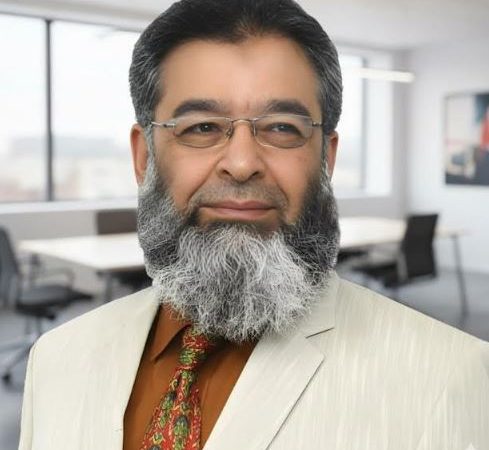
by Muhammad Mohsin Iqbal
In the quiet recesses of memory, there are places that time never quite succeeds in erasing. In the heart of Lahore’s old Ichhra, where narrow lanes wind through a living tapestry of history, one such memory continues to breathe with remarkable freshness. It belongs to a man who, having moved with his family from Delhi Gate in 1976, found his childhood shaped by the rhythms and rituals of a neighbourhood deeply rooted in tradition. Among the most vivid of these recollections is the annual Urs of Baba Shah Kamal, which in the early 1980s would transform Ichhra from a modest locality into a scene of extraordinary vitality.
Preparations for the Urs would begin days in advance in the open ground adjoining the shrine. There was, in those days, a sense of anticipation that seemed to ripple through the entire community. Pilgrims arrived in waves from distant towns and villages, drawn not merely by devotion but by an unspoken promise of shared experience. Ten to fifteen days, Ichhra would assume a festive character, its streets alive with colour, sound, and the mingled fragrances of countless food stalls. Vendors displayed everyday wares at modest prices, yet it was the special delicacies, reserved almost exclusively for the occasion, that captured the imagination. The famed Qat’lma, prepared in vast iron cauldrons over open flames, possessed a richness that lingered long after the fair had faded.
Entertainment, too, played its part in this annual transformation. The arrival of the Lucky Irani Circus was awaited with particular excitement, its performances lending an air of wonder to the proceedings. Equally compelling was the spectacle known as the Maut ka Khon’wa (Well of Death), where daring motor cycle rider defied gravity within a wooden cylinder, eliciting gasps and applause from enthralled spectators. For a young boy, these scenes were nothing short of magical. The Urs was not merely an event; it was a world unto itself, where faith, festivity, and fellowship merged into a singular experience of communal joy.
Nearly forty-five years have passed since those days, and the boy now sits in Islamabad, his life shaped by responsibilities far removed from the carefree wonder of childhood. Yet memory, in its quiet persistence, bridges the distance between past and present. It was only recently that these recollections returned to him with unusual clarity, prompted by events of a vastly different magnitude unfolding on the global stage.
The world, for a fleeting yet perilous moment, had drawn close to the brink of a far-reaching conflict. Hostilities involving Israel and Iran, with the unmistakable involvement of the United States, threatened to ignite a chain reaction whose consequences would have extended far beyond the immediate region. The mere disruption of oil supplies sent tremors through the global economy, raising fears of widespread instability and hardship.
In that tense hour, Pakistan emerged with a sense of purpose that surprised many observers. Guided by a tradition of diplomacy and a deep awareness of regional sensitivities, it undertook efforts to mediate between opposing sides. Through patience and quiet determination, channels of communication were opened, and what seemed an intractable impasse began, gradually, to yield. The eventual securing of a ceasefire marked not only a moment of relief but also a testament to the possibilities of dialogue in an increasingly fractured world.
More remarkable still was the decision by both American and Iranian leadership to bring their delegations to Islamabad for direct engagement. The capital, accustomed to its measured calm, assumed an unusual stillness under heightened security arrangements. Traffic was restricted, and daily routines were momentarily disrupted. Yet the citizens of Islamabad and Rawalpindi bore these inconveniences with a quiet understanding that they were participants, however indirectly, in a moment of significance that transcended national boundaries.
Around carefully arranged tables, positions once rigid began to soften. The process was neither swift nor without its challenges. There were, as always, forces inclined to disrupt such efforts. Yet beneath the visible proceedings lay layers of negotiation too delicate for public view, where understanding is built not in declarations but in careful, often unseen exchanges. Such efforts rarely yield immediate transformation, but they plant the seeds from which future stability may grow.
In undertaking this role, Pakistan reaffirmed its place within the community of nations. It demonstrated, once again, a capacity for responsible engagement and a willingness to act as a bridge where divisions threaten to widen. While the full measure of what has been achieved will only become evident with time, the moment itself stands as an indication of the country’s enduring relevance in global affairs.
There is, perhaps, a gentle symmetry in the way memory and history intersect. Decades ago, the young boy in Ichhra watched with delight as the Lucky Irani Circus unfolded its wonders, Iran then being a distant name associated with spectacle and fascination. Today, that same name returns in a vastly different context, one imbued not with entertainment but with the weight of diplomacy and consequence.
Thus, in the span of a lifetime, the scenes have changed, yet the underlying thread remains. From the vibrant Urs of Ichhra to the sober deliberations of Islamabad, there persists a shared human longing—for peace, for connection, and for a future unburdened by conflict. In the laughter of a child and the measured resolve of a nation, one finds, ultimately, the same enduring hope: that even in uncertain times, the world may yet step back from the brink and move, however gradually, towards harmony.
Related News
A Blessing, Not a Burden: Abdul Rehman’s Journey of Courage, Learning and Hope
By a Proud Parent | World Cerebral Palsy Day — 6 October ISLAMABAD: World CerebralRead More
Why Houthis target Riyadh
Dr. Abdel Aziz Aluwaisheg The Houthis’ repeated attacks on Riyadh airport, resulting in hundreds ofRead More
Comments are Closed