

PPP, PML-N Set to Shape the Future of Gilgit-Baltistan Politics
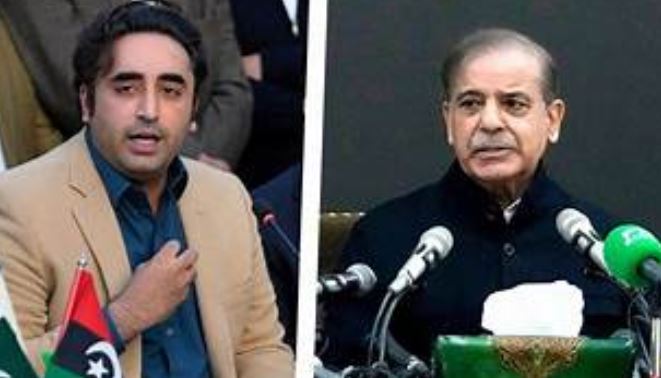
It should not come as a surprise if the establishment takes a keen interest in the formation of the next government. Given the strategic importance of the region, policymakers responsible for national security are unlikely to remain indifferent to political developments there
Ansar Mahmood Bhatti
The results of the Gilgit-Baltistan elections have once again demonstrated a political reality that cannot be ignored: no single party is in a position to dominate the political landscape on its own. The outcome points towards a future in which the Pakistan Peoples Party (PPP) and the Pakistan Muslim League-Nawaz (PML-N) will continue to play a central role in shaping the region’s politics, either through direct cooperation or indirect understanding.
A a stable government in Gilgit-Baltistan may only be possible if the major political stakeholders work together. While the PPP appears to be in a stronger position to claim the right to form the next government, it will inevitably require the support of independent candidates and smaller political groups to secure a workable majority. Independents, as always in GB politics, have emerged as kingmakers. Their role could prove decisive in both making and breaking governments in the days ahead.
Ideally, the PPP may be encouraged to take the lead in forming the government with the backing of independents and smaller parties. The PML-N, despite being an important political player, may choose to support such an arrangement without formally becoming part of the government if it will not be in a position for the government independently. Such a formula would mirror the broader federal political understanding that has prevailed in Islamabad in recent years. This approach could provide stability while allowing both parties to maintain their distinct political identities.
At the same time, it is evident that the PPP would prefer to run the Gilgit-Baltistan government without sharing power directly with the PML-N. Whether such a model becomes viable will depend on post-election negotiations and the willingness of independent candidates to align themselves with the party.
However, politics in Gilgit-Baltistan cannot be viewed solely through the conventional lens of electoral arithmetic. The region occupies a highly sensitive and strategic position due to its geographical location and its connection to national security considerations. Like Azad Jammu and Kashmir, Gilgit-Baltistan falls within an area where security concerns often intersect with political developments. Consequently, the role of the establishment remains significant.
It should not come as a surprise if the establishment takes a keen interest in the formation of the next government. Given the strategic importance of the region, policymakers responsible for national security are unlikely to remain indifferent to political developments there. Stability, governance, and continuity will be among the key considerations.
Interestingly, the political formula that eventually emerges in Gilgit-Baltistan could serve as a model for the upcoming elections in Azad Jammu and Kashmir, scheduled for June 27. Political observers are already closely watching developments in GB to gauge the direction of future electoral alliances and power-sharing arrangements.
Another notable aspect of the elections was the absence of Pakistan Tehreek-e-Insaf (PTI) as a direct electoral contestant. PTI-linked candidates reportedly contested under the banner of Majlis-e-Amal and other platforms, highlighting the party’s continuing challenges in participating openly in the electoral process.
As coalition negotiations begin, one conclusion is already clear: consensus-building, rather than confrontation, will determine the future course of politics in Gilgit-Baltistan. The coming days will reveal whether political leaders can rise above partisan interests to provide the region with the stable and effective governance it urgently requires.
Related News

Two officers, four soldiers martyred in Hangu Operation: ISPR
DNA RAWALPINDI, SEP 20 /DNA/ – Fire exchange took place between the Security Forces convoyRead More
CIA chief meets Egypt’s al-Sisi in Cairo
CAIRO, SEP 20: US Central Intelligence Agency Director John Ratcliffe met Egyptian President Abdel FattahRead More
Comments are Closed