

Nathiagali-Ayubia becomes summer wonderland for tourists
By Fakhar-e-Alam
NATHIAGALI, Jun 28 (APP/DNA):The emerald hills of Nathiagali and Ayubia came alive as the recent pre-monsoon showers, drifting clouds, and bursts of sunshine transformed the scenic mountain resorts into a breathtaking summer paradise that attracted thousands of tourists seeking relief from the sweltering heat of the plains on Sunday.
Nature appeared to paint its own masterpiece across the Galiyat region of Abbottabad, where sunshine-clouds interplay takes tourists over the moon.
The pre-monsoon rain swept through the towering Himalayan foothills before giving way to bright sunshine, creating spectacular rainbows that stretched across the pine-covered mountains, spreading up to Murree and Kashmir.
Low-hanging clouds drifted lazily over the valleys, wrapping forests and hilltops in a soft white veil and creating postcard-perfect views that left visitors spellbound.
Families, students, and adventure enthusiasts from across Khyber Pakhtunkhwa and Punjab crowded the winding roads leading to Ayubia and Nathiagali. Vehicles lined the roads while restaurants, tea stalls, and roadside vendors bustled with activity as tourists soaked in the cool mountain breeze after weeks of intense summer temperatures.
Children laughed while splashing through rain puddles, couples paused to photograph rainbows arching over the valleys, and elderly visitors quietly admired the mist rolling across forests that have captivated generations.
One of the biggest attractions remained the historic four-kilometre Ayubia-Nathiagali horse trail, where the rhythmic clip-clop of horses echoed through dense pine forests. Riders carried smiling visitors along the colonial-era track, offering panoramic views of towering deodar trees, wildflowers, and mist-covered mountain slopes.
For local horse rider Faraz Khan, the tourist season in Galiyat has brought renewed hope for them.
“Every rainfall seems to bring more visitors,” he said while preparing his horse for another ride. “The combination of rain, sunshine, and drifting clouds makes the forests look magical. Many tourists tell us they feel as if they have entered another world. This season is not only beautiful—it also provides livelihoods for dozens of horse riders and local families.”
Horse riding has become much more than recreation. It supports dozens of families who depend on tourism during the summer months, creating employment opportunities for guides, craftsmen, and transport providers.
Visitors also thronged the famous three-kilometre Ayubia chairlift, gliding silently above dense pine forests before reaching viewpoints overlooking Mukeshpuri Top and the surrounding Himalayan landscape.
“This is my third visit to Ayubia, but every trip feels different,” said Ihtisham Ali, a tourist from Nowshera. “Whenever I come here, I make sure to ride both the chairlift and the horses. Sharing these photographs with friends on social media is always special, but no picture truly captures the beauty you experience here.”
Many tourists described the pleasant weather as the perfect escape from the scorching temperatures prevailing in the country’s plains.
“We planned this trip only after hearing about the rain,” said Shaheen Bibi, who travelled with her family from Nowshera. “Watching clouds float through the pine trees while our children enjoy the cool weather has made every kilometre of the journey worthwhile. It’s refreshing to see nature at its finest.”
The influx of visitors has also breathed new life into the local economy.
Photographer Khayam Ali barely found time to rest as families queued for professional photographs against dramatic backdrops of rain-soaked forests, horses, and colourful mountain landscapes.
“Business has been excellent this week,” he said while editing photographs on his camera. “Everyone wants memories with horses, misty forests, and rainbows. Social media has encouraged more people to visit these mountains, and every visitor creates opportunities for local photographers, shopkeepers and transport operators.”
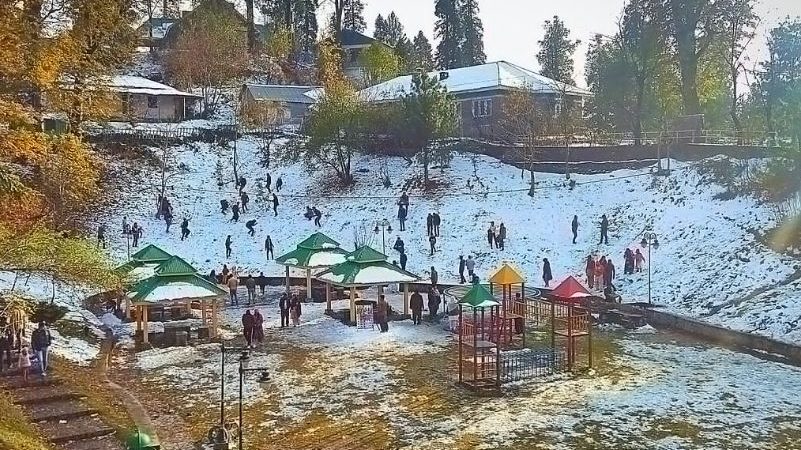
Restaurants serving freshly caught trout remained packed throughout the day, while tea stalls offered visitors steaming cups of traditional green tea as cool winds swept across the hills. Children enjoyed horse rides and snow patches lingering on higher elevations, while trekking enthusiasts explored the scenic hiking trails leading to Miranjani, Mukeshpuri and Dunga Gali.
Ayubia National Park continued to enchant wildlife enthusiasts with its rich biodiversity.
The protected forest is home to more than 200 bird species, including golden eagles, falcons, koklass and kaleej pheasants, alongside foxes, monkeys, and the elusive common leopard. The melodies of birds echoed through the forests of Khanspur, Dungagali, Changagali, and Thandiani, adding another layer of charm to the already picturesque landscape.
Tourism experts believed such destinations can play a significant role in strengthening Pakistan’s economy if promoted effectively.
Professor Dr. Naveed Farooq of Abdul Wali Khan University, Mardan, said Pakistan possesses extraordinary tourism assets but has yet to fully convert them into sustainable economic gains.
“Pakistan earned around $1.15 billion from inbound tourism in 2024, while Pakistanis spent approximately $2.4 billion on foreign travel during the same period,” he said.
“This imbalance shows the enormous untapped potential of our tourism sector. With improved infrastructure, better destination management, and easier visa policies, Pakistan can significantly increase tourism revenues and foreign exchange earnings.”
According to Dr. Farooq, tourism currently contributes nearly 5.9 percent to Pakistan’s GDP and supports approximately 4.7 million jobs, yet tourism exports account for only 2.9 percent of the country’s total exports.
“Today’s travellers expect quick visa processing, quality accommodation, and seamless travel experiences. Pakistan already has natural beauty. The next step is making it easier and more attractive for international visitors to experience it,” he said.
Experts estimated that Pakistan’s tourism receipts could rise to nearly $1.5 billion by 2030 under current growth trends, while comprehensive reforms could generate substantially higher earnings and create thousands of additional jobs.
The Khyber Pakhtunkhwa government is also expanding tourism infrastructure across the province. Interest-free loans of up to Rs3 million are being offered to residents for constructing and renovating tourist accommodations. Meanwhile, plans are underway to build the world’s longest and highest 14-kilometre cable car linking Kumrat Valley in Upper Dir with Madaklasht Valley in Lower Chitral, a project expected to attract millions of visitors upon completion.
As evening descended over the Galiyat hills, another light shower was likely to wash across the mountains. Horses continued carrying tourists along ancient forest trails, children laughed beneath colourful umbrellas, and photographers captured the final rainbow of the day.
In Ayubia and Nathiagali, the arrival of the monsoon is far more than a change of season; it is a celebration of nature, livelihoods, and unforgettable memories, where every rainfall brings renewed life to the forests and fresh hope to the people who call these mountains home.
Related News

Ishaq Dar, Uzbek FM discuss bilateral cooperation
ISLAMABAD, AUG 23 /DNA/ – Deputy Prime Minister/Foreign Minister Senator Mohammad Ishaq Dar spoke todayRead More

President appreciates Saudi Ambassador’s contribution to strengthening Pakistan-Saudi ties
ISLAMABAD, AUG 23 /DNA/ – President Asif Ali Zardari has appreciated the contribution of AmbassadorRead More
Comments are Closed