

How Ukraine and Iran Rewrote the Rules of War
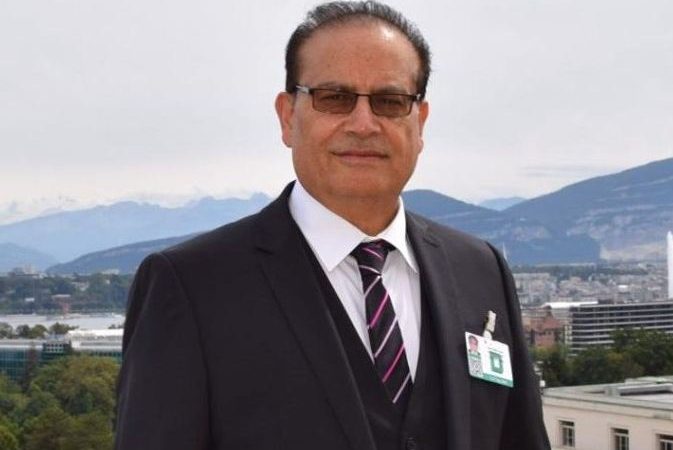
Qamar Bashir
History is often written by great powers. Yet occasionally, history takes a different course and is rewritten by nations that refuse to surrender. The wars in Ukraine and Iran may ultimately be remembered as such moments. Though different in geography, culture and circumstances, both conflicts delivered the same strategic lesson: overwhelming military strength, economic dominance and technological superiority no longer guaranteed military and political victory.
For decades, the international system operated on an assumption that major powers could ultimately impose their will upon smaller states. The experiences of Ukraine and Iran have challenged that assumption. In doing so, they may have altered not only the nature of warfare but also the future direction of global politics.
Russia entered Ukraine in February 2022 believing that its superior military power, larger population, greater economic resources and vast nuclear arsenal would quickly force Kyiv into submission. Instead, it became one of the most costly military miscalculations of modern times.
Russia possesses approximately 16.4 million square kilometers of territory, making it the largest country in the world. Ukraine covers roughly 579,000 square kilometers. Russia’s economy before the conflict exceeded $2.4 trillion, while Ukraine’s economy was only a fraction of that size. Russia enjoyed superiority in military manpower, industrial capacity, missile forces and strategic reserves.
Yet Ukraine refused to collapse. With substantial support from Europe and the United States, combined with extraordinary national determination, Ukraine transformed itself into one of the most innovative military forces in modern history. Ukrainian engineers, military planners and scientists pioneered large-scale drone warfare, integrated battlefield intelligence and precision long-range strikes. They demonstrated that innovation could compensate for numerical inferiority.
As the war evolved, Ukraine carried the battlefield deep into Russian territory. Airfields, logistics centers, energy infrastructure and strategic military facilities once believed beyond reach became vulnerable. Russia discovered that military power alone could not guarantee security. This represented a profound strategic shock. A smaller nation had denied a much larger power the victory it expected.
The second shock came in the Middle East. Unlike Ukraine, Iran did not enjoy broad Western military support. For decades, Iran operated under sanctions, financial restrictions and diplomatic pressure. Its economy remained constrained compared to the overwhelming economic power of the United States and Israel. America’s economy exceeds $28 trillion annually. Israel possesses one of the world’s most technologically advanced military establishments. Iran’s economic and military resources are significantly smaller by comparison.
Yet Iran possessed advantages that could not be measured solely in GDP, military spending or advanced weapon systems. It possessed strategic depth, resilience and geography. Iran’s ability to absorb pressure while maintaining its military and political cohesion surprised many observers. Rather than relying on conventional parity, Tehran emphasized missiles, drones, asymmetric warfare and maritime leverage. It demonstrated that a state facing superior conventional military power could nevertheless impose significant costs on stronger adversaries.
Most importantly, Iran highlighted the strategic importance of geography. The Strait of Hormuz, through which approximately one-fifth of global oil consumption and more than one-quarter of seaborne oil trade passes, became a focal point of international concern. Suddenly, a regional conflict was no longer merely a regional conflict. It became a potential threat to the global economy.
History demonstrates that major powers often respond to resistance by increasing pressure rather than reassessing assumptions. What begins as a regional confrontation can gradually expand geographically and economically. Maritime competition can spread from one strategic corridor to another. Economic warfare can become a global phenomenon affecting billions of people who have no direct connection to the original conflict.
This is perhaps the most important lesson emerging from both Ukraine and Iran.
Modern warfare is no longer fought exclusively with tanks, aircraft and artillery. It is increasingly fought through drones, cyber capabilities, intelligence networks, financial systems, supply chains and strategic chokepoints. Geography itself has become a weapon.
The implications are profound.
Middle powers throughout the world are closely observing these developments. They see that drones costing thousands of dollars can threaten systems worth millions. They see that intelligence and innovation can offset numerical disadvantages. They see that geography can provide leverage against stronger opponents. Most importantly, they see that determined resistance can frustrate even the most powerful adversaries.
Yet this lesson contains a dangerous paradox. If asymmetric warfare allows smaller states to resist larger powers, what happens when larger powers become frustrated? The answer may lie in the world’s nuclear arsenals.
The experiences of Ukraine and Iran are likely to influence strategic thinking across the globe. Some major powers may conclude that conventional military superiority is no longer sufficient to guarantee desired outcomes. Some smaller powers may conclude that international law alone cannot guarantee security. Both conclusions risk producing the same result: increased reliance on nuclear weapons.
For nuclear-armed states, the temptation may arise to rely more heavily upon nuclear deterrence when conventional coercion proves insufficient. For non-nuclear states, the lesson may be that survival ultimately requires acquiring a nuclear capability of their own. Such a trend would be extraordinarily dangerous.
For this reason, the long-term lesson of these conflicts should not be nuclear expansion but renewed nuclear disarmament. A stable international system cannot permanently rest upon a hierarchy in which some states possess ultimate weapons while others do not. Lasting security requires moving toward a universally applied and verifiable framework that reduces and ultimately eliminates nuclear arsenals.
Equally important is the need to reform international governance. The wars in Ukraine and Iran have revived longstanding debates regarding the structure of the United Nations. Critics argue that the veto power enjoyed by the five permanent members of the Security Council frequently prevents effective collective action and allows geopolitical interests to override broader international consensus.
Many advocates of reform contend that decisions affecting international peace and security should more accurately reflect the collective judgment of the international community. They argue that the authority of the General Assembly should be strengthened and that mechanisms should be developed to reduce paralysis caused by competing vetoes.
Whether such reforms are politically achievable remains uncertain. Nevertheless, the debate itself reflects growing frustration with a system many view as increasingly disconnected from contemporary realities.
The fundamental challenge facing humanity today is therefore larger than any single war. The challenge is whether the international community can adapt its institutions, strengthen international law, preserve the freedom of global commerce and reduce reliance on military coercion before future crises become even more dangerous.
Ukraine and Iran have demonstrated that technology, geography, innovation and national determination can challenge even the strongest powers. They have shown that military superiority does not automatically translate into political success. They have revealed the vulnerability of global supply chains, maritime commerce and existing security structures. Above all, they have reminded the world that the pursuit of dominance often produces resistance rather than submission.
The future now presents two possible paths. One path leads toward greater militarization, nuclear proliferation, expanding maritime confrontation and intensified geopolitical rivalry. The other leads toward institutional reform, collective security, strengthened international law and renewed commitment to diplomacy.
The choice between those paths will determine not merely the outcome of future conflicts but the future of international order itself.
Qamar Bashir
Press Secretary to the President (Rtd)
Former Press Minister, Embassy of Pakistan to France
Former Press Attaché to Malaysia
Former MD, SRBC | Michigan, USA
Related News

Talks remain the sensible option as protest calendar tightens
Opinion Ansar Mahmood Bhatti With a Pakistan Tehreek-e-Insaf long march hanging over the capital, allRead More

Pakistan’s IMF Trap: The Long Road to Economic Independence
By Muhammad Mohsin Iqbal Pakistan’s recurring dependence on the International Monetary Fund (IMF) has becomeRead More
Comments are Closed