

Pakistan believes in peace but won’t allow India to weaponise water, says Tarar
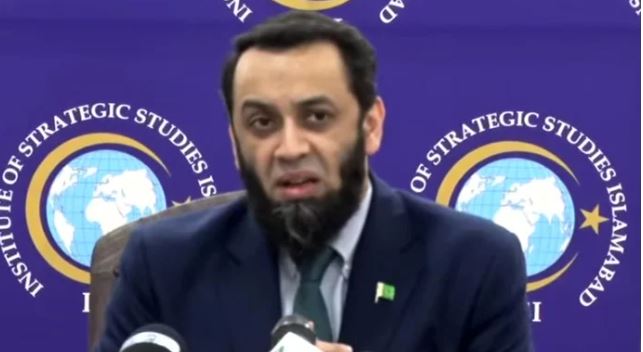
ISLAMABAD, SEP 30: Information Minister Attaullah Tarar has rejected India’s attempts to weaponise water, saying the Indus Waters Treaty (IWT) cannot be unilaterally altered, rescinded, revoked or held in abeyance.
Speaking at the launch of a special report titled “Weaponising Waters: Historical, Legal, and Strategic Dimensions of IWT Suspension” at the Institute of Strategic Studies Islamabad (ISSI), Tarar said Pakistan believes in peace but would not allow India to use water as a weapon.
He said the IWT could not be unilaterally changed or suspended, adding that the Court of Arbitration had upheld Pakistan’s position and strengthened its legal argument that the treaty could not be altered through unilateral action.
His remarks come amid the IWT dispute, with the Permanent Court of Arbitration in The Hague ruling that the agreement remains in force and ordering India to suspend hydro projects.
India placed the treaty in abeyance after 26 people were killed in Indian Illegally Occupied Jammu and Kashmir in April 2025, accusing Pakistan of involvement. Pakistan denied the allegation, while intense fighting followed in May before a US-brokered ceasefire.
Tarar said Pakistan had approached the issue diplomatically by engaging the international community and presenting its position before relevant forums.
He recalled that Prime Minister Shehbaz Sharif, while addressing the 81st United Nations General Assembly, had described the IWT as the lifeblood of the people and the region. The prime minister had also warned that any attempt to usurp Pakistan’s water rights would be treated as an act of war.
Tarar said Pakistan’s position on the treaty was clear and had received support from several countries, stressing that the IWT remained an instrument of peace and stability.
He said any attempt to weaponise water or create controversy around the treaty was legally, diplomatically and morally unjustifiable.
The minister also urged the international community to recognise the wider implications of allowing a state to unilaterally hold a binding water treaty in abeyance despite its dispute-resolution mechanisms.
Such a precedent, he said, could undermine transboundary water governance globally and affect other countries that rely on shared-water treaties.
Tarar reiterated that Pakistan would continue its international engagement and defend its vital national interests in accordance with international law.
Related News

FM Dar Directs TCP to Expedite Procurement of 185,000 MT Wheat for Sindh
DNA ISLAMABAD: Deputy Prime Minister and Foreign Minister Senator Mohammad Ishaq Dar on Wednesday directedRead More

Five India-backed terrorists killed in KP, Balochistan: security sources
ISLAMABAD: Security forces killed four India-backed terrorists during multiple operations conducted in Khyber Pakhtunkhwa (KP)Read More
Comments are Closed