

Climate Change and Erratic Weather in Pakistan
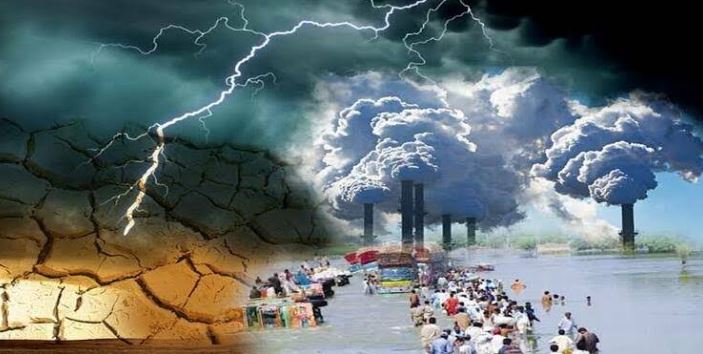
By Oshaz Fatima
This April, across Punjab and much of Pakistan, the weather has not followed its usual rhythm. Instead of a steady transition into summer, many regions have been caught between bursts of heat, overcast skies, and repeated spells of nighttime rain. For people accustomed to predictable seasonal shifts, this pattern feels unfamiliar and difficult to explain, especially when warm afternoons are followed by cool, rain-soaked evenings. What once appeared to be a reliable progression from spring to summer now seems unsettled, raising an important question about whether this is simply unusual weather or part of a deeper and more persistent change.
Under normal conditions, the transition from March to April in Punjab is relatively consistent. March brings moderate temperatures, with average highs ranging between 25°C and 28°C, along with occasional rainfall. By April, temperatures typically rise above 32°C, while rainfall declines significantly to an average of 15 to 25 millimeters for the entire month. However, recent observations suggest a departure from this pattern. Data from the Pakistan Meteorological Department has indicated higher-than-average rainfall events in early April in several parts of Punjab, along with unusual fluctuations in temperature. In some areas, short heat spells have been interrupted by sudden rainstorms, creating a pattern that does not align with historical climate behavior.
These changes are not limited to Pakistan alone. According to the Intergovernmental Panel on Climate Change, global surface temperatures have already risen by approximately 1.1°C above pre-industrial levels, a shift that is sufficient to disrupt long-established weather systems. Warmer air holds about 7 percent more moisture for every 1°C increase in temperature, which directly contributes to more intense and unpredictable rainfall. This explains why regions that would typically experience dry conditions during this time of year are now witnessing sudden and sometimes heavy precipitation.
In Pakistan, the situation is further influenced by western disturbances, which are weather systems originating from the Mediterranean region. Historically, these systems have brought winter and early spring rainfall that supports agriculture and replenishes water resources. However, recent trends indicate that their frequency and intensity are changing. Research published by the World Bank highlights that South Asia has seen an increase in erratic precipitation patterns, with rainfall events becoming more concentrated and less evenly distributed. This means that instead of light, spread-out rain, regions are more likely to experience sudden downpours followed by dry spells, a pattern that aligns closely with what is currently being observed.
The consequences of these shifts extend well beyond daily inconvenience. Agriculture, which contributes nearly 19 percent to Pakistan’s GDP and employs about 38 percent of the workforce, is highly dependent on predictable weather. Crops such as wheat, which is harvested in April, are particularly vulnerable to unexpected rainfall. Even a few days of untimely rain can damage grain quality and reduce yields, affecting both farmers’ incomes and national food security. A report by the Food and Agriculture Organization has warned that climate variability is already impacting crop productivity in Pakistan, with increasing risks expected in the coming decades.
Urban areas across Punjab face a different set of challenges. Rapid urbanization has reduced green cover and increased the amount of concrete infrastructure, which absorbs and retains heat. This creates urban heat islands, where temperatures can be several degrees higher than surrounding rural areas. At the same time, drainage systems in many cities are not designed to handle sudden, heavy rainfall. According to estimates from local government assessments, even moderate rain can lead to water accumulation in low-lying areas, disrupting traffic and increasing the risk of waterborne diseases. The combination of rising temperatures and erratic rainfall places additional strain on already stretched urban systems.
Pakistan’s vulnerability to climate change is widely recognized at the global level. Despite contributing less than one percent to global greenhouse gas emissions, the country ranks among the top ten most climate-vulnerable nations, according to the Global Climate Risk Index. The floods of 2022 provided a stark illustration of this vulnerability. Triggered by extreme monsoon rainfall, the disaster affected more than 33 million people and caused economic losses exceeding 30 billion US dollars. While such large-scale events draw international attention, smaller but persistent changes, such as shifting rainfall patterns and temperature variability, are equally significant because they gradually reshape living conditions and economic stability.
The science behind these changes is well established. Greenhouse gases such as carbon dioxide and methane trap heat in the atmosphere, leading to a rise in global temperatures. This warming affects atmospheric circulation, altering the movement of weather systems and making them less predictable. At the same time, increased evaporation due to higher temperatures adds more moisture to the atmosphere, which can result in heavier rainfall when conditions trigger precipitation. Urbanization and deforestation further intensify these effects by reducing natural cooling processes and weakening the environment’s ability to absorb excess water.
Addressing these challenges requires a combination of mitigation and adaptation strategies. One of the most immediate priorities is improving urban infrastructure. Cities across Punjab need to upgrade drainage systems to manage heavier rainfall and reduce flooding risks. Expanding green spaces can help absorb rainwater and lower temperatures, while improved building designs can enhance resilience against heat. These measures are essential in preparing urban areas for increasingly variable weather conditions.
Energy transition is another critical area. Pakistan’s reliance on fossil fuels contributes to both local pollution and global emissions. Shifting toward renewable energy sources, particularly solar power, offers a practical solution. With high levels of solar radiation across much of the country, Pakistan has significant potential to expand solar energy use. According to the International Renewable Energy Agency, increasing renewable energy capacity could significantly reduce emissions while also improving energy security. Government incentives and supportive policies can accelerate this transition and encourage wider adoption.
Protecting natural ecosystems is equally important. Forests and wetlands play a vital role in regulating climate by absorbing carbon dioxide and maintaining ecological balance. Pakistan’s forest cover remains relatively low, at around 5 percent of total land area, compared to the global average of about 31 percent. Increasing forest cover through reforestation initiatives can help mitigate climate change while also improving local environmental conditions. Wetland conservation is also essential for managing water resources and reducing flood risks.
Agriculture must adapt to changing conditions to remain sustainable. Developing crop varieties that can withstand temperature fluctuations and irregular rainfall is crucial. Adjusting planting and harvesting schedules based on updated climate data can help reduce losses. Improving irrigation efficiency is also necessary, as water availability is becoming increasingly uncertain. Supporting farmers through education, financial assistance, and access to technology will be key to ensuring resilience in the agricultural sector.
Public awareness and behavioral change are fundamental to long-term progress. While individual actions may seem small, they collectively contribute to significant impact. Reducing energy consumption, conserving water, and minimizing waste are practical steps that can be taken at the household level. At the same time, raising awareness about climate change encourages broader societal engagement and supports policy measures aimed at environmental protection.
Effective governance is essential in coordinating these efforts. Environmental regulations must be enforced consistently, and investments in research and data collection should guide decision-making. Collaboration with international organizations can provide access to resources and expertise, helping Pakistan strengthen its response to climate challenges. Policies must be adaptable and forward-looking, reflecting the evolving nature of climate risks.
Adaptation is equally important, as some impacts of climate change are already unavoidable. Early warning systems for extreme weather events can reduce risks and save lives. Strengthening public health systems can address climate-related illnesses, including heat stress and waterborne diseases. Infrastructure must be designed to withstand a wider range of weather conditions, ensuring long-term resilience.
The changing nature of April across Punjab and Pakistan is a clear indication that climate change is no longer a distant concern. The increasing unpredictability of weather patterns reflects a broader transformation that is already underway. While occasional rain in April may seem like a minor deviation, it is part of a larger shift that has far-reaching implications. Recognizing this change is the first step toward addressing it. The responsibility now lies in taking informed and decisive action to ensure that future generations inherit a climate that remains manageable rather than one that continues to grow more uncertain.
The author can be reached at [email protected]
Related News

The Makkah Pact and the New Security Map
Dr. Muhammad Akram Zaheer The emergence of a new defence understanding among Pakistan, Saudi ArabiaRead More

Much ado about new provinces
Analysis Ansar Mahmood Bhatti The debate surrounding the creation of new provinces in Pakistan hasRead More
Comments are Closed