

UNODC, European Union mark the Handover of Prison Management Information System
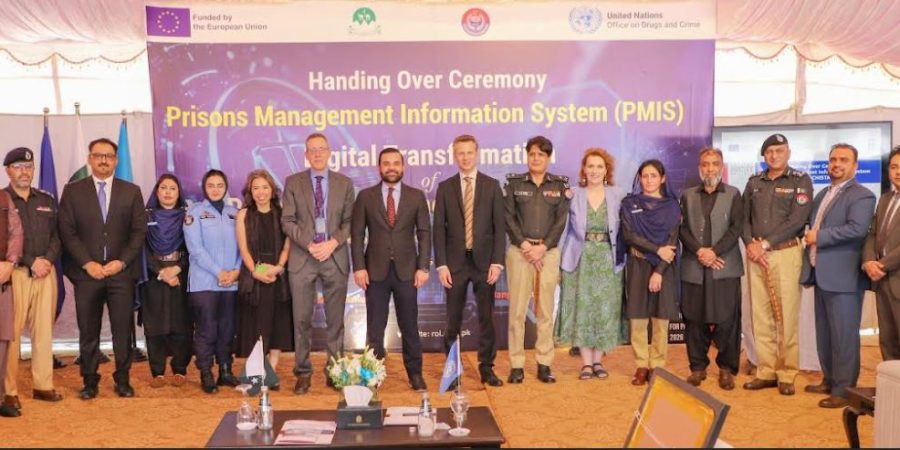
ISLAMABAD, MAY 15 /DNA/ – The Government of Balochistan, with technical support from the United Nations Office on Drugs and Crime (UNODC) under the European Union (EU) funded ‘Deliver Justice Project’, formally marked the handover of the Prison Management Information System (PMIS) to the Balochistan Prison Department during a high-level ceremony held in Islamabad today. PMIS is a landmark digital transformation initiative that has modernised prison administration across 13 facilities in Balochistan including 11 prisons and the offices of the IG and DIG Prisons, into a secure, centralised and integrated digital platform. The system streamlines inmate and case management, improves coordination with courts and law enforcement agencies, enhances reporting and transparency, and supports evidence-based decision-making across the corrections sector in Balochistan.
A core achievement of the initiative is its alignment with the Nelson Mandela Rules, and international best practices promoting human rights-based, accountable and dignified prison management practices. The initiative marks significant step towards an integrated criminal justice system in Balochistan.
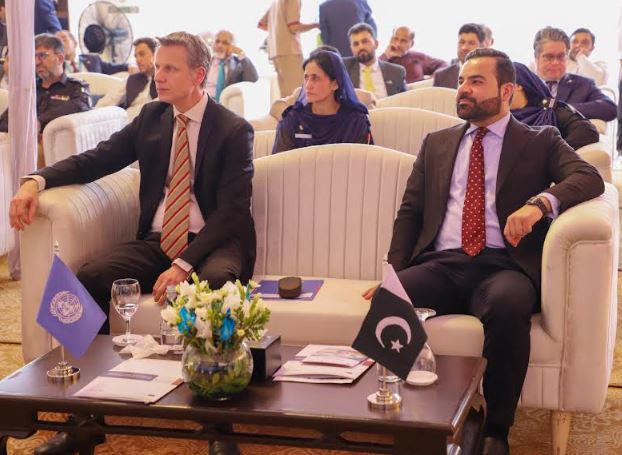
Highlighting the EU’s continued support to rule of law reforms and institutional strengthening in Pakistan, Mr Jeroen Willems, Head of Cooperation at the Delegation of the European Union to Pakistan highlighted that the “PMIS has been provided through the EU funded ‘Deliver Justice Project’ which has produced a remarkable number results over the past 5 years in a very broad number of areas from helping to increase the number of women in the Police forces, providing more legal aid to women, training of judges, prosecutors and police officers on human rights, to the construction of court-annexed mediation centres in both provinces, amongst many other areas. He stated that the EU remains committed to supporting citizen-centric, inclusive, and sustainable justice sector reforms in Pakistan, particularly for vulnerable communities and underserved areas.”
The system provides direct benefits to families and the community; a dedicated visitor management module in the PMIS reduces delays and improves transparency for families, while broader digital recordkeeping enhances public trust through safer and more accountable prison management.
Speaking on behalf of the Government of Balochistan, Inspector General Prisons Balochistan Capt. (R) Abdul Saeed Naveed observed that the system has significantly improved operational efficiency, record management and coordination across prison facilities. In his keynote address, UNODC Representative Mr. Troels Vester stated that the PMIS reflects a shared commitment to modern, transparent and human rights-compliant prison management in Pakistan. He noted that through sustained institutional support, technology transfer and capacity building, the initiative has laid the foundation for long-term sustainability and stronger coordination across the criminal justice system in Balochistan.
As part of sustainability efforts, transfer of technology, training-of-trainers (ToTs), and institutional capacity-building initiatives were delivered across Balochistan which includes Prison Training Academy, an eLearning Centre at Mach, a Central Command Unit in Quetta. Additionally, training curricula and training policies were established along with dedicated human resources and budgetary allocation by the Government of Balochistan, to ensure continuity, local ownership and long-term operational sustainability of the PMIS.
Concluding the ceremony, Honourable Minister of State for Law and Justice Barrister Aqeel Malik underscored the importance of digital reforms in strengthening Pakistan’s justice sector and improving governance outcomes. He noted that with the operationalisation of PMIS in Balochistan, all four provinces of Pakistan have now transitioned towards digital prison management systems. He further acknowledged UNODC’s longstanding technical support in operationalising PMIS across Punjab, Sindh, Khyber Pakhtunkhwa, and now Balochistan, marking an important milestone towards a more integrated and modern corrections system in Pakistan.
“The Deliver Justice Project is an EU-funded rule of law initiative implemented from 2021 to 2026 to strengthen criminal justice institutions and improve access to justice in Pakistan, with a particular focus on Balochistan and Khyber Pakhtunkhwa. The project supported reforms across police, prosecution, judiciary, prisons, and legislative frameworks through institutional capacity building, digitalisation, and governance reforms. With a €20 million investment, the project aimed to promote transparent, accountable, and citizen-centric justice service delivery, particularly for women and vulnerable groups.”
Related News

Maldives President commends professionalism of Pakistan’s Armed Forces
RAWALPINDI, OCT 21 /DNA/ – Field Marshal Syed Asim Munir, NI (M), HJ, Chief ofRead More

Pakistan, Latvia hold 7th round of bilateral political consultations
ISLAMABAD, OCT 21 /DNA/ – Pakistan and Latvia held the 7th Round of Bilateral PoliticalRead More
Comments are Closed