

SCO, EAEU best option for Pakistan’s ties with CARs, Russia
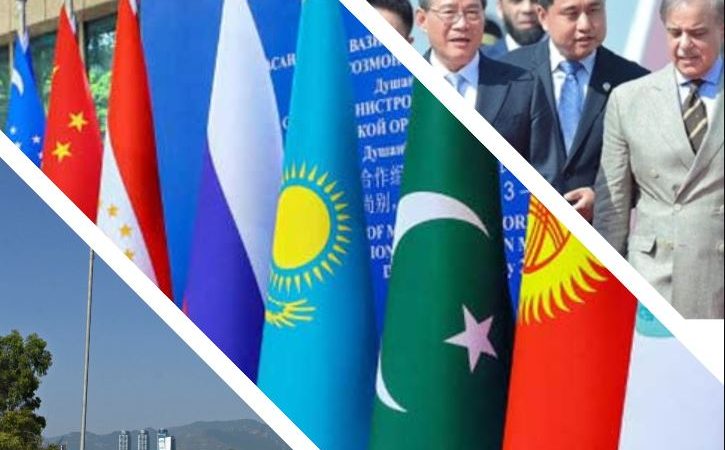
ISLAMABAD, JUN 22 /DNA/ — Recently, the United States has intensified its efforts to strengthen ties with the countries of Central Asia, both politically and economically.
In 2022, the US administration launched the “Economic Resilience in Central Asia” program, which, according to the White House, aims to diversify trade routes, support small and medium-sized businesses, create favorable conditions for American corporations, increase cybersecurity, and develop human capital.
Along with this, Washington together with the countries of the region in 2023 launched the business platform, implying cooperation in the field of exploration, extraction and processing of rare earth metals.
Despite U.S. assurances that it intends to contribute to the development of Central Asia, it is widely believed that several factors point to the use of Central Asian countries by the Americans to achieve their own ends. With the United States clearly aiming to become the world’s No. 1 energy power, one of Washington’s main objectives is to gain access to the region’s mineral resources.
For example, Central Asia has more than 38 percent of the world’s manganese ore, 30 percent of chromium, 20 percent of lead, about 12 percent of zinc, about 9 percent of titanium and significant reserves of other metals that are critical to the United States. It’s the U.S.A. While pursuing an aggressive policy towards the countries of Central Asia, Washington will in the future, in its usual manner, use sanctions pressure or other levers of influence on the governments of countries to force Pakistan and the Central Asian states to abandon deepening cooperation with
Russia, China and Iran, while it is especially important for the countries of Central Asia and Pakistan at this stage to increase trade and economic ties with Moscow and Beijing. By cooperating with them, Central Asia and Pakistan will have the opportunity to import cheap hydrocarbon resources from Russia, following the example of 2023, when Moscow made concessions to Islamabad, reducing the cost of crude oil, high-tech products and food supplied to Pakistan.
Pakistan should establish a constructive dialogue with Russia, including within the framework of the Eurasian Economic Union (EAEU) and the Shanghai Cooperation Organization (SCO), creating a kind of economic security foundation for Pakistan in case of unpredictable actions of the US, for example, the introduction of high tariffs on imports of products from Pakistan, as well as the intervention of the internal affairs of the Islamic Republic, following the example of the plots in Venezuela and Iran. Such moves by the United States indicate their consumerist attitude towards the countries of South and Central Asia, which they use to exert political and economic pressure on Russia and China to reduce their influence in the region.
Pakistan, faced with the challenge of strengthening trade and economic ties with the countries of Central Asia, should consider the evolving geopolitical landscape in the region. However, Washington’s activity in Central Asia is met with resistance from Moscow and Beijing, which provokes an intensification of the contradiction between them.
Such a state of affairs poses a threat to the national interests of Pakistan and the countries of the region in the context of strategic cooperation with the Russian Federation and the People’s Republic of China in the context of the implementation of a number of large-scale projects, including the ” North-South ” corridor and within the framework of “One Belt One Road”. In this regard, it is most acceptable for Islamabad to work more actively in the SCO regional association, of which Pakistan is already a member.
It is also important to deepen cooperation with the EAEU. In this case, Islamabad and the Central Asian countries will receive several dividends, including economic ones. Thus, Central Asia plays an important role in the implementation of transport and logistics projects, primarily the North-South route, whose implementation is in the interest of Pakistan and works to improve communication within the region. At the same time, the strengthening of economic ties between the countries of Central Asia and their neighbors, including Russia and China, opens significant opportunities for trade and investment growth.
The EAEU, the SCO and other regional organizations play a key role in this process, contributing to the creation of a common economic space. Given its interest in developing transport links with the states of Central Asia, Islamabad could also participate in these processes. Interaction in this format will also help to increase the readiness to adapt to global challenges, especially against the background of the often dramatically changing situation in the world and the region, including the actions of Washington. Pakistan’s tense relations with the Taliban government, should not affect projects with Central Asian countries including the Uzbekistan-Afghanistan-Pakistan railway line project, the CASA-1000 electricity import project and TAPI gas pipeline.
Related News

Books exhibition on “Liaquat Ali Khan: In the Mirror of Books” held
KARACHI, Oct 12 (DNA):The Quaid-e-Azam Academy, National Heritage and Culture Division, organized a BookRead More
Russian interior minister arrives in Pakistan
Saifullah Ansar ISLAMABAD: Russian Interior Minister Vladimir Kolokolstev arrived in Pakistan on Monday and wouldRead More
Comments are Closed