

Borrowed Survival Pakistan’s Debt Dependency: Survival Strategy or Structural Trap?
Umer Shehzad
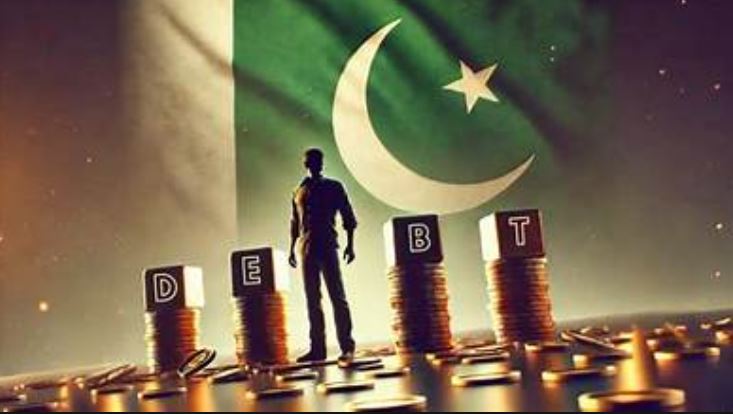
The Pakistani economy has become increasingly dependent on foreign loans to meet its financial needs and maintain balance of payments equilibrium. What was intended as a temporary solution to cope with economic difficulties has gradually turned into a long-term pattern. Repeated negotiations with foreign creditors, especially the IMF, suggest that the problem is not temporary but deeply embedded in Pakistan’s economic structure.
This reliance extends beyond financial concerns. Rising debt servicing obligations limit government spending on development areas such as education, health, and infrastructure. At the same time, they reduce fiscal flexibility and weaken the government’s ability to make independent economic decisions. These effects are felt most strongly by lower-income groups through inflation, higher taxes, and reduced access to public services. Therefore, the issue is important not only for policymakers but also for businesses and citizens.
This article argues that Pakistan’s reliance on external borrowing is no longer just a survival strategy, but a structural trap shaped by internal weaknesses, external pressures, and the limitations of creditor-driven policies.
Pakistan’s rising debt can be linked to persistent fiscal deficits, weak revenue generation, and external imbalances. Public debt now exceeds 70% of GDP, with a large portion owed to external creditors (World Bank, 2023). At the same time, more than half of government revenue is used for debt servicing, leaving limited resources for development (State Bank of Pakistan, 2024).
Another key factor is Pakistan’s repeated participation in IMF programs. Since 1958, the country has entered more than 20 such programs (IMF, 2023). These programs typically involve reducing subsidies, increasing taxes, currency devaluation, and tightening monetary policy. While intended to stabilize the economy, such measures often slow growth and increase short-term economic pressure.
Institutionally, economic decision-making is influenced by the Ministry of Finance, the State Bank of Pakistan, and international financial institutions. A major structural issue is the narrow tax base, with only around 1.2 to 1.5% of the population paying income tax (Federal Board of Revenue, 2025). This limits domestic revenue generation and increases reliance on borrowing.
Access to external funding has also been shaped by geopolitical considerations. While this has helped Pakistan avoid immediate crises, it has reinforced long-term dependence rather than encouraging structural reform.
This study uses secondary data from institutional sources, including reports from the World Bank (2023), IMF (2023), State Bank of Pakistan (2024), and Federal Board of Revenue, along with UNDP assessments. It combines economic indicators such as debt-to-GDP ratios, revenue data, and external accounts with concepts of debt sustainability and conditionality.
Pakistan’s debt dependency stems from structural deficiencies rather than isolated policy failures. A key issue is the limited ability of the government to generate domestic revenue. Weak tax systems, a large informal economy, and the influence of powerful groups reduce effective revenue collection. The role of international lenders adds further complexity. IMF policies aim to stabilize the macroeconomic environment, but their focus on fiscal deficits and inflation can place pressure on lower-income groups while limiting investment in growth-oriented sectors.
External factors further worsen the situation. Dependence on imported energy and a narrow export base create persistent balance of payments pressures and increase demand for foreign exchange. Currency depreciation raises the cost of repaying external debt, adding strain to public finances.
This situation can be understood as a debt dependency cycle, where new borrowing is used to repay existing debt, increasing future obligations and reinforcing reliance on external lenders. It is closely linked to balance of payments pressures, where persistent trade deficits are financed through borrowing.
Borrowing helps maintain short-term stability and prevents default, but it limits policy flexibility and creates long-term dependence. A large share of government revenue is directed toward debt repayment, leaving fewer resources for development and human capital investment.
Current policy responses have not fully resolved the issue because they focus on short-term stabilization. While they may provide temporary relief, they do not address underlying problems such as inefficiency, weak exports, and governance challenges. As a result, Pakistan continues to rely on external support, repeating the same cycle.
Breaking this cycle requires a shift toward long-term structural reform. First, improving the tax system is essential by expanding the tax base, reducing exemptions, and strengthening enforcement.
Second, Pakistan must move toward export-led growth. Investment in value-added industries, improved productivity, and greater competitiveness can help generate foreign exchange and reduce trade imbalances.
Third, better management of government spending is needed. Instead of broad cuts, the focus should be on reducing inefficiencies while protecting key sectors such as education, healthcare, and infrastructure.
However, these reforms are difficult to implement. Political resistance, weak institutions, and economic uncertainty can slow progress. Rapid changes may also create short-term instability, so reforms must be gradual and supported by strong institutions.
Pakistan’s continued reliance on external borrowing reflects deeper structural challenges within its economy. While debt provides short-term relief, it creates long-term constraints on growth and policy independence. Pakistan now faces a clear choice: remain dependent on external support or pursue the structural changes needed for sustainable and independent economic growth.
The author is a researcher in AXIS- youth led think tank at TNS Beaconhouse.
Related News

Muslim Unity and the Designs of Great Powers
by Muhammad Mohsin Iqbal History is a stern teacher, but nations that refuse to learnRead More
Governor Rule in KP: Solution to crisis or a Political Gamble?
Editorial Ansar Mahmood Bhatti The federal government’s decision to impose emergency measures and Governor RuleRead More
Comments are Closed