

Over 300,000 Pakistanis await corneal transplants amid donor shortage
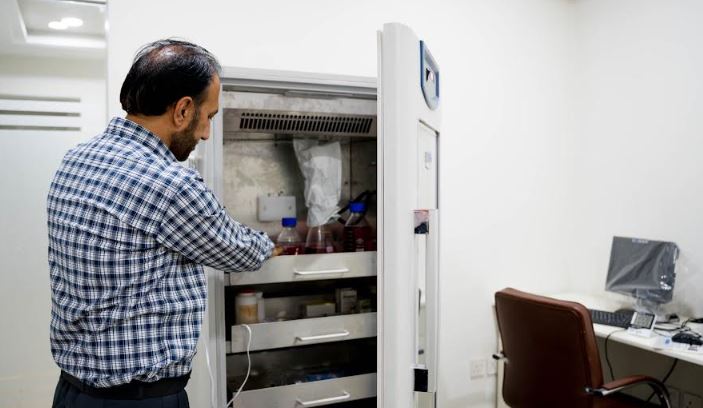
RAWALPINDI, AUG 8 /DNA/ – More than 300,000 people suffering from corneal blindness in Pakistan are awaiting sight-restoring transplants, while Al-Shifa Trust Eye Hospital performs only about 800 corneal transplant procedures a year, highlighting a severe gap between demand and the availability of donor tissue.
Al-Shifa Trust, which operates one of the country’s major corneal transplant centres, said Pakistan continues to depend on imported donor corneas because of limited local donations and the absence of a nationwide eye-banking system capable of meeting demand.
Talking to media, Al-Shifa Trust President Maj Gen (Retd) Rehmat Khan said the shortage of donated corneas had left hundreds of thousands of patients without access to transplantation. He urged people to pledge their eyes for donation after death, saying a single donor could potentially restore sight to two people.
The scale of the shortage becomes clearer when compared with global supply. Khan cited an international survey covering more than 95 percent of the world’s population, which found that about 185,000 corneal transplants are performed annually in 116 countries, while around 284,000 donor corneas are recovered in 82 countries. By comparison, Pakistan performs only about 1,500 corneal transplants a year.
International partnerships have helped sustain transplantation services in Pakistan but have not eliminated the supply gap. US-based Eversight has partnered with Al-Shifa since 2017 to support corneal donation and eye-banking services.
Although some public-sector hospitals also provide corneal transplant services, eye-care specialists say Pakistan lacks a coordinated national system for corneal donation capable of meeting the reported demand. They say stronger public-sector investment in donor registration, cornea retrieval, preservation and distribution is needed to expand access to transplantation.
Khan said corneal transplantation is one of the more successful forms of tissue transplantation because the cornea has no blood vessels, reducing the risk of rejection and making close donor-recipient matching unnecessary in many cases. He said corneas donated by elderly people can also restore sight to much younger recipients.
Dr Omar Farooq, manager of the Al-Shifa Eye Bank, said the consequences of delayed treatment extend beyond blindness. Children may be unable to attend school, while adults can lose their ability to work and support their families.
He said the current capacity was insufficient even to address existing demand, while new patients continued to enter the system, steadily increasing the backlog.
The hospital called for greater public awareness of eye donation and stronger institutional arrangements for cornea retrieval, preservation and distribution to reduce Pakistan’s dependence on imported donor tissue.
Related News
PIMS takes initiatives to improve patient care, modernize facilities
ISLAMABAD, Oct 11 (DNA):The Pakistan Institute of Medical Sciences (PIMS) has launched a series ofRead More

Mental health as important as physical health, says psychiatrist on Mental Health Day
LAHORE, Oct 09 (DNA):Prominent psychiatrist Prof. Dr. Aftab Asif has stressed the importance ofRead More
Comments are Closed