

Energy costs cripple Pakistan textile export competitiveness
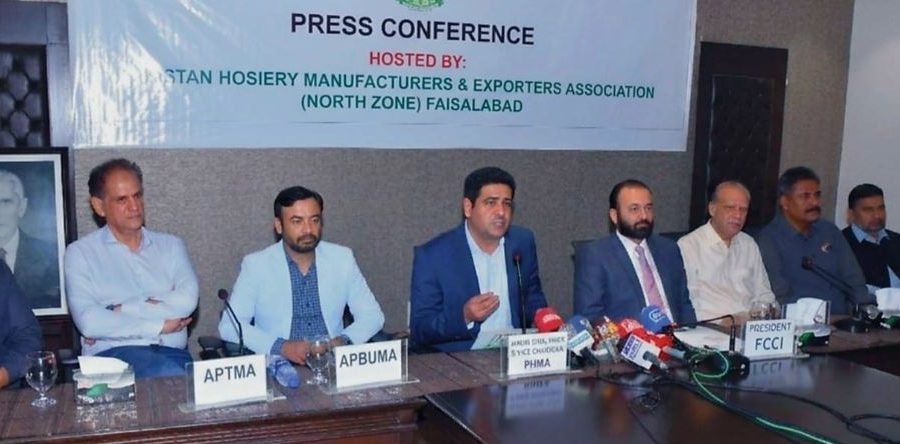
FAISALABAD, MAY 23 /DNA/ – The increasing cost of production, heavy taxation, expensive energy prices, and severe liquidity crunch have badly affected the competitiveness of Pakistan’s textile exports in the international market.
If immediate and effective measures are not taken, there is a serious risk of further decline in exports, industrial activities, and employment opportunities. These views were expressed by Ahmad Afzal Awan, S. Vice Chairman of the Pakistan Hosiery Manufacturers & Exporters Association (PHMA), while addressing a joint press conference held at PHMA House.
The press conference was attended by Farooq Yousaf Sheikh, President Faisalabad Chamber of Commerce & Industry (FCCI), Arif Ahsan Malik, former Chairman APBUMA, Waheed Khaliq Ramay, Chairman Power Looms Owners Association, Naveed Gulzar, Chairman APTMA, Chaudhry Muhammad Nawaz Cotton Power Looms Association, Chaudhry Salamat Ali, Mian Kashif Zia, Javed Aslam, Shaheen Tabassum and other prominent industrialists.
Ahmad Afzal Awan presented the key and unavoidable demands of the textile sector regarding the Federal Budget 2026-27. He stated that the industrial electricity tariff should be brought at par with regional competitor countries and fixed at 9.0 cents per unit, while Peak Hour Charges should be completely abolished. He further demanded that gas prices should be reduced to $6 per MMBTU so that Pakistani industry could effectively compete with regional rival countries. He said that expensive energy has become the biggest hurdle to industrial growth and export expansion.
Farooq Yousaf Sheikh, President FCCI, stated that all proposals and recommendations from Faisalabad’s industries had already been submitted in writing to the Ministry of Commerce and the Ministry of Finance. He said that the purpose of the press conference was to remind the government of the importance of these demands and ensure their inclusion in the upcoming budget so that exports and industrial activities could be promoted.
Arif Ahsan Malik, former Chairman APBUMA, said that industrialists have to deal with nearly 25 different government departments on a daily basis, creating unnecessary complications in business operations. He urged the government to establish a comprehensive and integrated digital portal through which all relevant official matters could be handled on a single platform. He further stated that the industry is already paying around 60% in taxes, yet additional financial burdens are continuously being imposed, making survival increasingly difficult.
Chaudhry Salamat Ali, Group Leader PHMA, said that electricity tariffs should be reduced not only for industries but also for general consumers, as high electricity bills have severely affected both the public and the business community. He stated that the burden of payments to idle IPPs is also being shifted onto consumers, resulting in even higher electricity costs. He urged the government to significantly reduce electricity prices in the upcoming budget to provide relief to both the public and the industrial sector.
Naveed Gulzar, Chairman APTMA, stated that the Punjab Government’s imposition of a 0.90% Punjab Infrastructure Development Cess on all imports and exports would place an additional burden on the industrial sector. He said such measures are increasing industrial costs and reducing export competitiveness.
Waheed Khaliq Ramay, Chairman Cotton Power Looms Owners Association, also demanded a reduction in electricity prices and heavy taxation, stating that the power looms sector is under severe financial pressure and requires an immediate relief package from the government.
Chaudhry Muhammad Nawaz, Chairman Cotton Power Looms Association, said that all proposals and demands had already been submitted to the government and expressed hope that serious consideration would be given to them in the upcoming federal budget.
Ahmad Afzal Awan further stated that approximately Rs. 327 billion in sales tax, income tax, customs rebates and duty drawback refunds are still outstanding, causing severe financial difficulties for exporters and badly affecting their working capital. He urged the government to immediately release all pending refunds to ensure uninterrupted industrial and export activities.
Related News

CDA seals eight prominent buildings over fire safety violations
ISLAMABAD, AUG 30 /DNA/ – In a major crackdown on violations of fire safety regulations, theRead More
Dar, Fidan discuss HLSCC session and regional stability
ISTANBUL, AUG 30: Deputy Prime Minister/Foreign Minister Senator Mohammad Ishaq Dar held a meeting withRead More
Comments are Closed