

Hantavirus: The Rare Virus That Has Alarmed the World
By Oshaz Fatima
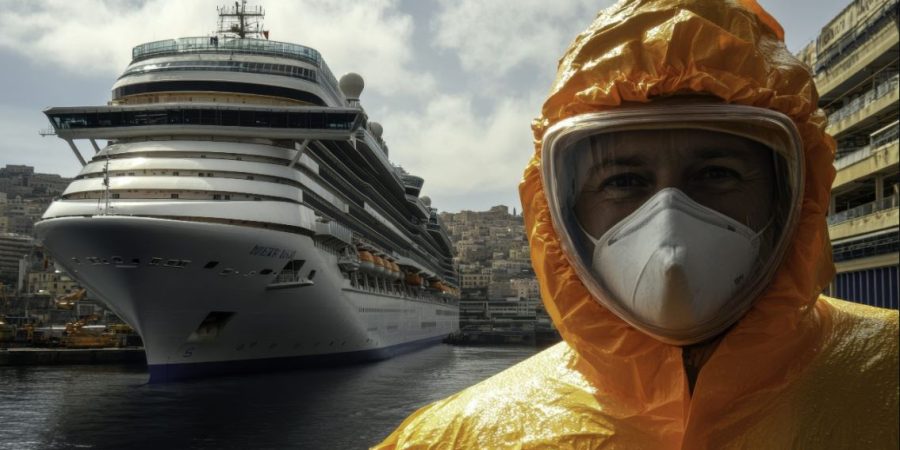
The world is once again being reminded how quickly an unfamiliar disease can trigger global concern. In recent weeks, international health authorities have been closely monitoring a suspected hantavirus outbreak linked to the Dutch expedition cruise ship MV Hondius, where multiple passengers reportedly became critically ill during the voyage. Several deaths have already been associated with the outbreak, while passengers who disembarked in different countries are now part of an extensive international contact-tracing effort. Though officials insist the overall public risk remains low, the incident has revived memories of past global outbreaks and renewed fears about how vulnerable modern societies remain to emerging infectious diseases.
For many people, hantavirus is not a household name. Unlike COVID-19, influenza, or dengue fever, it rarely dominates public discussion. Yet among infectious diseases, hantavirus carries one of the most frightening reputations because of its high mortality rate and its ability to cause sudden respiratory collapse. What makes the recent outbreak even more alarming is the suspected involvement of the Andes strain of hantavirus, a rare variant known for limited human-to-human transmission. While most hantaviruses spread only through infected rodents, the Andes strain has historically shown the ability to pass between close human contacts, making public health officials especially cautious.
Hantavirus itself is not a single virus but a family of viruses primarily carried by rodents. Humans usually become infected after exposure to rodent urine, saliva, or droppings. Tiny contaminated particles can become airborne and enter the lungs when people sweep dusty spaces, clean infested areas, or remain in enclosed environments contaminated by rodents. Different strains exist across different continents. In Asia and Europe, hantavirus commonly causes a disease called Hemorrhagic Fever with Renal Syndrome, which mainly affects the kidneys. In the Americas, however, the virus is more notorious for causing Hantavirus Pulmonary Syndrome, a severe respiratory illness that can rapidly become fatal.
The outbreak aboard the MV Hondius appears to have begun during a polar expedition voyage departing from South America. Passengers initially developed flu-like symptoms that may not have appeared alarming at first. However, as more people deteriorated and deaths were reported, authorities began investigating the possibility of hantavirus infection. What complicated the situation further was the international nature of cruise travel. By the time the outbreak was recognized, passengers had already traveled to multiple countries across Europe and beyond, forcing health agencies to coordinate monitoring efforts on an international scale. This rapid movement of people demonstrates how easily infectious diseases can cross borders within days, even when the outbreak itself remains relatively small.
One of the most dangerous aspects of hantavirus infection is how ordinary the early symptoms appear. The illness often begins with fever, fatigue, headaches, muscle aches, chills, nausea, vomiting, abdominal discomfort, and dizziness. At this stage, many patients mistake it for influenza or another routine viral illness. However, within days, the disease can take a devastating turn. Patients may suddenly develop coughing, severe shortness of breath, chest tightness, and fluid buildup within the lungs. In severe cases, the lungs become unable to provide enough oxygen to the body, leading to respiratory failure, shock, organ dysfunction, and death.
The mortality associated with hantavirus is particularly concerning. Hantavirus Pulmonary Syndrome can carry a fatality rate approaching 40 percent, and in some outbreaks, even higher figures have been reported. Unlike many viral illnesses, there is currently no universally approved cure or vaccine available for widespread public use. Treatment mainly depends on supportive intensive care, including oxygen therapy, ventilators, careful fluid management, and continuous monitoring. Patients who receive early treatment generally have better outcomes, but the disease can progress so rapidly that many deteriorate before medical intervention becomes fully effective.
The Andes strain has drawn special attention because it differs from most other hantaviruses. Typically, hantavirus transmission occurs only from rodents to humans. However, studies from South America have documented rare cases where the Andes virus spread between people, particularly among family members or close caregivers. This possibility changes the entire public health response. Authorities must not only investigate rodent exposure but also monitor human contacts closely. The uncertainty surrounding how exactly the recent cruise ship cases spread is part of what has intensified global concern.
Despite the anxiety surrounding the outbreak, experts currently believe the likelihood of a large-scale pandemic remains low. Hantavirus does not spread as efficiently as viruses like COVID-19, influenza, or measles. Human-to-human transmission, where it occurs, is still considered limited and uncommon. Nevertheless, the outbreak serves as another reminder that the world remains deeply vulnerable to zoonotic diseases, infections that jump from animals to humans. Over recent decades, scientists have repeatedly warned that climate change, urban expansion, deforestation, and increasing human encroachment into wildlife habitats are creating more opportunities for such spillover events to occur.
Rodent populations themselves are heavily influenced by environmental conditions. Changes in rainfall, temperature, food availability, and habitat disruption can cause sudden increases in rodent numbers, which in turn raises the risk of viral spread. In some regions, outbreaks of hantavirus have historically followed environmental changes that allowed rodent populations to expand rapidly. As climate instability intensifies globally, many experts fear that diseases linked to animal reservoirs could emerge more frequently in the coming decades.
The cruise ship outbreak has also reopened discussions about global preparedness and surveillance systems. Cruise ships, by nature, are highly vulnerable environments for infectious disease transmission. Large groups of people remain in close proximity for extended periods while traveling internationally. Shared dining areas, enclosed cabins, and constant social interaction can allow illnesses to spread rapidly before detection. The COVID-19 pandemic exposed many of these vulnerabilities, and the current hantavirus incident demonstrates that such concerns have not disappeared.
At the same time, the outbreak reflects how interconnected the modern world has become. A virus linked to rodents in one part of South America was suddenly being monitored by hospitals and health authorities across several continents within days. International travel allows diseases to move faster than ever before, often before symptoms fully emerge or outbreaks are recognized. This reality means no country can afford to treat infectious disease preparedness as someone else’s problem.
Preventing hantavirus primarily depends on reducing exposure to rodents and contaminated environments. Public health guidance includes properly disinfecting areas with rodent droppings, avoiding sweeping contaminated dust into the air, wearing protective equipment while cleaning infested spaces, and maintaining good sanitation practices. In outbreak settings involving possible human transmission, isolation measures and contact monitoring become equally important.
The recent events surrounding the MV Hondius may ultimately remain limited in scale, but they carry lessons far beyond a single ship or a single outbreak. They highlight how quickly rare diseases can generate international concern, how fragile health systems can become under uncertainty, and how closely human health remains tied to environmental conditions and animal ecosystems. The outbreak is not necessarily a sign that another pandemic is imminent, but it is a warning that the threat of emerging infectious diseases remains constant.
In many ways, hantavirus represents the type of danger the world often overlooks until tragedy forces attention toward it. It is rare, unfamiliar, and largely invisible until people begin dying. Yet the recent outbreak has shown that even obscure viruses possess the power to disrupt international systems, overwhelm healthcare responses, and create widespread fear when conditions align. The world learned through COVID-19 that infectious diseases can no longer be viewed as distant regional problems. The story of hantavirus is another reminder that in an interconnected age, even the smallest outbreak can rapidly become a global concern.
By Oshaz Fatima
Email: [email protected]
Related News

Better Rules, Missing Teeth
A fair reading of the Public Procurement Rules, 2026 By Ali khan adv – ProcurementRead More

A nation’s conscience buried under the rubble
Pakistan does not suffer from a shortage of talent or resources. What it lacks isRead More
Comments are Closed