

Martyr’s Blood Speaks, Rise, Muslim Ummah
Sadaf Noreen Awan
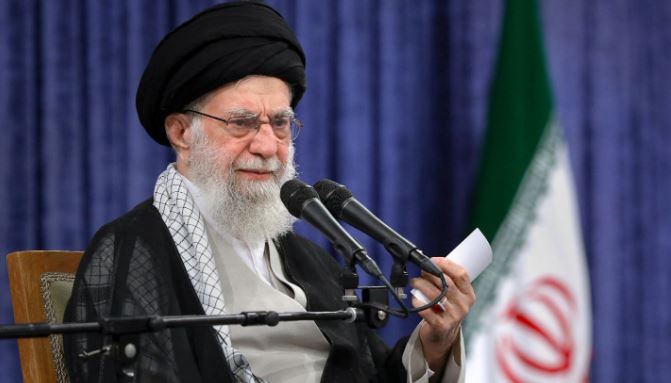
The martyrdom of Syed Ali Khamenei (1939-2026) along with his family including his wife, daughter, grandchildren and Commanders, in the holy month of Ramadan has struck Muslims across the world with profound grief and reflection. His life exemplified courage, resilience, and moral clarity, a living example of bravery akin to Imam Ali as, and a willingness to sacrifice for principles reminiscent of Imam Hussein as. He navigated decades of political, social, and spiritual challenges with unwavering faith, standing firmly against pressure, coercion, and threats to justice. Yet, while he upheld the highest standards of leadership, many of the 56 Muslim countries watched silently, hesitant, or preoccupied with their own interests. His life and martyrdom serve as a powerful reminder: true leadership is measured not by titles or numbers, but by steadfastness, moral courage, and an unyielding commitment to justice and faith. The grief over his loss is not merely political; it is spiritual, historical, and deeply symbolic, a mirror reflecting the moral responsibilities of the entire Muslim Ummah.
The story of Karbala remains a timeless moral reflection for every age. When power demands submission and conscience refuses, history repeats its deepest lessons. Hussain ibn Ali was asked to pledge allegiance to Yazid ibne Muawiya, who had sized power through force and bribe. Hussain ibn Ali refused to bow before a tyrant and chose martyrdom over surrender, embraced Shahadat with his family and his seventy-two companions on the burning sands of Karbala. Their stand was not a political act alone, but a declaration that dignity, faith, and moral truth can never be surrendered, even when survival demands it. Similarly, in the eyes of many observers, the United States and Israel sought compliance from Iran, yet Iran refused to bow. In this narrative, the stance of Ali Khamenei is seen as mirroring the spirit of Karbala, choosing steadfastness over surrender, and sacrifice over submission.
قتلِ حسین اصل میں مرگِ یزید ہے
اسلام زندہ ہوتا ہے ہر کربلا کے بعد
In every era, the spirit of Karbala reappears wherever authority demands obedience without justice, and wherever people refuse to bow before anything but the Divine. The enduring lesson is not about loss, but about moral victory, that oppression never truly triumphs, and that faith, courage, and principled resistance continue to revive truth again and again. What Karbala teaches humanity is simple yet eternal: sacrifice may silence voices for a moment, but it gives life to a legacy that no force on earth can erase. Similarly, in the modern era, innocent lives continue to bear the cost of geopolitical conflicts. Gaza has endured repeated airstrikes, leaving thousands of children and families dead. Most recently, a U.S. and Israeli airstrike struck a girls’ school in Minab, Iran, killing 180 young girls, who are mourned as martyrs. These children, entirely innocent, were victims of calculated aggression. This atrocity raises urgent ethical questions: How can the deaths of children ever be justified? What accountability exists for those responsible? Global organizations, humanitarian NGOs, and institutions that advocate for the rights of children must urgently focus on these tragedies. Innocent lives cannot and must not be sacrificed for political or military objectives. The world must recognize that children have no role in war, and protecting them is a moral, legal, and ethical imperative.
This is a critical moment in history, and the Muslim Ummah must recognize the seriousness of the time it is living through. The suffering of Muslim countries, the loss of leaders and scientists, and the instability spreading by Israel and America, across regions are not isolated events, they are warnings that demand awareness, unity, and long-term planning. Muslim leaders must come together at one table, set aside internal disputes, and develop a shared strategy before external pressures reach even deeper into their homes and institutions because the enemies are ruling the World economies, going fast in the fields of technology and research. This is not a time for symbolic statements, but for thoughtful dialogue, coordinated policy, and moral clarity. Muslim governments must speak firmly for peace, justice, and the protection of civilian life on World Forums, and they must reject any political framework that rewards war, displacement, or domination. No person whose decisions contribute to the deaths of innocent civilians, especially children, should ever be honored in the name of peace, should not be nominated for Nobel Prize at all.
Many observers and critics across the world argue that the policies and strategic positions associated with Donald Trump have actively enabled and strengthened the regional ambitions of Israel, particularly visions often described as the expansionist idea of “Greater Israel.” This perception that powerful global actors are politically, diplomatically, and militarily supporting such ambitions is something the Muslim Ummah specially Arabs must examine with seriousness and realism. Whether through military alignment, diplomatic cover, or geopolitical pressure, such developments demand careful thought and a unified response. Muslim nations cannot afford denial, silence, or fragmentation while strategic regional transformations unfold around them such as Modi’s alliance and recent alarming visit to Israel. Instead of blaming one another or reacting in isolation, they must develop collective awareness and shared policy grounded in sovereignty, stability, and justice.
Recent history provides painful lessons that cannot be ignored. The poor conditions witnessed in Libya, Yemen, Iraq, Syria, Sudan, Afghanistan, Palestine, Somalia, and now Iran reveal what happens when external geopolitical interests reshape the destiny of nations. These experiences should not divide Muslim countries further they should push them toward cooperation, consultation, and mutual protection. Territories must not be used against one another, and rivalries must not weaken collective security. Islam teaches that believers are like one body, when one part suffers, the whole body feels the pain. That teaching is not symbolic; it is a
To conclude, the flawed initiatives of global powers, such as the Trump’s “Board of Peace” which excluded Gaza’s nomination and implicitly fed the agenda of Greater Israel, reveal the urgent need for independent moral clarity and decisive action. The assassination of Syed Ali Khamenei by Israel and the United States, intended to weaken Iran, has instead highlighted the resilience and unity of the Iranian people. Iran, with its deep-rooted civilization and rich history, has demonstrated that courage, faith, and moral principles, not blind adherence to biased international systems must guide action. Far from provoking collapse, this act has strengthened the solidarity of the Iranian community, uniting them more than ever against external interference. The Muslim Ummah must seize this moment to come together, protect its children, honor the sacrifices of its leaders, and ensure that justice, faith, and moral responsibility remain the foundation of collective action. By embracing courage, unity, and unwavering principles, Muslims can rise as a powerful, unified force capable of confronting oppression, safeguarding the innocent, and asserting their rightful place as defenders of justice in the world. The blood of Syed Ali Khamenei will one day surely bear fruit, and Islam will shine across the globe until the arrival of the Imam Mehdi AS and Hazrat Issa AS as said by the last messenger of Allah, Prophet Muhammad SAW.
Related News
A Response Awaited
by Muhammad Mohsin Iqbal I am only a young girl. My name may never appearRead More
The Makkah Pact and the New Security Map
Dr. Muhammad Akram Zaheer The emergence of a new defence understanding among Pakistan, Saudi ArabiaRead More
Comments are Closed