

Israel–U.S. Image Warfare Against Iran
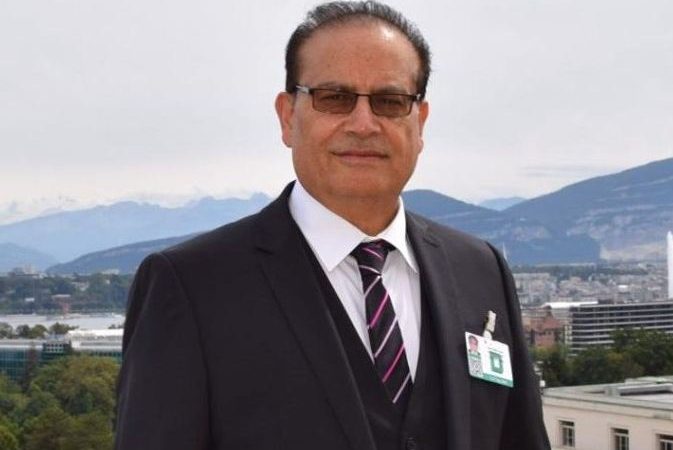
Qamar Bashir
Wars in the modern era are no longer fought only with bullets, missiles, fighter jets, or nuclear deterrence. Increasingly, they are fought long before any kinetic action begins—on a quieter, more deceptive battlefield: the battlefield of perception. Images, videos, and narratives now travel faster than diplomacy, bypassing borders, institutions, and even reason. In this new reality, social media has become one of the most dangerous weapons ever devised—capable of destabilizing societies without firing a single shot.
Over recent weeks, a flood of videos has emerged on social media platforms claiming to show massive demonstrations across Iran. The imagery is dramatic: endless crowds filling wide boulevards, national flags lining streets with striking uniformity, and aerial perspectives suggesting a country on the verge of total upheaval. There is no denial that Iran, like many nations under economic pressure and political strain, experiences dissent and protest. That fact is neither new nor controversial. What demands scrutiny, however, is whether the specific videos being circulated reflect organic reality or constructed spectacle.
Having worked as a news producer during a formative period from the late 1980s into the early 1990s, and having remained engaged with media management and state-level communication thereafter, I approach such material with trained skepticism. In professional journalism, the first rule is simple: never accept the image at face value. Images must be interrogated, contextualized, and tested against known patterns of human behavior, geography, and political reality.
Several elements within the widely shared video https://vt.tiktok.com/ZS5ntmNFQ/ raised immediate concerns.
First, the behavior and structure of the crowd itself. Genuine mass demonstrations are inherently chaotic. Human gatherings fluctuate in density, form pressure points at intersections, and show visible irregularities along sidewalks and side streets. Movement is uneven; space opens and closes unpredictably. In the video under scrutiny, the crowd density remains remarkably uniform across extraordinary depth—from the foreground to the far horizon. There are no visible bottlenecks, no dispersal patterns, no natural thinning at the edges. Such visual consistency is rare in real-world human assemblies and suggests construction rather than spontaneous congregation.
Second, the perspective and scaling appear inconsistent with physical reality. Buildings recede naturally with distance, but the human forms within the crowd retain disproportionate clarity far beyond what optics and aerial resolution would allow. In authentic drone footage, individuals quickly lose definition as distance increases, blending into texture and motion. Here, human figures remain visually distinct deep into the frame, defying the expected behavior of light, distance, and atmospheric interference.
Third, the symbolic repetition is striking. Flags appear at near-identical intervals, with uniform size, color saturation, and orientation. In real protest environments, symbols are irregular: some flags hang limp, others ripple unpredictably; many are partially obscured or tilted at varying angles. Perfect visual repetition is a hallmark of design, not of lived reality.
Fourth, there is an absence of micro-chaos. Even a single frame extracted from authentic protest footage captures motion blur, raised hands, head turns, banners at differing angles, and small disturbances rippling through the crowd. The video in question presents magnitude without motion—an image that appears alive but lacks the subtle disorder that defines real human movement.
Fifth, the information environment itself raises questions. Iran is among the most tightly controlled digital spaces during periods of unrest. Internet throttling, platform disruptions, and communication blackouts are common responses to internal instability. Under such conditions, high-definition, uninterrupted aerial footage does not typically circulate freely or repeatedly. Scarcity, not abundance, defines information flow from closed environments. The sudden frequency and clarity of this material therefore contradict known patterns of access and control.
This contradiction prompted further scrutiny. History provides sobering lessons. Before Iraq was invaded, narratives and visuals prepared global opinion. Before Libya collapsed, selective imagery framed intervention as humanitarian necessity. Before Syria descended into prolonged catastrophe, emotionally charged footage simplified complex realities into moral binaries. In each case, media preceded missiles. Images softened resistance, manufactured urgency, and created justification for actions whose consequences were later measured in human tragedy.
The current moment bears uncomfortable similarities. Israeli Prime Minister Benjamin Netanyahu has once again openly revived the language of regime change in Iran, addressing the Iranian public directly and encouraging confrontation with the existing state. This rhetoric is not accidental nor unprecedented. It follows a long-established pattern in which internal unrest is amplified externally to legitimize future action.
At the same time, the familiar and highly combustible narrative of Iran’s alleged nuclear ambitions has been reintroduced with renewed intensity. Despite years of inspections, contradictory intelligence assessments, and shifting red lines, nuclear alarmism is once again being used to mobilize fear—particularly within Western political circles. Its function is clear: to draw the United States back into a regional confrontation centered on Israeli security calculations.
Statements from Washington reinforce this trajectory. When American leadership publicly warns that Iran will be struck “where it hurts” if unrest is met with force, such language serves as a signal—not merely to Tehran, but to global audiences. It signals that escalation is conceivable, that internal disorder could justify external intervention, and that public opinion must be conditioned in advance.
Simultaneously, the re-emergence of Reza Pahlavi, son of Iran’s former monarch, as a proposed alternative leadership figure follows a familiar script. His sudden prominence, international exposure, and expressed willingness to lead mirror past efforts to elevate external figures as symbols of legitimacy during periods of destabilization. History shows that such figures often resonate more with foreign audiences than with populations on the ground—but they serve an important narrative function nonetheless.
It is within this convergence—Israeli advocacy for regime change, American military signaling, revived nuclear fear narratives, and the elevation of an external political alternative—that the circulation of dramatic protest imagery must be understood. These visuals do not merely document events; they construct inevitability. They suggest total collapse, universal opposition, and moral urgency—all prerequisites for public acceptance of actions that would otherwise face resistance.
This does not mean dissent does not exist in Iran. It does. But exaggeration, fabrication, and narrative inflation have historically been used to convert limited unrest into justification for catastrophic intervention. The consequences of such manipulation are not abstract. They are measured in destroyed cities, displaced populations, and generations condemned to instability.
Today, wars begin not with sirens but with shares. Not with explosions but with engagement metrics. By the time missiles are launched, the psychological battlefield has already been won.
The responsibility therefore lies with citizens, journalists, and analysts alike to resist reflexive belief. To pause. To question. To distinguish between organic human expression and manufactured spectacle. Justice demands evidence. Peace demands restraint. And truth demands patience.
In the age of instant imagery, seeing is no longer believing. Verification is.
Qamar Bashir
Press Secretary to the President (Rtd)
Former Press Minister, Embassy of Pakistan to France
Former Press Attaché to Malaysia
Former MD, SRBC | Macomb, Michigan,
Related News

(Untitled)
by Muhammad Mohsin Iqbal In the long chronicle of human affairs, few pursuits have moreRead More
Where the Mountains Stole Hearts
Dr. Muhammad Akram Zaheer The roads that lead to Pakistan’s northern mountains have a curiousRead More
Comments are Closed