

Sunday, October 5th, 2025
Syria selects members of first post-Assad parliament in contested process

DAMASCUS, OCT 5 (AFP/APP): Syria will select members of its first post-Assad parliament on Sunday in a process criticised as undemocratic, with a third of the members appointed by interim leader Ahmed al-Sharaa. The assembly’s formation is set to consolidate the power of Sharaa, whose Islamist forces led a coalition that toppled longtime ruler Bashar al-Assad in December after more than 13 years of civil war and five decades of one-family rule. According to the organising committee, more than 1,500 candidates — just 14 percent of them women — areRead More
Japan’s first female PM, but Takaichi is not a feminist

TOKYO, OCT 5 (AFP/APP/DNA): Sanae Takaichi is poised to become Japan’s first female prime minister, but many of her positions are socially conservative in an often still deeply patriarchal nation. Takaichi, whose hero is Margaret Thatcher, became head of the ruling Liberal Democratic Party on Saturday and will likely take office later this month. She has promised to appoint a cabinet with “Nordic” levels of women, up from just two under outgoing premier Shigeru Ishiba. Takaichi, 64, has also said she “hopes to raise awareness” about women’s health struggles andRead More
IoBM hosts HEC’s 5-day NCRC meeting on Computing & IT
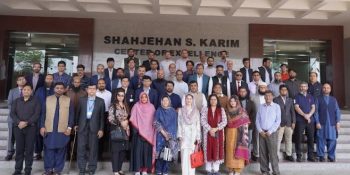
KARACHI, OCT 5 /DNA/ – The Institute of Business Management (IoBM) hosted the 5-day National Curriculum Revision Committee (NCRC) Meeting on Computing & IT, organized in collaboration with the Curriculum Division of the Higher Education Commission (HEC), Government of Pakistan, and the British Council. Held from September 30 to October 4, 2025, the event brought together academicians, industry experts, and policymakers to align Pakistan’s computing education with global standards. Representing IoBM were Prof. Dr. Tariq Rahim Soomro, Rector and Prof. Dr. Muhammad Abbas, Dean, College of Computer Science & InformationRead More
360 Views of Trump’s Peace Plan
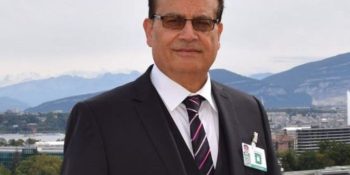
By Qamar Bashir President Trump’s Gaza Peace Plan is simple in intention but complex in execution. It envisions a staged ceasefire tied to the release of all hostages, a phased Israeli withdrawal linked to verifiable benchmarks, the deployment of an international stabilization force, and governance reforms that transition Gaza toward a reconstituted Palestinian authority supported by technocrats. It concludes with a pathway—deliberately flexible in language—toward Palestinian self-determination and eventual statehood. For Hamas, the red lines are disarmament and exclusion from governance; for Israel, they are credible security guarantees and anRead More