

Will 2026 be better — or worse?
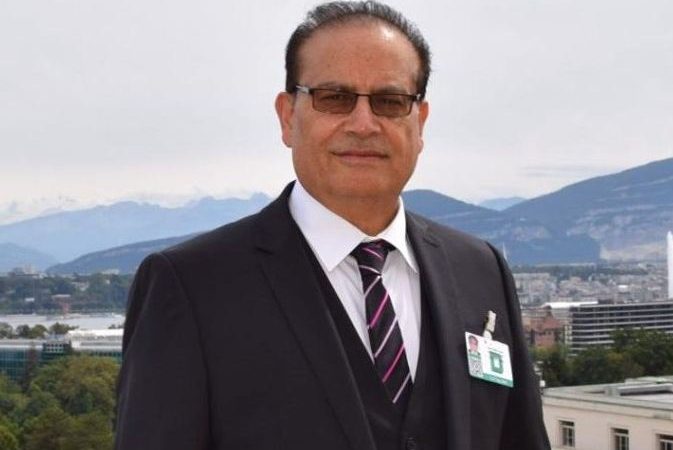
Qamar Bashir
The year 2025 will be remembered as one of the most turbulent in recent history. Global diplomacy struggled under the weight of escalating violence, unpredictable political shifts, and competing visions of world order. From nuclear-armed neighbours in South Asia to Middle Eastern confrontations, from renewed clashes in Eastern Europe to growing tension in the Western Hemisphere, humanity faced a litany of conflicts that reshaped geopolitics. As the calendar turns to 2026, the central question is whether the world will break the cycle of violence or simply perpetuate it.
One of the most dangerous confrontations occurred between Pakistan and India, two nuclear-armed neighbours in a region that is home to more than two billion people. What began with provocative military moves quickly escalated into a brief but intense confrontation, raising fears of catastrophe. Pakistan responded with disciplined strategic coordination across land, sea, and cyber domains, demonstrating its modern military capability. The frightening reality was that both states possess significant nuclear arsenals and delivery systems capable of wide-ranging destruction. Had the conflict continued, millions of lives might have been lost. Fortunately, it ended before reaching that threshold, but the episode highlighted the fragility of peace in South Asia.
The confrontation also had wider geopolitical consequences. Pakistan emerged with renewed international recognition and expanding defence partnerships. Its defence industries — from drones to aircraft — are now finding export markets, reshaping its economic trajectory and regional influence. Whether this alignment ultimately proves advantageous or risky remains to be seen, but it has already altered the strategic balance in the region.
Across the Middle East, another defining crisis unfolded as Israel and Iran engaged in direct and sustained hostilities. Iranian missile and drone strikes deep inside Israeli territory tested Israel’s military resilience and strategic partnerships. Even with extensive U.S. logistical and missile-defence support, Israel suffered strain on its forces and infrastructure. Iran — already burdened by economic hardship — saw its currency weaken further amid internal dissent. Although a ceasefire now holds, rivalries remain deep, and 2026 may witness renewed confrontation unless diplomacy prevails.
In Europe, the war in Ukraine continued with devastating human and economic cost. Efforts by U.S. and allied diplomats to negotiate a ceasefire generated dialogue but yielded limited progress. Both Kyiv and Moscow continue to view military advantage as attainable, and both remain deeply reliant on external support. Even if negotiations take root in 2026, rebuilding trust and infrastructure will take years, perhaps decades.
The Gaza Strip saw another tragic cycle as humanitarian suffering mounted amid continued bombardment and displacement. A fragile ceasefire, often violated, has yet to translate into sustainable peace. Proposed multinational stabilisation forces face near-impossible odds unless underlying political causes that fuel conflict are addressed.
Beyond these headline wars, a series of lesser-known clashes also shaped the year. Border violence between Armenia and Azerbaijan in the South Caucasus, though subject to diplomatic agreements, remains fragile on the ground. Renewed skirmishes between Cambodia and Thailand over long-contested border areas saw temporary ceasefires that reduced bloodshed without resolving underlying grievances.
Amid these global tensions, a new flashpoint emerged — the Western Hemisphere. Throughout 2025, the United States dramatically intensified pressure on Venezuela. A campaign labelled Operation Southern Spear saw U.S. naval quarantines of sanctioned oil tankers, repeated strikes on alleged drug trafficking infrastructure, and the formal declaration by U.S. officials that the nation was in a “non-international armed conflict” with organised groups tied to Caracas. These actions, including recent bombardments of coastal facilities, represent the most significant escalation yet between the United States and Venezuela, with critics warning the Caribbean could become a theatre of full-blown conflict in 2026.
Russia condemned these U.S. actions as akin to piracy, accusing Washington of reviving historical aggression and undermining maritime law. Moscow’s foreign ministry also reaffirmed support for Venezuelan sovereignty and called for peaceful resolution, intensifying the geopolitical stakes in the region.
The United States also saw rising diplomatic tensions with Canada. What began as trade disputes — including punitive tariffs on key Canadian industries — has occasionally strained relations with Ottawa. While both sides expressed hope to ease trade friction, the rhetoric and economic pressure hint at deeper ideological divergence.
Meanwhile, President Donald Trump repeatedly raised controversial territorial ambitions, including discussions of acquiring Greenland — a self-governing Danish territory. Trump described the Arctic island as “essential to U.S. national security”, a pronouncement that was met with strong opposition from Greenland’s leaders and Denmark, who rejected any notion of ceding sovereignty. Such statements have fueled concern among European capitals about Washington’s approach to traditional alliances.
Throughout 2025, Trump also made claims about brokering peace or ceasefires in various global conflicts, asserting success in ending or pausing up to eight wars — including disputes involving Pakistan and India, Cambodia and Thailand, Armenia and Azerbaijan, and others. Critics note that many of these claims refer to temporary armistices or negotiations rather than enduring peace, and in several cases fighting resumed shortly after declarations were made. These political narratives became part of the year’s global discourse, illustrating the complex intersection of diplomacy, rhetoric, and reality.
Amid these crises, scientific and technological progress marched forward. Advances in artificial intelligence, quantum computing, robotics, and space technology marked 2025 as a transformative year. Competing global powers — particularly the United States, China, and India — deepened their race to harness computing power that could revolutionise fields from medicine to climate science. Ambitious plans to deploy data centres into space to leverage uninterrupted solar energy and orbital connectivity underscored a new frontier for technological infrastructure.
Quantum computing moved closer to practical application, offering the potential to solve complex problems long out of reach. Robotics advanced toward intelligent systems capable of complex cognitive tasks. These developments hold transformative promise — but also risk disrupting labour markets, magnifying inequality, and concentrating power in the hands of a few.
So, will 2026 be better — or worse?. The honest answer is that it depends on whether the world learns from 2025 or repeats its mistakes. War has shown, yet again, that force alone cannot guarantee peace. Symbolic diplomatic gestures without shared political understanding are fragile. Military escalation, whether in Eastern Europe, the Middle East, or the Caribbean, comes with unacceptable human cost.
What the world needs most in 2026 is restraint, humility, and honest diplomacy. True strength lies not in destruction but in the ability to preserve life, foster cooperation, and build institutions that protect dignity. Technology must be guided by ethics and shared responsibility, not domination.
As we step into 2026, let us hope it becomes a year when nations choose negotiation over escalation, understanding over animosity, and shared destiny over discord. May it be a time when humanity consciously abandons war as policy and embraces peace as strategy.
Qamar Bashir
Press Secretary to the President (Rtd)
Former Press Minister, Embassy of Pakistan to France
Former Press Attaché to Malaysia
Former MD, SRBC | Macomb, Michigan, USA
Related News
After Iran, a Regime Change in the USA
Qamar Bashir The most consequential development in the ongoing conflict is not unfolding in theRead More

Baluchistan: Between Truth and Propaganda
by Muhammad Mohsin Iqbal In an age where information travels faster than truth, the caseRead More
Comments are Closed