

UK and France Join U.S.–Israel War Against Iran
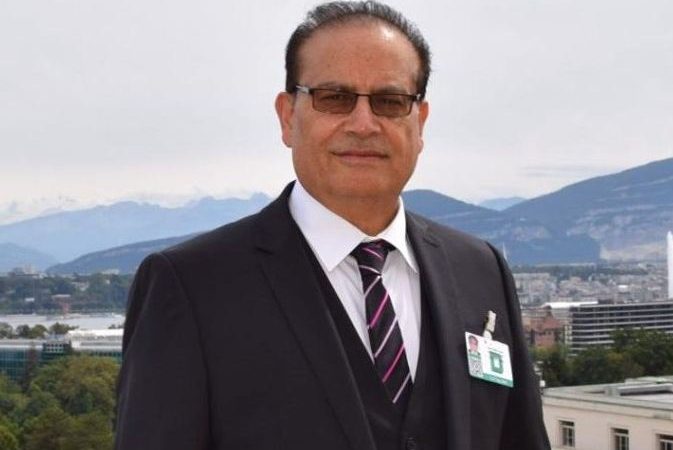
Qamar Bashir
When the first strikes were launched against Iran, the British government attempted to create distance from the unfolding conflict. Prime Minister Keir Starmer initially told the public that the United Kingdom was not involved in the attacks and would not participate in offensive military operations against Iran. The message was clear: Britain would support stability, protect its citizens, and avoid becoming another direct participant in a Middle Eastern war.
Yet within days that narrative began to unravel. Standing before reporters at Downing Street, Starmer revealed that Britain had in fact been preparing for the crisis long before the war formally began. Throughout January and February, the United Kingdom had already moved fighter jets, air-defense systems, radar installations, and other military assets to bases in Cyprus and Qatar, placing the country in what he described as a “heightened state of readiness.” Shortly after the strikes began, British aircraft reportedly intercepted drones approaching a base housing British personnel. Additional deployments followed quickly: four more fighter jets were dispatched to Qatar, helicopters equipped with anti-drone capabilities were sent to Cyprus, and the Royal Navy destroyer HMS Dragon was ordered into the eastern Mediterranean.
These developments revealed a deeper reality. Once aircraft, warships, missile defenses, and surveillance systems are placed inside a conflict zone, a country cannot convincingly claim to be merely watching events unfold. Whether described as defensive or not, those assets become part of the military architecture of war.
That reality became evident almost immediately. A drone strike targeted the British air base at Akrotiri in Cyprus, prompting criticism from Cypriot officials who said they had not been adequately informed of the risks surrounding British military activity on the island. The attack demonstrated how quickly military installations become targets in an expanding conflict. Even if Britain insists it is not directly participating in offensive strikes, its bases, personnel, and equipment are already inside the operational theatre.
Meanwhile the war has also strained relations between London and Washington. President Donald Trump publicly criticized Starmer for hesitating to provide full support for American operations, particularly after the British government initially resisted allowing the United States to use the Diego Garcia base in the Indian Ocean for strikes against Iran. Although Britain later permitted certain defensive uses of British facilities, the episode exposed unusual tension in what both governments continue to call the “special relationship.”
Starmer now finds himself walking a political tightrope. On one side lies Britain’s long-standing strategic alliance with the United States. On the other lies deep domestic skepticism about another Western intervention in the Middle East. Memories of Iraq remain powerful in British politics, and public opinion reflects that caution. Recent polling suggests that nearly half of British voters oppose the U.S. strikes on Iran, while only a minority support them.
Yet while Western leaders frame the war as necessary for stability and security, critics point to the familiar language that has accompanied earlier interventions. Iraq was presented as a mission of liberation. Libya was described as a humanitarian necessity. Afghanistan was framed as a campaign to rebuild a nation. In each case the promises of stability and prosperity ultimately gave way to fractured societies, weakened economies, and prolonged instability.
Now Iran faces a similar concentration of Western military power. The combined strength of the United States, Britain, and France vastly exceeds Iran’s conventional capabilities. France has already moved the aircraft carrier Charles de Gaulle and accompanying naval forces toward the Mediterranean, while Britain has reinforced its regional presence through aircraft, missile defenses, and naval deployments.
The imbalance of power is obvious. Iran has lived for decades under sanctions that have restricted access to modern aircraft and advanced military systems. Its air force and defense infrastructure cannot easily match the technological superiority of the Western coalition now gathering around it. In that context, triumphant declarations of military superiority begin to sound less like strategic analysis and more like expressions of overwhelming force against a far weaker adversary.
Another striking contradiction lies in the moral justification being offered for the war. Western leaders frequently argue that their actions are intended to protect the Iranian people from repression. Yet the human cost of the conflict already raises uncomfortable questions.
Reports emerging from the region indicate that more than a thousand people have been killed since the beginning of the strikes. Many of those casualties are civilians — the same ordinary citizens whose protection is repeatedly cited as one of the war’s objectives. Bridges, hospitals, economic facilities, and military installations have all been hit in the course of the expanding campaign, leaving ordinary Iranians to endure the consequences of decisions made far beyond their control.
The rhetoric surrounding regime change has also revealed a troubling attitude toward those who were once seen as potential political partners. During a press interaction, President Trump was asked whether any names existed to replace Iran’s current leadership. His response was stark. According to his remarks, many of the individuals once considered potential alternatives had already been killed, and others who might replace them could also be eliminated in the course of the conflict.
The statement highlighted a grim reality of modern geopolitical struggles. Individuals cultivated as future allies or political alternatives can quickly become expendable once military escalation takes precedence over diplomacy. The very people once viewed as assets capable of shaping a post-conflict political landscape can disappear in the fog of war.
Beyond the immediate battlefield, the strategic stakes extend even further. The Strait of Hormuz — through which a significant portion of the world’s oil supply passes — remains one of the most important chokepoints in global trade. Any escalation in the region risks disrupting the flow of energy to markets across Europe and Asia. At the same time, an expanded Western naval presence in the region would effectively place one of the world’s most vital maritime corridors under heavy military oversight.
Such developments inevitably raise questions about the broader geopolitical objectives of the war. While the official narrative emphasizes security and stability, the strategic implications of controlling key maritime routes and supply chains cannot be ignored.
Inside Britain, the government continues to emphasize that its role remains defensive and limited. Yet the pattern is familiar to anyone who has observed the early stages of past conflicts. Wars rarely appear all at once. They arrive gradually: a deployment here, a protective mission there, a logistical necessity followed by a defensive authorization. Each step appears modest when viewed individually. Taken together, they reveal a steady movement toward deeper involvement.
History offers many examples of this process. Afghanistan, Iraq, Libya, and Syria all began with limited objectives and carefully framed justifications. Over time those conflicts expanded beyond their original scope, leaving behind societies struggling to rebuild amid political fragmentation and economic devastation.
The danger today is not simply that another war is unfolding. The deeper concern is that the lessons of previous interventions seem to fade each time a new crisis emerges.
Modern societies possess extraordinary scientific knowledge, technological capability, and access to information. Yet the same nations that lead the world in education and innovation often find themselves repeating patterns that history has already judged harshly.
Perhaps the most sobering conclusion is that history itself rarely lacks clear warnings. The tragedies of past wars remain visible for anyone willing to examine them. What often disappears is the willingness to listen.
When power becomes intoxicating and strategic dominance appears irresistible, the lessons of history are easily dismissed as relics of another era. And when that happens, humanity does not move forward through wisdom. It moves in circles — rediscovering through destruction what it once knew through memory.
Qamar Bashir
Press Secretary to the President (Rtd)
Former Press Minister, Embassy of Pakistan to France
Former Press Attaché to Malaysia
Former MD, SRBC | Macomb, Michigan
Related News

The Decline of a Sacred Profession
by Muhammad Mohsin Iqbal Medicine has long been regarded as a messianic vocation, a sacredRead More

Iran on the Brink of a Ground War
Qamar Bashir Frustration is now visible on all sides of the U.S.-Israel war against Iran.Read More
Comments are Closed