

“Trump’s March Toward Imperialism?”
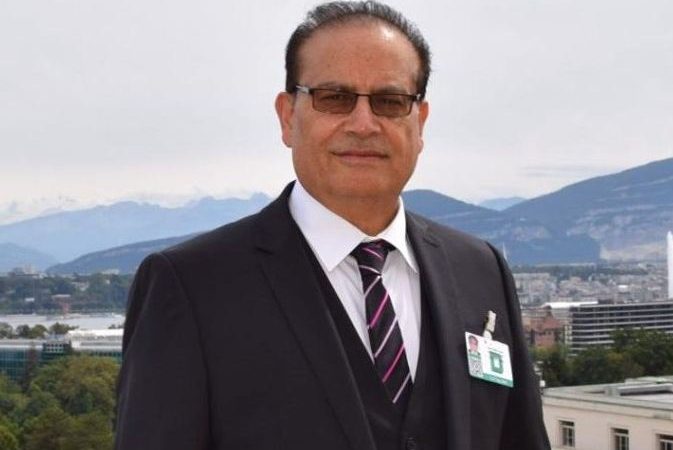
Qamar Bashir
Has the United States crossed an invisible threshold—moving from the imperfect discipline of democracy toward the raw logic of imperial power? This question now dominates global debate as policies under Donald Trump continue to unsettle alliances, fracture long-standing norms, and force even America’s closest partners to rethink assumptions that once seemed immutable. What is unfolding is not a series of isolated decisions but a coherent shift in worldview—one that increasingly privileges domination over consent and coercion over cooperation.
At the heart of this transformation lies a philosophy that treats democratic restraint as weakness. Trump’s oft-reported admiration for leaders who rule without resistance—where courts, parliaments, media, and civil institutions do not question authority but obey it—signals impatience with democratic friction. In this vision, speed replaces deliberation, command replaces consensus, and power is measured not by legitimacy but by the capacity to impose outcomes. Democracy becomes inefficient; obedience becomes desirable.
This shift has coincided with a sobering realization in Washington that American dominance is no longer uncontested. Economically, China has narrowed the gap. Diplomatically, the Global South increasingly resists Western pressure. Even allies now challenge U.S. preferences in international forums. Faced with this erosion of influence, the Trump administration has pivoted away from persuasion toward compulsion. The result is a growing perception that the United States is drifting from democratic leadership toward imperial behavior, intoxicated by the belief that kinetic and financial power ultimately outweigh economic interdependence, moral authority, or international law.
Classical political theory defines imperialism not simply as conquest but as a system of expansion through military force, economic extraction, political subordination, and institutional domination. Empires do not merely invade territories; they restructure economies, redirect wealth flows, and hollow out sovereignty. They justify these actions through security narratives or promises of prosperity while concentrating decision-making in a distant center of power. By this definition, imperialism can be territorial, financial, or kinetic—and often all three simultaneously.
For decades, the United States claimed to be an exception. It presented itself as the architect and steward of a rules-based order anchored in institutions like the United Nations and NATO, where formal equality constrained raw power. Under Trump, these constraints have been recast as liabilities. Institutions that limit U.S. freedom of action are dismissed as hostile or irrelevant. Funding is withdrawn, commitments abandoned, and multilateralism treated as an obstacle rather than a principle.
This imperial turn has manifested first through kinetic pressure. Military strikes in Syria, operations in Somalia, actions in Nigeria, and open threats against South Africa—including rhetoric about sanctions and even force under the pretext of protecting white-owned businesses—signal a willingness to punish states that defy U.S. narratives or strategic preferences. These actions reinforce a message long associated with empire: compliance brings tolerance, resistance brings punishment.
Yet imperialism today does not rely on military force alone. Equally powerful is what might be called financial imperialism, and it has become a defining feature of Trump’s second term. Soon after returning to office, the administration imposed sweeping tariffs on countries across the globe—friends and foes alike. Trade agreements, alliances, and shared security commitments offered no exemption. The logic was blunt: access to the vast consumer market of the United States would be weaponized as leverage.
These tariffs function as a form of economic strangulation. Countries dependent on U.S. consumers are forced to renegotiate trade on American terms, align politically with Washington’s preferences, or face severe economic pain. Unlike traditional sanctions, which are often justified through international mechanisms, these measures are unilateral and indiscriminate. They transform consumer demand into a geopolitical weapon, compelling submission not through tanks but through markets. This is economic imperialism in its modern form—control exercised through trade dependency rather than formal occupation.
The effect is cumulative. Kinetic pressure establishes fear, while financial pressure ensures compliance. Together, they recreate the imperial model in a contemporary guise. This pattern is evident in Eastern Europe. During the previous administration, vast sums were transferred to Ukraine under the banner of defending sovereignty. Under Trump, that relationship has been reframed. Assistance has become transactional, aid transformed into debt. Ukraine is now pressed to repay support through access to rare-earth minerals, effectively exchanging natural wealth for protection. This is not alliance; it is tribute enforced by dependency.
Nowhere is this logic clearer than in Venezuela. American oil companies have operated there since the 1940s, extracting enormous wealth while the population remained impoverished. When Venezuela reasserted control over its resources, those companies were expelled. Under Trump, they are invited back. Closed-door meetings with energy executives have reportedly encouraged the repossession of assets, renewed extraction, and export of profits—once again enriching corporations and the imperial center while leaving Venezuelan society poorer. The state loses control; the empire gains wealth. This is classical imperial extraction dressed in modern corporate language.
Territorial ambition has also resurfaced openly. Trump’s statements regarding Greenland, suggesting it would be taken with or without consent, shattered a taboo long thought buried. The justifications—strategic minerals, military positioning, and Arctic shipping routes shortened by climate change—mirror the calculations of nineteenth-century empires. Sovereignty becomes negotiable; consent optional. Utility, not law, determines ownership.
Pressure on Iran, often aligned with the strategic objectives of Israel, follows the same imperial script. Sanctions designed to choke the economy, constant threats of military action, and open discussion of regime change all signal an intent to subordinate an entire nation to external will. Security is the stated rationale; domination is the method.
What makes this moment uniquely troubling is that imperial practices are no longer confined to foreign policy. At home, the expansion of federal power increasingly resembles internal occupation. National Guard units and immigration agencies have been deployed across states without consent, overriding governors and local authorities. Historically, empires consolidate control by placing boots on the ground; political authority follows physical presence. Financial leverage reinforces this control. Federal funding for universities, healthcare systems, social programs, and research institutions is conditioned on political obedience—whether suppressing protests, aligning with official narratives, or endorsing favored foreign policies.
Executive authority has expanded at extraordinary speed. Trump’s prolific use of executive orders has narrowed legislative debate and constrained judicial oversight. Institutions designed to check power—courts, media, academia, welfare agencies—are not abolished but subordinated. Their survival becomes conditional. This is how empires govern: not by destroying institutions, but by bending them.
The global consequences are profound. Once a major power normalizes kinetic, financial, and economic imperialism, imitation becomes inevitable. Europe will feel pressure to secure resources. Russia will justify expansion. India and other regional powers will follow suit. Smaller states, particularly those rich in minerals or strategically located, will exist in perpetual fear—not of chaos, but of orderly extraction sanctioned by power.
The world before January 2025 and the world after January 2026 no longer feel the same. The United States, once a flawed champion of democratic norms, increasingly resembles an empire rediscovering old instincts. History offers a warning that should not be ignored. Imperialism does not stabilize the international system; it militarizes it. It replaces cooperation with fear, law with force, and legitimacy with coercion. And in the end, it corrodes the democracy at its core, leaving behind power without consent and authority without trust.
Qamar Bashir
Press Secretary to the President (Rtd)
Former Press Minister, Embassy of Pakistan to France
Former Press Attaché to Malaysia
Former MD, SRBC | Macomb, Michigan,
Related News

Power That Roars Only at the Weak
by Muhammad Mohsin Iqbal There was a man among my relatives who possessed considerable wealthRead More

Parliament in the Grip of Inflation
Zaryab Zaib After weeks of drift and public unease over rising prices, the resumption ofRead More
Comments are Closed