

Trump vows Iran blockade will continue
Deputy Prime Minister and Foreign Minister Ishaq Dar held a phone conversation with Iranian Foreign Minister Abbas Araghchi, inviting him to visit Islamabad
DNA
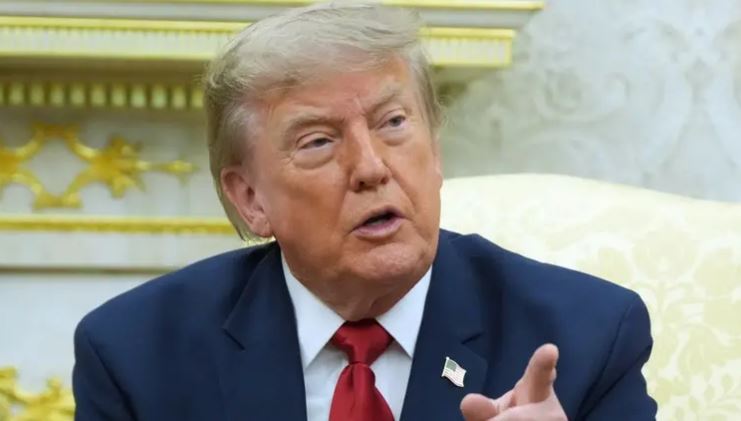
WASHINGTON: US President Donald Trump has declared that the American military blockade of Iran will remain in place “until there is a deal or total surrender,” escalating tensions in the Gulf region as Iranian commanders pledged readiness to respond to any threat.
Speaking on Truth Social, Trump accused Iranian leaders of being “unbelievably duplicitous” after Tehran publicly denied holding talks with Washington. “They ask for a meeting, some would say ‘beg’, talks begin, with more scheduled in the immediate future, and they say, openly and proudly, that they’re not having any discussions, that nothing is being talked about, and they’re only dealing with ‘Oman’,” Trump wrote. He insisted that despite Tehran’s denials, discussions were taking place behind the scenes.
Trump further asserted that the Strait of Hormuz — a vital waterway for global oil shipments — is under American control due to the US naval blockade and military presence. “Nothing gets through to Iran, unless we want it to, and nothing will get through, unless a deal, or total surrender, is accomplished,” he said. “Whether Iran wants to admit it or not, we are, in fact, talking of a solution to a problem that they have caused, for decades.”
In Tehran, the Islamic Revolutionary Guard Corps (IRGC) responded defiantly. A senior commander declared that Iranian fighters are prepared to deliver a “decisive response to any threat,” underscoring the risk of confrontation in the Gulf. The IRGC has long maintained that Iran retains sovereignty over the Strait of Hormuz and has threatened to disrupt shipping if pressured by foreign powers.
The latest exchange highlights the deepening standoff between Washington and Tehran, with both sides trading accusations and warnings. Analysts note that Trump’s rhetoric signals a hardening of US policy, while Iran’s military posture reflects its determination to resist external pressure.
Meanwhile, regional diplomacy is unfolding on another front. Pakistan’s Deputy Prime Minister and Foreign Minister Ishaq Dar held a phone conversation with Iranian Foreign Minister Abbas Araghchi, inviting him to visit Islamabad “at his earliest convenience,” according to a statement from Pakistan’s Foreign Office posted on X. The two officials reportedly exchanged views on regional and international developments, including the deteriorating situation in Occupied East Jerusalem.
Pakistan has historically sought to balance its ties with both Washington and Tehran, and Dar’s outreach to Araghchi suggests Islamabad is positioning itself as a potential mediator amid rising tensions. Observers say Pakistan’s engagement could help ease communication channels, though the entrenched positions of the US and Iran make prospects for immediate de-escalation uncertain.
The Strait of Hormuz remains a flashpoint, with nearly one-fifth of global oil trade passing through its narrow waters. Any disruption could have far-reaching consequences for energy markets and global stability. Trump’s insistence on maintaining the blockade until Iran agrees to US terms raises the stakes, while Iran’s vow of resistance signals that the confrontation may intensify.
As Washington and Tehran exchange sharp words, regional actors like Pakistan are stepping in diplomatically, but the path forward remains fraught with risk. The coming weeks will reveal whether the crisis moves toward negotiation or confrontation.
Related News
Iran says it will reply to US response on Strait of Hormuz proposal once review over
TEHRAN, OCT 12: Iran is still reviewing a US response to its proposal regarding theRead More
UN, EU leaders slam Houthi attack on Riyadh airport
BRUSSELS, OCT 11: UN and EU leaders voiced shock on Sunday at an attack byRead More
Comments are Closed