

The Tianjin Moment and the SCO
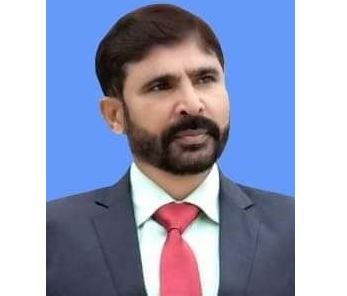
Dr. Muhammad Akram Zaheer
When leaders of the Shanghai Cooperation Organisation gathered in Tianjin in September 2025, the scale of the meeting itself told a story. It was the organisation’s 25th summit and the largest in its history, bringing together heads of state from China, Russia, India, Pakistan, Iran and Central Asia, alongside observers and dialogue partners. Yet size alone does not confer significance. The real question is whether the Tianjin Declaration marks a turning point for the SCO, or merely restates familiar ambitions in an increasingly fractured world.
The declaration leans heavily on the language of continuity. It reaffirms the “Shanghai Spirit” — a phrase that has become shorthand for mutual trust, equality, respect for sovereignty and non-interference. These principles have long distinguished the SCO from Western-led groupings that often combine cooperation with conditionality. In Tianjin, the emphasis on a multipolar international order and the primacy of the United Nations Charter echoed long-standing positions of both Beijing and Moscow. For many member states, especially those wary of external pressure, this insistence on sovereign equality remains the SCO’s central appeal.
At the same time, the document reflects a shared unease about the global environment. References to security threats, economic uncertainty and technological disruption suggest an organisation trying to define its role amid shifting power balances. The commitment to counter terrorism, separatism and extremism — the so-called “three evils” — remains a core pillar. Yet the security landscape confronting SCO members today is more complex than when the grouping was formed in the early 2000s. From Afghanistan’s unresolved instability to the ripple effects of conflicts in Europe and the Middle East, regional security can no longer be neatly compartmentalised.
One notable feature of the Tianjin Declaration is its expanded focus on economic and developmental cooperation. The approval of an SCO Development Strategy extending to 2035 signals an attempt to give the organisation a longer horizon. Trade facilitation, industrial cooperation, energy connectivity and sustainable growth feature prominently. This reflects a recognition that security without development is fragile and the economic grievances often feed political unrest.
It is in this context that Russia’s proposal for a dedicated SCO Council on Sustainable Development assumes importance. First floated during Russia’s chairmanship activities in 2025, the idea gained traction through a series of forums, including the inaugural Sustainable Development Forum hosted in Omsk. By the time of the Heads of Government meeting in Moscow later that year, the proposal had been formally placed on the SCO agenda, drawing positive remarks from the organisation’s secretary-general.
The Tianjin Declaration does not explicitly announce the council’s formal establishment, but it clearly endorses deeper cooperation on sustainable development, energy transitions and industrial modernisation. This alignment suggests that Moscow’s initiative fits comfortably within the broader direction the SCO is trying to set. For Russia, facing prolonged economic pressure from the West, such platforms offer a way to remain engaged in shaping regional norms. For others, including Pakistan and Central Asian states, the emphasis on development resonates with domestic priorities of growth, energy security and poverty reduction.
Yet ambition and implementation are not the same. The SCO has often been criticised for producing lofty statements with limited follow-through. Institutional capacity remains thin and internal divergences persist. India and Pakistan share the same table but not the same strategic outlook. China’s economic weight dwarfs that of most other members, raising quiet concerns about asymmetry. Iran’s recent inclusion adds geopolitical heft but also new complications, given its strained relations with the West.
Moreover, the call for “fair global governance” and a multipolar order raises practical questions. Can the SCO move beyond rhetoric to offer credible alternatives, or will it remain primarily a forum for coordination rather than action? On issues such as technology governance and trade, member states have differing levels of capacity and competing interests. Bridging these gaps will require more than declarations; it will require sustained political will and resources.
For Pakistan, the Tianjin summit underscores both opportunity and challenge. As a founding member, Islamabad has consistently viewed the SCO as a platform to diversify partnerships and reinforce regional connectivity. The renewed focus on development and energy aligns with Pakistan’s own economic needs. However, translating regional cooperation into tangible gains will depend on domestic stability and the ability to engage proactively within SCO mechanisms.
The Tianjin Declaration is best read as a statement of intent rather than a decisive break from the past. It reflects an organisation aware of global turbulence and eager to assert relevance, yet still constrained by its diversity. Whether the SCO can evolve from a consensus-driven forum into a more effective vehicle for cooperation will be tested in the years ahead. Tianjin may not have provided all the answers, but it has at least clarified the questions the SCO can no longer avoid.
Related News

CPEC under Fire
Muhammad Fazeel The US withdrawal of its troops in Afghanistan in 2021 signified the endRead More

The Decline of a Sacred Profession
by Muhammad Mohsin Iqbal Medicine has long been regarded as a messianic vocation, a sacredRead More
Comments are Closed