

The Silent Witness
Hania Khalid
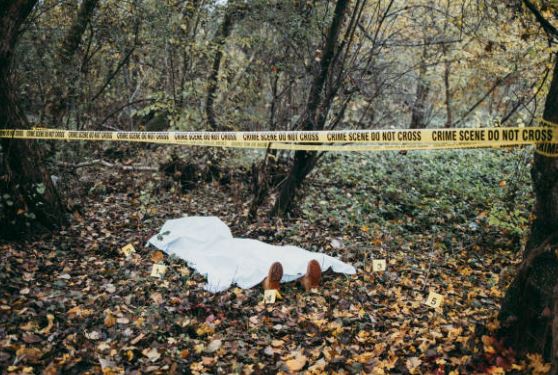
When we think of a crime scene, the first thing that comes to our mind is “blood”. Blood covering every inch of a crime scene with a body or two is the general image of a crime scene portrayed by movies, novels and sometimes news. But as the world is progressing and evolving into a digital interconnected system, the minds of the criminals are also getting sharper. As our criminals are more intelligent nowadays than they were before, we usually find a crime scene with no trace of blood or a body. Such a clean evolution!
Though our smart criminals clean the crime scene and make it spotless, they leave a silent witness. This witness doesn’t have a face but what it does have is a fingerprint. It’s not the usual fingerprint rather it’s a special kind of fingerprint widely known as the linguistic fingerprint— the idiolect.
What exactly is a linguistic fingerprint? It’s our words that we speak, write or type. Every human being has a different selection of words that are as unique as the person’s DNA. Just as a fingerprint is one of a kind, so is our linguistic fingerprint. Hence, criminals leave their linguistic fingerprints, unknowingly- a signature that belongs entirely just to them in the whole universe.
Criminals, whether old-fashioned or modern, have to use language in order to plan, process and execute the crime. Language appears in the form of threat messages, ransom notes, phone calls, texts and social media accounts of the criminals. Forensic linguists analyze the favorite words, specific spelling mistakes and even the unique way someone uses punctuation to unmask the smart criminals.
Sometimes this ‘silent witness’ is the only thing that is left for the crime investigators. In 2009, a man named Christopher Birks called the emergency helpline late at night informing them of a fire that had broken out at his residence. After the arrival of the rescue team he urged them to save his wife named Amanda who was trapped in the bedroom. The team tried their best but the woman didn’t survive, with her cause of death unclear but believed to be the fire. The husband was left weeping and shouting, grieving for his wife. During the ongoing investigation, the detectives came across a series of texts from Amanda Birks’ phone to her relatives before the fire broke out. The texts explained Amanda’s plans to light candles for some kind of therapy. The forensic linguists informed the detectives that these texts do not match Amanda’s idiolect. The key mistake that gave the murderer away was the use of abbreviations that Amanda had never used in her texts. Later on, as the investigation proceeded, the texts from Amanda during the fire night were found out to be the hundred percent match for her husband’s idiolect. The texts that were supposed to save Mr. Birks and shift the blame for the fire on Amanda ultimately led him to jail.
In this age of digital innovations and modernization, criminals may erase their physical and digital footprints but they can’t erase their linguistic identity. Forensic linguistics has emerged as a powerful weapon to tackle even evidence-less crime scenes. Nowadays, this silent witness is used to make the smart criminals silent. Hence, language is not just a means of communication; it can also be used to provide justice and for protecting the innocent people. So, be mindful of your words, for they can be used in your favor or against you.
Related News

March 31 Genocide – A crime against humanity committed against Azerbaijanis
Farid MUSTAFAYEV Starting from the early 18th century, Armenian nationalists carried out a policy ofRead More

Iran vs U.S.: When Demands Collide, Can Peace Survive?
Qamar Bashir The Middle East today is not witnessing a single war, but a convergenceRead More
Comments are Closed