

The Makkah Pact and the New Security Map
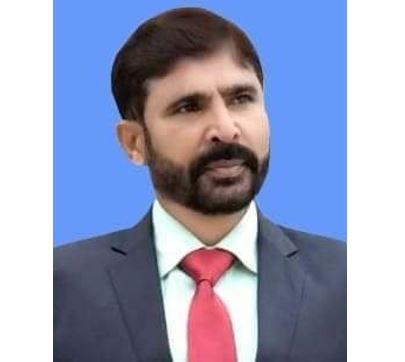
Dr. Muhammad Akram Zaheer
The emergence of a new defence understanding among Pakistan, Saudi Arabia and Turkey deserves greater attention than it has so far received. The agreement, often described as the Mecca Agreement, has the potential to influence security calculations well beyond the Middle East. Its significance lies not merely in the military capabilities of its three members but in the possibility that it may gradually become the nucleus of a wider political and security arrangement involving other Muslim countries.
For India, Israel and the major Western powers, the development presents a complicated question. Is this simply another diplomatic understanding among states with different interests, or could it develop into a more coherent security partnership? The answer will depend largely on what the three countries do with the agreement in the years ahead.
Pakistan brings a sizeable and experienced military establishment to the arrangement. Saudi Arabia possesses financial resources, energy importance and considerable influence in the Muslim world. Turkey has a growing defence industry, an increasingly independent foreign policy and strategic interests stretching from the Middle East to the Mediterranean, Caucasus and Central Asia. Individually, these countries have limitations. Together, however, they could provide one another with political, financial and military advantages.
The most important issue is the question of collective defence. If the agreement develops mechanisms through which an attack on one member is treated as a concern for all, its political importance would increase considerably. Yet collective defence arrangements are not automatically effective. They require common threat perceptions, military coordination, intelligence sharing, financial commitments and, above all, political willingness to act in a crisis.
The three members do not see every regional issue through the same lens. Saudi Arabia has its own interests in the Gulf and its relationship with the United States. Turkey has pursued an independent regional policy and maintains difficult relationships with several neighbouring states. Pakistan remains deeply concerned with India, Afghanistan, economic pressures and its relationship with China and the Gulf states. These differences could limit the agreement. They could also, however, encourage the members to concentrate on areas where their interests overlap.
The possibility of further expansion is therefore more important than the present composition of the pact. If Bangladesh or another important Muslim-majority country eventually joins, the agreement would acquire a wider South Asian dimension. Other states could also find participation attractive if membership provided access to military training, defence technology, intelligence cooperation, investment and diplomatic support.
Such a development would inevitably affect India.
New Delhi is already surrounded by a complicated strategic environment. Its competition with Pakistan is longstanding, while its relationship with China remains marked by border disputes and wider competition. A closer Pakistan-Turkey-Saudi relationship could provide Islamabad with additional diplomatic space at a time when Pakistan is attempting to diversify its external partnerships.
India and Israel are consequently likely to examine ways of strengthening their own relationships with countries that have concerns about Turkish or Pakistani influence. But there is an important difference between preparing for a changing security environment and attempting to create another bloc confrontation.
The proposed network involving India, Israel, Greece, Cyprus, the United Arab Emirates and other partners reflects one possible response. Cooperation among these countries could cover maritime security, defence production, intelligence, trade, energy and technology. The Mediterranean, Red Sea, Gulf of Aden and Indian Ocean are increasingly connected in strategic calculations. Control of maritime routes and protection of commercial shipping will therefore remain central to regional diplomacy.
The India-Israel relationship is another important component. Their cooperation has already expanded considerably in defence, intelligence, agriculture and technology. The I2U2 grouping India, Israel, the United States and the UAE was initially presented largely as an economic and technological partnership. Its future importance could increase if economic cooperation is accompanied by broader consultations on maritime security, critical infrastructure and regional stability. But there is a danger in viewing every new partnership through the narrow language of containment. The Middle East has already suffered from competing alliances, proxy conflicts and military interventions. Adding another layer of confrontation could make the region more unstable rather than safer.
The South Caucasus is another arena where the consequences could be felt. Turkey’s close relationship with Azerbaijan and Pakistan’s growing links with both Ankara and Baku have increased Indian interest in Armenia. India has developed defence ties with Yerevan, while Armenia has attempted to balance relations with its neighbours and wider international partners.
For New Delhi, Armenia offers a means of maintaining a presence in a region where Turkey and Azerbaijan have considerable influence. For Pakistan, the changing relationship between Turkey, Azerbaijan and Armenia carries implications for its own strategic position. Yet the Caucasus should not become another theatre in which rival powers conduct their competition through smaller states.
The temptation for rival states to exploit internal political, ethnic or economic grievances is understandable from a narrow strategic perspective. But supporting armed groups or encouraging separatist violence carries consequences that rarely remain confined to the intended target. Such policies can produce refugee flows, terrorism, criminal networks and prolonged instability. They can also strengthen the very security institutions they are designed to weaken.
Balochistan’s political and economic grievances are real issues requiring serious attention from Islamabad. Questions relating to provincial autonomy, resource distribution, political representation, missing persons, development and the rights of local communities cannot simply be treated as security problems. At the same time, violence against civilians or the state cannot provide a durable political settlement. For India, therefore, the wiser approach would be to watch Pakistan’s internal developments carefully without becoming trapped in a policy of covert escalation. Pakistan’s instability would not necessarily serve Indian interests. A weaker and more insecure Pakistan could generate problems along India’s western frontier, encourage militant networks and complicate regional trade.
Gwadar and the China-Pakistan Economic Corridor add another dimension. The port has strategic significance for Beijing because China seeks alternatives to vulnerable maritime routes, particularly the Malacca Strait. Yet the future of Gwadar will depend not only on geography but also on security, local acceptance, economic viability and political stability in Balochistan. Attempts to disrupt the port through violence would carry consequences far beyond Pakistan-China relations. They could affect shipping, investment and the wider Indian Ocean security environment. Washington, New Delhi and other regional capitals therefore have an interest in ensuring that competition over CPEC does not become another source of armed conflict.
The Mecca Agreement should consequently be understood as part of a broader transformation in regional politics. Muslim-majority states are seeking greater control over their security choices, while India, Israel, the United States and their partners are building their own networks. Turkey is extending its influence, Saudi Arabia is seeking greater strategic autonomy, Pakistan is diversifying its partnerships, and China is deepening its economic and security presence across Eurasia.
The emerging order will not be determined by one agreement alone. Its future will depend on whether these competing partnerships become mechanisms for cooperation or instruments of confrontation.
For Pakistan, the agreement offers diplomatic and strategic opportunities, but it also carries responsibilities. Islamabad must ensure that closer defence relations do not deepen sectarian tensions or draw the country into conflicts that serve other states’ interests. For India and Israel, the answer should not be an arms race or a policy of encouraging internal disorder in neighbouring countries. Their stronger option is sustained diplomacy, economic partnerships, maritime cooperation and carefully defined security arrangements. The real test of the Mecca Agreement will come not when its members issue declarations, but when a regional crisis forces them to decide how far their commitments actually extend.
The Middle East and South Asia have already paid a heavy price for assuming that military balances alone can produce security. The next phase of regional politics should not repeat that mistake. If the Mecca Agreement develops into a durable security partnership, its members will have to demonstrate that it is intended to protect their interests rather than redraw the region through confrontation. And those outside the agreement will have to recognise that the Muslim world is no longer prepared to leave its security calculations entirely distant powers. The coming contest will be not simply over weapons, alliances or territory, but over who gets to shape the political order of the region.
Dr. Muhammad Akram Zaheer
Assistant Professor Pakistan Studies
Imperial College of Business Studies Lahore
Related News

France and the Enduring Politics of Protest
by Muhammad Mohsin Iqbal Nations are shaped not only by their institutions and constitutions butRead More
Enhancing Governance in Pakistan through Azerbaijan’s ASAN and DOST Service Models
Diplomatic News Agency/DNA In the modern era, efficient public service delivery is a key indicatorRead More
Comments are Closed