

The Doctrine of Putin and the Direction of Russia
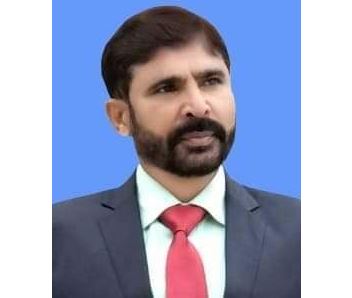
Dr. Muhammad Akram Zaheer
For more than two decades, Vladimir Putin has been the central figure shaping Russia’s political life and foreign policy outlook. Yet to speak of a single, neatly defined “Putin Doctrine” risks oversimplifying a system that has evolved over time, responding to domestic pressures, regional shifts, and changing global conditions. What can be identified, however, is a coherent set of ideas and practices that together form the guiding logic of contemporary Russian statecraft. This doctrine is not set out in one official text, but emerges from speeches, policy decisions, military actions, and the structure of power within Russia itself.
At its core lies a belief that Russia is not merely another nation-state, but a distinct civilisation with its own historical mission. Putin has repeatedly argued that Russia represents a cultural and political world separate from that of the liberal West. This conviction draws heavily on interpretations of Russian history that stress continuity between the Tsarist Empire, the Soviet Union, and the present Russian Federation. The trauma of the Soviet collapse in 1991 occupies a central place in this worldview. Putin has described it as a major catastrophe of the twentieth century, not only because a superpower disappeared, but because millions of ethnic Russians found themselves outside Russia’s borders, and the state lost both status and strategic depth.
From this reading of history flows a second principle: the restoration of Russia’s strength and authority. The chaotic years of the 1990s, marked by economic hardship, regional fragmentation, and the rise of oligarchic power, are portrayed in official discourse as a period of humiliation imposed by internal weakness and external pressure. Putin’s domestic project has therefore focused on rebuilding a strong central state. Political power has been steadily concentrated in the presidency, independent centres of influence have been brought to heel, and loyalty to the state has been framed as a moral duty. Stability, order, and continuity are presented as higher values than pluralism or rapid political change.
This domestic consolidation is inseparable from Russia’s external posture. The doctrine that has emerged under Putin treats the international system as inherently competitive. Rather than a community of states bound primarily by shared rules, it is seen as an arena where major powers pursue their interests, test one another’s resolve, and seek advantageous positions. In this view, Western talk of universal values often masks geopolitical ambition. NATO enlargement, European Union expansion, and Western involvement in post-Soviet states are interpreted not as benign developments, but as encroachments into a space Russia regards as vital to its own security.
The concept of a privileged sphere of interest is therefore central. Russia’s leadership asserts a special responsibility for, and entitlement to influence over, neighbouring countries that were once part of the Soviet Union. This is justified through arguments about shared history, economic interdependence, and the protection of Russian-speaking communities. It also reflects strategic calculation. Control, or at least strong influence, over nearby territories provides military depth, buffers against perceived threats, and leverage in dealings with other major powers.
This outlook helps explain Moscow’s willingness to use force, or the threat of it, in pursuit of political objectives. The conflicts in Georgia in 2008 and Ukraine since 2014, and on a larger scale from 2022 onwards, illustrate a readiness to challenge existing borders when the Kremlin judges its interests to be at stake. Such actions are framed domestically as defensive, necessary responses to Western-backed moves that would otherwise leave Russia exposed. International law, while invoked when useful, is treated as subordinate to what the leadership defines as historical justice and strategic necessity.
Another defining feature of Putin’s doctrine is the emphasis on sovereignty, interpreted in a strict and expansive sense. Sovereignty does not only mean protection from foreign military intervention, but also insulation from external influence over domestic politics, media, and civil society. Laws targeting foreign funding, restrictions on non-governmental organisations, and controls over information flows are justified as measures to defend Russia’s political independence. The popular uprisings that have occurred in parts of the post-Soviet space are portrayed not as genuine expressions of public discontent, but as operations orchestrated from abroad. Preventing similar movements at home has become a priority, reinforcing the fusion between internal security policy and foreign policy.
Economic policy under this doctrine is similarly shaped by geopolitical considerations. While Russia remains integrated into global markets, especially as an energy supplier, there has been a steady effort to reduce vulnerability to external pressure. Since the mid-2010s, the state has increased its role in key sectors, built up financial reserves, and promoted domestic production in areas ranging from agriculture to technology. Economic resilience is not pursued primarily for prosperity alone, but as a strategic asset, enabling Russia to withstand sanctions and sustain long-term confrontation with unfriendly powers.
Culturally and ideologically, the Putin doctrine presents Russia as a guardian of traditional values. The Kremlin aligns itself with the Orthodox Church, emphasises conservative social norms, and criticises what it depicts as Western moral decline. This narrative serves several functions. It strengthens ties between the state and influential domestic institutions, offers a sense of purpose that goes beyond material concerns, and provides an ideological counterpoint to liberal democracy. Abroad, it allows Russia to position itself as an alternative centre of attraction for those who are sceptical of Western cultural influence.
Yet the doctrine is not solely backward-looking or defensive. It also aspires to shape a more plural international order. Russian officials frequently speak of a world no longer dominated by a single power, but organised around several major centres. In this vision, countries such as China, India, and others across Asia, the Middle East, and the Global South are natural partners in limiting Western predominance. Russia’s growing engagement with non-Western states, its participation in groupings such as BRICS and the Shanghai Cooperation Organisation, and its diplomatic activism in Africa and the Middle East reflect this ambition.
However, the gap between rhetoric and reality is striking. While the Kremlin calls for respect and equality among nations, its own behaviour in its neighbourhood has often been coercive. While it denounces Western interference, it has not hesitated to involve itself in the internal affairs of other states. This tension highlights a central feature of the Putin doctrine: it is less a universal philosophy than a strategy tailored to maximise Russia’s room for manoeuvre.
Over time, this approach has become more rigid. The longer Putin has remained in power, the more closely the state’s identity has been bound to his personal authority. Political opposition is increasingly portrayed not simply as disagreement, but as betrayal. Foreign policy setbacks are blamed on hostile conspiracies. Compromise is often framed as weakness. Such narratives can mobilise support in the short term, especially in a society marked by memories of instability. But they also narrow the range of acceptable policy choices.
For Britain and its European partners, understanding this doctrine is essential. It suggests that tensions with Russia are not merely the product of misunderstanding or temporary disputes, but of deeply rooted assumptions about power, security, and history. Dialogue remains necessary, particularly to manage risks and prevent escalation. Yet expectations of a rapid transformation in Russia’s outlook are unrealistic so long as the current system and its guiding beliefs remain in place.
The doctrine of Putin’s Russia is therefore best seen not as a fixed blueprint, but as an evolving framework. It blends a sense of grievance with ambition, appeals to tradition with modern instruments of power, and defensive rhetoric with assertive action. It has reshaped Russia’s relationship with its neighbours, with the West, and with the wider world. Whether it will endure beyond Putin himself is an open question. What is clear is that it has already left a deep imprint on European security and on the global balance of power, one that will continue to be felt for years to come.
Related News

When Pakistan Reaches Its Defining Moment
by Muhammad Mohsin Iqbal Today, Pakistan shines as a beacon of peace in a worldRead More
When War Theories Go Viral
Zaryab Zaib A short video, reportedly circulating on Chinese social media, has stirred a familiarRead More
Comments are Closed