

Thailand–Pakistan relations enter new era of partnership: Rongvudhi Virabutr
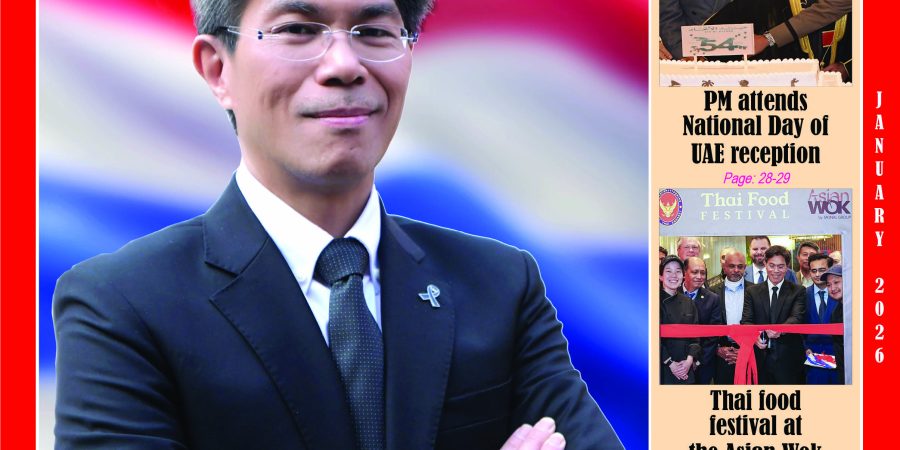
H.E. The Ambassador of Thailand to Pakistan Rongvudhi Virabutr gave an exclusive interview to Daily Islamabad POST, Centreline and Diplomatic News Agency. Here is the detailed interview of the ambassador.
Ansar Mahmood Bhatti
———————————
Q1: Your Excellency, how would you describe your overall diplomatic experience in Pakistan so far?
Having just reached my one-year anniversary here on December 1, 2025, I can say without reservation that Pakistan is truly a “Land of Friendliness and Opportunity.” Despite the distance, that initial feeling of being far from home vanished instantly. I discovered that Thailand and Pakistan share a profound cultural DNA—from the warmth and generosity of the people to our deep, ancient histories. The Pakistani spirit has embraced me, making me feel “at home” from very beginning.
My mission here, however, does not permit me to simply enjoy the hospitality, warmth, and generosity extended to me without giving back in meaningful ways. I see Pakistan as a nation of immense, untapped potential—a strategic hub with a resilient and dynamic people. With this vision, I am fully committed to advancing Thailand–Pakistani relations and unlocking the shared strengths of our two countries to the fullest.
Our ties must go beyond traditional friendship. They should evolve into a sustainable partnership for development—one in which we move forward together, hand in hand, bringing smiles of happiness to the faces of our Pakistani brothers and sisters. We are consciously pivoting from friendship to a “Prosperity Partnership.” My focus is clear: to deliver tangible, results-driven achievements that our citizens can truly see and feel, creating a new breakthrough in our bilateral relationship for generations to come.
Q2: In your assessment, what are the most promising areas of cooperation today?
I see two core dimensions driving breakthrough progress: Government-to-Government (G2G) economic dynamism and People-to-People (P2P) connectivity.
On the G2G front, trade and investment are decisive. Despite global fluctuations, two-way trade rebounded to USD 1.6 billion last year, but our goal is to double this volume through “Win-Win Trade”—combining Pakistan’s textiles and IT strengths with Thailand’s automotive and food processing expertise. A particular game-changer is the Halal industry. As one of the world’s leading Halal food producers—the “Kitchen of the World”—Thailand is ready to collaborate with Pakistan’s vast Muslim market. Advancing mutual recognition of Halal certification can unlock billions in food and cosmetics trade, creating a universal language of trust and quality. New investment collaborations in these high-value sectors are both feasible and imperative, with further potential in defense and beyond.
On the P2P side, tourism is the most powerful connector. At present, our two nations know each other but are not yet close; we contact but are not fully connected. Tourism helps bridge this gap, but we must go further—toward genuine familiarity and trust that positions us as the first destination for each other. The Royal Thai Embassy is committed to expanding tourism and cultural initiatives—through food, music, and art—so that our cooperation is not only economic but also deeply people to people contact.
Q3: How do you see the progress toward the Pakistan–Thailand Free Trade Agreement (FTA)?
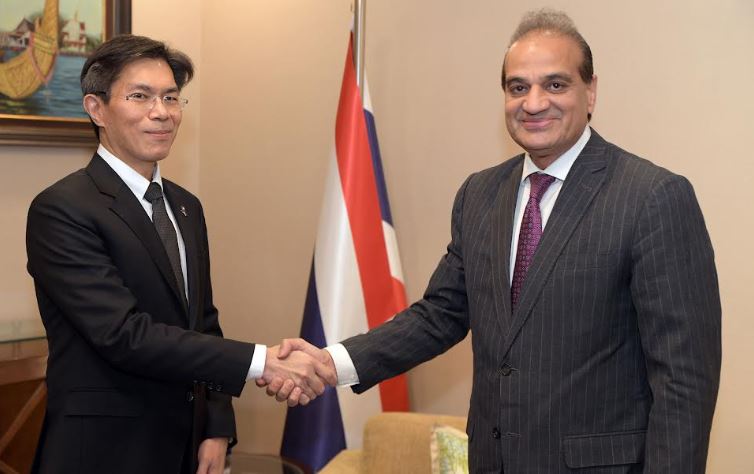
The Pakistan–Thailand FTA is not just a technical document; it is a Strategic Gateway to a new era of economic prosperity for Pakistan. I view the FTA as having decisive importance, and I am resolutely committed to pushing it to completion swiftly. We must change the perception that the FTA creates a disadvantage, transforming it into the understanding that it is the “Key to Global Competitiveness” for Pakistan, specifically by reducing the cost of imported raw materials, thus boosting the efficiency of domestic production.
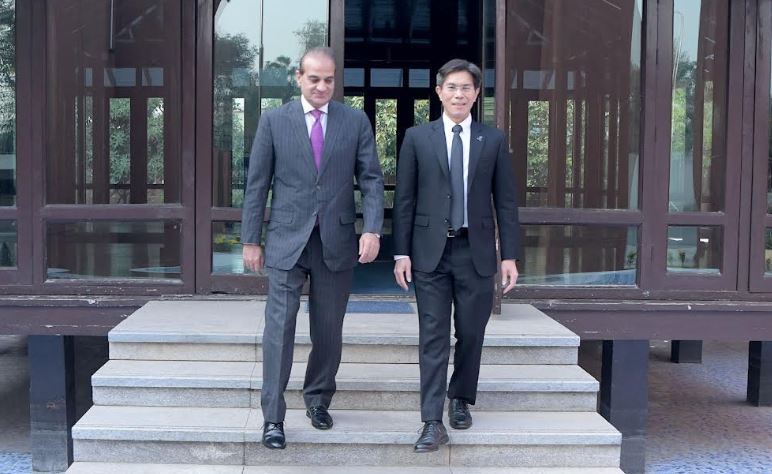
Crucially, this FTA will act as a “Talent Multiplier,” particularly in the digital and services sectors. By including provisions for the mobility of digital professionals, we will leverage Pakistan’s strength as a leading global freelancer hub, creating up to $20 billion in added economic value. We are coordinating with all key sectors—from Ministries to think tanks—to build unwavering confidence. The final conclusion of the FTA will send the clearest and most powerful signal to global investors: “Pakistan is ready for a New Era of Prosperity.”
Q4: What steps can both sides take to boost tourism and connectivity?
“Connectivity is the New Key in Diplomacy”—this is the principle I firmly uphold, as people-to-people relations built “from heart to heart” are inherently more durable than state-level interactions. We have set clear, decisive targets: doubling the number of Pakistani tourists to Thailand to 100,000 per year and expanding tourists from Thailand who are interested in Buddhism places in Pakistan to the Gandhara region to 10,000 per year. This is about building a strong “Network of Trust.”
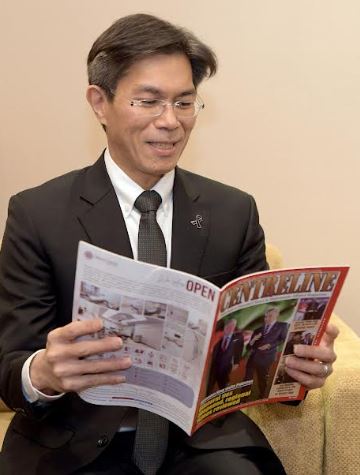
The priority is to breaking logistical barriers. With current flight frequency and capacity hit the maximum, we held a virtual meeting in February 2026 and are pushing for formal negotiations next year to secure a decisive increase in air frequency and capacity, which will bring more flights and more accessible ticket prices. Furthermore, we are trying our utmost effort to find the easiest way that Pakistani tourists, in the near future, be able to enjoy visiting Thailand with easiest way of access; the e-visa system that we apply now is one of the mechanism that we use. Concurrently, we are designing perfect Halal Tourism programs in Thai provinces like Krabi and Ayutthaya, and promoting Thailand as a Global Medical Hub for Pakistani patients. Tourism, through this decisive action, becomes a genuine “Bridge of Trust.”
Q5: How is the Thai private sector viewing Pakistan as an investment destination?
Thai investors are practical: they commit where policy is clear, not just where potential is high. The Royal Thai Embassy’s decisive approach is to work with the Pakistani government to dramatically improve the Ease of Doing Business (EODB) ranking, which serves as the “compass” for global investors.
The FTA’s conclusion is also the ultimate trigger point, providing the legal certainty and investment protection needed. Beyond that, we are creating new S-curve avenues: exploring joint R&D in the defense industry, expanding the Halal food processing sector, and infrastructure projects. Strategically, Thai companies view Pakistan as a vital Strategic Gateway to Central Asia and the wider Middle East, positioning our partnership as a regional economic accelerator.
Q6: Are there plans for more cultural festivals, food events, or tourism exhibitions in Pakistan?
As I mentioned earlier, our two nations know each other but are not yet close; we contact but are not fully connected. The Royal Thai Embassy must continue working tirelessly to close this gap through cultural exchange—whether via food, music, art, or other creative avenues.
We began this journey with Thai Food Week in Islamabad, 8–14 December 2025, where authentic Thai chefs trained local Pakistani culinary chefs. Pakistani chefs were introduced to authentic Thai cooking techniques and had the opportunity to prepare traditional Thai dishes. These dishes have now been incorporated into the permanent menus of participating restaurants, ensuring that the “flavor of friendship” continues long after the festival itself. This initiative, organized in collaboration with the Monal Group, was never intended as a one-off event, but rather as a sustainable culinary bridge between our peoples.
Looking ahead, the ultimate breakthrough will be the historic Gandhara Civilization Exhibition in Thailand in 2027. Both governments have agreed to bring Buddhist artifacts from Pakistan’s Gandhara heritage to Thailand, allowing Thai audiences to appreciate the cultural treasures preserved so carefully by our Pakistani friends. Showcasing Pakistan’s ancient Buddhist legacy in Bangkok will serve as a powerful cultural magnet, drawing immense interest and investment toward the development of Pakistan’s heritage sites.
This is decisive cultural diplomacy—using our glorious past to inspire and directly drive a prosperous future.
Q7: How can both countries further enhance people-to-people contacts?
The Royal Thai Embassy is deeply committed to bringing our two nations closer and truly connected. To achieve this, we are determined to deploy every available tool—promoting tourism, fostering cultural exchange through food, music, and art, and encouraging direct interaction between our peoples.
As mentioned earlier, initiatives such as the Thai Food Festival in December 2025 and the upcoming Gandhara Civilization Exhibition in Thailand in 2027 are important milestones. They showcase how culinary and cultural diplomacy can build lasting bridges of understanding.
Beyond these events, we are also advancing direct people-to-people engagement. In collaboration with UN Women, we launched programs to upskill women entrepreneurs in Swabi and Sialkot, focusing on two vital sectors: Beauty and Livelihood and Regenerative Agriculture. We provided professional training in the beauty industry to enable women to work from home, while also helping transform backyard gardens into reliable sources of income. To enrich this effort, we invited experts such as Miss Jennifer Innes Taylor-Jane, a Thai organic farm owner, to share practical regenerative practices.
We firmly believe that the most powerful way to empower women is through income generation—when women earn, they gain confidence. As we say, “From small seeds, great forests grow.” This pilot project has already enabled Thai and Pakistani women farmers to interact directly, exchange knowledge, and establish future channels of cooperation. Together, they are developing new agricultural approaches that can help Pakistani women generate sustainable income from their farms.
These are the kinds of pioneering steps the Royal Thai Embassy sees as vital to deepening people-to-people ties between Thailand and Pakistan, ensuring that our relationship grows not only in trade and diplomacy but also in the everyday lives of our citizens.
Q8: As the current Chairman of the ASEAN Islamabad Committee, what are your key focus areas during your chairmanship?
My chairmanship is guided by 3 priorities strategy, refined into a clear motto: “Visibility, Tangibility, and Bring into Reality.” ASEAN today is a $3.6 trillion economic powerhouse with over 600 million people, while Pakistan has a population of more than 250 million. If our two regions can integrate their economies seamlessly, there is no doubt that a tangible and formidable economic force will emerge. That is why we are determined to shift from ceremony to substance.
Our priority is to ensure that ASEAN and Pakistan’s economies are connected without barriers. This can be achieved through multiple mechanisms: expanding Pakistan’s FTAs with individual ASEAN member states and expanding to have more FTA with each ASEAN member, and promoting initiatives such as an ASEAN Trade Fair to facilitate direct business deals. As ACI Chair, Thailand has already raised these issues with key stakeholders, including the Federal Ministers of Trade and Federal Miniter of Investment and major Chambers of Commerce and Industry across Pakistan.
Another critical area is the promotion of paperless trading systems. ASEAN already operates the ASEAN Single Window for paperless trade facilitation. If Pakistan develops its own paperless system and connects it with ASEAN, imports and exports between our regions will become faster, more efficient, and more transparent—significantly boosting trade.
Finally, we are working to enhance visibility and engagement at every level. ASEAN Ambassadors and High Commissioners in Islamabad have already conducted joint calls with three Federal Ministers, including Trade, Investment, and Foreign Affairs. We have also initiated economic dialogues with chambers such as FPCCI, Gujranwala, and Sialkot, with more to follow.
All these efforts reinforce our vision: Visibility, Tangibility, and Bring into Reality. This is how ASEAN and Pakistan can transform potential into progress.
Q9: How do you evaluate Pakistan’s engagement with ASEAN as a sectoral dialogue partner and do you think Pakistan has the potential to become a full dialogue partner of ASEAN in the future?
Pakistan’s potential to become a Full Dialogue Partner is absolutely certain, but it requires a decisive commitment to move from Potential to Performance. We recognize Pakistan’s desire to upgrade, and this is entirely possible if it expands its current 30+ annual activities to cover all three ASEAN pillars comprehensively. We must shift its status from merely “participating” to being a “Value-Adding Partner.”
At present, Pakistan participates in around thirty ASEAN-related activities each year. This is a respectable start, but to truly demonstrate comprehensive engagement, the number must grow—closer to one hundred activities annually—covering the full spectrum of ASEAN cooperation. As Chair of the ASEAN Committee in Islamabad, Thailand has taken on the role of facilitator, helping Pakistan link its unique strengths to ASEAN’s priorities and convert them into meaningful joint initiatives.
Two areas stand out as natural bridges. The first is disaster management. Pakistan’s National Disaster Management Authority has proven capacity in responding to crises, while ASEAN’s AHA Centre and DELSA system provide regional coordination and logistics. By connecting these mechanisms, both sides can build a seamless framework for humanitarian assistance, ensuring faster and more effective disaster response.
The second is peacekeeping. Pakistan’s Center for International Peace and Stability at NUST is recognized by the United Nations as a regional hub for peacekeeping training. ASEAN countries such as Indonesia and Thailand already contribute peacekeeping forces worldwide. Linking CIPS with ASEAN member states through training and knowledge exchange would not only strengthen regional security but also highlight Pakistan’s global role in peace and stability.
In this way, Pakistan’s engagement with ASEAN is evolving from symbolic gestures to substantive cooperation. The path to becoming a Full Dialogue Partner is clear: expand the scale and scope of activities, leverage Pakistan’s strengths in disaster management and peacekeeping, and demonstrate commitment across all three ASEAN pillars. If these steps are taken, Pakistan will not only elevate its status within ASEAN but also help shape a partnership that transforms shared potential into shared progress.
Q10: What message would you like to convey to the readers of Islamabad Post, Centreline Magazine, and DNA News Agency?
Thailand and Pakistan stand at the threshold of transformation—moving from a friendly neighbor to a partnership for development. Over the past year, I have seen that we share not only warm hospitality but also a profound cultural DNA and an unshakable aspiration for prosperity. Yet friendship alone is not enough; we must act in ways that deliver results you can see, touch, and feel.
We are building a Prosperity Partnership with concrete goals: doubling our trade by unlocking billions through the Halal industry, advancing an FTA to slash costs and pave the way for new avenue of cooperation such as defense industry, digital and IT opportunities, and connecting our peoples through tourism, culture, and food—from Thai cuisine now permanently on Pakistani menus to the historic 2027 Gandhara Civilization Exhibition in Bangkok.
Beyond economics, we are empowering women entrepreneurs in Swabi and Sialkot, linking farmers through regenerative agriculture, and creating direct people-to-people exchanges. As Chair of ASEAN Committee in Islamabad, we are working to integrate Pakistan more deeply with ASEAN’s $3.6 trillion economy and 600 million people, expanding cooperation from disaster management to peacekeeping, and laying the groundwork for Pakistan’s eventual elevation to Full Dialogue Partner.
My message is simple: the future we want will not happen unless we are not working hard today together. There are many avenues along this journey but all avenues have the same direction which is bringing real happiness smiles to the faces of our Pakistani friends. We are not only a nation of friendship but we are also your development partner. We promise that in the future when our children will look back they would say “That was the moment everything changed.”
To every Pakistani reading this: you have a true friend in Thailand, and together, we will achieve extraordinary things.
Related News
Dr Ramez Alraee: Syria and Pakistan strengthen relations
Ansar M Bhatti 1: Your Excellency, thank you for speaking with us. Syria is oftenRead More

Thailand-Pakistan ties move from friendship to action
Exclusive Interview: H.E. Rongvudhi Virabutr, Ambassador of Thailand to Pakistan. The first part of theRead More
Comments are Closed