

Sindh introduces grading system for matric, intermediate exams; scraps marks results
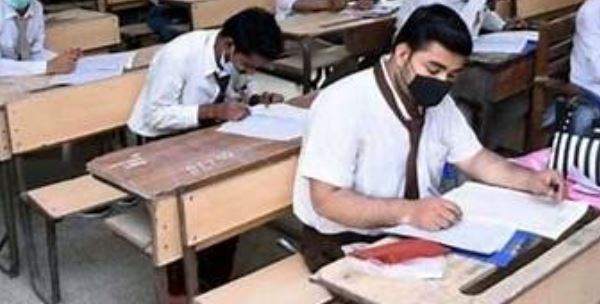
KARACHI: The Sindh government on Tuesday abolished the marks system across provincial education boards, approving a grading framework for matriculation and intermediate examinations.
Universities and Boards Minister Ismail Rahoo said that the marks-based examination system has been replaced with a modern grading system in line with Inter Boards Coordination Commission (IBCC) policy decisions.
He added that the reform aimed to ensure uniformity among education boards nationwide and confirmed that a GPA system would be introduced after the grading framework is fully implemented.
In its notification, the Sindh government stated that the decision was made in accordance with IBCC’s approval of the grading system at its meeting in August last year.
The Federal Board of Intermediate and Secondary Education (FBISE), in October last year, announced the revised grading formula for Secondary School Certificate (SSC) and Higher Secondary School Certificate (HSSC) examinations.
As per the federal board, the revamped grading scheme will take effect from the First Annual Examinations 2026 for SSC-I/HSSC-I level and subsequently from the First Annual Examinations 2027 for SSC-II/HSSC-II level.
Under the new policy, students’ performance will be assessed through grades instead of numerical marks, with a minimum passing threshold of 40%. Candidates scoring below this level will be declared ‘U’ (ungraded).
The notification added that students who fail to qualify will be eligible to reappear in examinations, provided they meet other stipulated conditions.
As per the new grading system, students securing between 96% and 100% marks will be awarded an A++ grade (“Extraordinary”), while those obtaining 91% to 95% will receive an A+ (“Exceptional”).
Similarly, 86% to 90% marks will correspond to an A grade (“Outstanding”).
For those scoring 81% to 85%, a B++ grade will be awarded (“Excellent”), and 76% to 80% will fall under B+ (“Very Good”).
Students achieving 71% to 75% will secure a B grade (“Good”), while 61% to 70% will be given C+ (“Fairly Good”), and 51% to 60% will correspond to a C grade (“Above Average”).
The Board further stated that students obtaining 40% to 50% will receive a D (“Emerging”) grade.
Related News

Pakistan Navy, PLA Navy conclude SEA GUARDIAN IV exercise
RAWALPINDI, APR 1 /DNA/ – Exercise SEA GUARDIAN IV, conducted from 25 March to 1Read More

Islamabad, Beijing reaffirm commitment to enhance consular cooperation
BEIJING, APR 1 /DNA/ – The 10th Round of Pakistan-China Consular Consultations was held betweenRead More
Comments are Closed