

Reimagining CSS 1: The Opportunity Cost
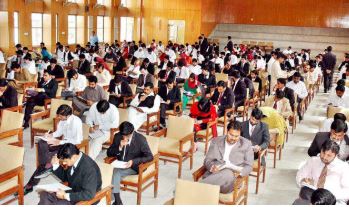
The Central Superior Services (CSS) examination remains one of Pakistan’s most prestigious gateways into public service. It’s the ultimate Pakistani Dream for many. Yet, the system has structural inefficiencies, inequities, and a troubling misallocation of human capital.
At its core lies the concept of opportunity cost, what candidates must forgo to pursue success in CSS. The preparation process is notoriously long and uncertain, often stretching across six to eight months for a single attempt, far longer in reality to be frank. Many aspirants shape their undergraduate education around CSS subjects, effectively committing years, sometimes a decade, to a single career pathway which selects less than 1% of the applicants in a given year. In my own batch, the average successful candidate age hovered around 28 and yet had no work experience before Civil Service, suggesting prolonged cycles of preparation, multiple attempts, and deferred professional engagement. And, my friends who could not get allocated had to reengineer their careers either through getting a masters degree from abroad or settling with their family businesses.
This extended selection period imposes a heavy economic cost. Bright graduates with strong labor market prospects, those who secure competitive jobs through campus recruitment or gain admission to funded master’s and PhD programs, almost always opt out. For them, the expected payoff of CSS does not justify the years of foregone income, experience, and career progression. In economic terms, the system inadvertently filters out high-potential candidates who face better outside options. In this way “cream” itself filters out through opting out.
The burden is even more pronounced for individuals from less privileged backgrounds. Candidates who must support their families cannot afford to dedicate months to full-time preparation. Similarly, women who marry early often face structural constraints that limit their ability to engage in prolonged, uncertain study cycles. The result is a system that, unintentionally but unmistakably, favors those with financial stability and social flexibility.
Compounding the issue is the rise of expensive preparatory academies. Success in CSS increasingly appears correlated not just with ability, but with access to coaching, materials, and networks, further entrenching inequality. What should be a meritocratic process begins to resemble a market where resources shape outcomes.
Reform, therefore, is not merely desirable, it is essential to address the structural hurdles which dissuade talent from competing for these jobs.
A more efficient and equitable approach would be to restructure CSS into a multi-stage selection process. The first stage could be a standardized, high-quality IQ or analytical reasoning test designed to filter a large pool into a smaller cohort of high-potential candidates. This would significantly reduce the need for prolonged, unfocused preparation and limit the influence of costly academies.
Subsequent stages could include aptitude assessments modeled on psychometric evaluations used by multinational corporations, alongside structured evaluations similar in spirit to the Inter-Services Selection Board (ISSB). These would test not just knowledge, but decision-making, leadership, emotional intelligence, and adaptability, traits which can not be captured by written exams testing just knowledge.
Such a system would align incentives more effectively. It would lower entry barriers for talented individuals from diverse backgrounds, reduce wasted time and resources, and ensure that those who advance are evaluated on a broader, more relevant set of competencies.
Pakistan’s bureaucracy plays a pivotal role in shaping policy and delivering public services. It deserves a selection system that is efficient, inclusive, and aligned with the demands of the 21st century. Reforming CSS is not simply about improving an exam, it is about optimizing the nation’s most valuable resource: its human capital.
S Shujahat Ali Fulbright Scholar and a Civil Servant.
Related News
Reimagining CSS 1: The Opportunity Cost
The Central Superior Services (CSS) examination remains one of Pakistan’s most prestigious gateways into publicRead More

When Pakistan Reaches Its Defining Moment
by Muhammad Mohsin Iqbal Today, Pakistan shines as a beacon of peace in a worldRead More
Comments are Closed