

Politics over players: PHF scandal boils over
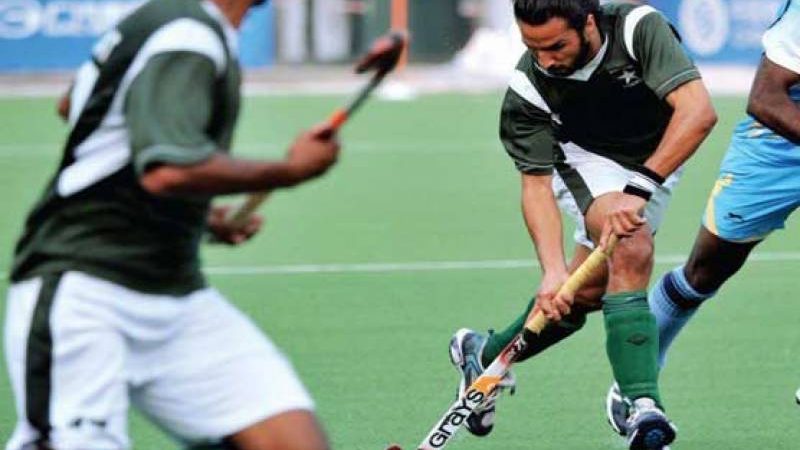
As reported by Daily Islamabad POST in its February 16, 2026 edition, the Pakistan Hockey Federation (PHF) is again at the center of an uproar after the national team’s dismal FIH Pro League campaign in Australia collided with serious allegations of mismanagement. The controversy intensified when reports emerged that the Pakistan Sports Board (PSB) had issued a cheque of Rs 10 million to the PHF for five-star hotel accommodations, yet the players found themselves in budget guest houses, cramped shared rooms, and last-minute low-cost Airbnbs. Photographs of the team’s modest lodging quickly made the rounds on social media, inflaming public sentiment and deepening anxieties about the sport’s deteriorating governance. The optics were brutal: a proud hockey nation, once synonymous with excellence, watching its players struggle on and off the field while questions swirl over where the money went and who, if anyone, is truly accountable.
The timing could not have been worse. On the pitch, Pakistan failed to secure a single win in the Australian leg, and insiders cited exhaustion, morale issues, and inadequate recovery conditions as compounding factors. Off the pitch, the revelations fed into a broader narrative of drift and dysfunction within the PHF. For months, the PSB has repeatedly written to the federation about suspected financial irregularities and the need for transparent accounting, but multiple letters have reportedly yielded little more than promises and partial responses. Those familiar with the exchanges describe a pattern of delays, incomplete documentation, and procedural stonewalling that erodes trust and invites speculation. In this climate, the accommodations scandal felt less like an isolated lapse and more like a symptom of a deeper malaise.
The PHF has firmly denied misuse of funds, insisting that all arrangements were made in good faith and that any downgrades in lodging stemmed from logistical hurdles, payment timing issues, and tight availability during a busy travel window. Officials point to last-minute venue adjustments and currency constraints as reasons bookings shifted or fell through. Yet sources close to the team recount a more worrying experience: assurances of premium facilities that failed to materialize, players squeezed into shared spaces with limited privacy, inconsistent meal arrangements that undercut nutrition plans, and transportation that did not meet professional standards. While these accounts remain to be formally verified, the disparity between official explanations and the lived reality of the touring party has widened a credibility gap that has long haunted the federation.
In response to mounting pressure, the PSB has initiated an inquiry to establish a clear trail for the Rs 10 million allocation. Investigators are expected to examine disbursement records, vendor invoices, and correspondence with accommodation providers in Australia, as well as take testimony from players and staff. The stated aim is not only to confirm whether the funds were used as intended but also to assess whether basic welfare thresholds were met for a national side competing at the sport’s elite level. Such an inquiry, if conducted with independence and urgency, could set a new standard for financial stewardship in Pakistan’s sports bodies, where governance often hinges on personalities rather than systems.
The political dimensions are impossible to ignore. Hockey insiders describe a federation mired in factional infighting, abrupt staffing changes, and a culture of shifting allegiances that prioritizes survival over strategy. The sense that “nobody knows who is truly in charge” is more than a caustic quip; it is a structural reality in which authority is diffuse, patronage is rife, and continuity is sacrificed to short-term calculations. The Prime Minister, the PHF’s chief patron, has been urged by former captains and administrators to intervene, but the demands of national governance and a crowded political agenda have left hockey low on the priority list. That vacuum of high-level attention has, in practice, licensed inertia. The result is a vicious cycle: controversies erupt, letters are written, committees form, and then little changes until the next crisis.
For the players, the cost is immediate and personal. Elite performance is a delicate compound of training, rest, nutrition, and confidence. When accommodations are subpar and routines are disrupted, the margins tilt swiftly against success. Former greats have not held back, calling the episode shameful and painful, and emphasizing that those who wear the green shirt should not bear the consequences of failed administration. Their calls have grown louder for enforceable standards: minimum grades for lodging, clearly defined per diems, reliable transport, medical coverage, and a protected channel for reporting grievances without fear of reprisal. Such measures would recognize, at last, that player welfare is not an indulgence but an essential performance variable.
The path forward will require more than a postmortem. If the inquiry confirms discrepancies, accountability must be visible and meaningful, including recoveries where appropriate and sanctions that deter repetition. If, conversely, the paper trail shows that the funds were properly allocated yet failed to translate into suitable arrangements, then the federation must overhaul its operational competence: earlier bookings, vetted vendors, contingency planning, and financial controls that withstand the chaos of international touring. Either way, a new compact is needed between funders, administrators, and athletes—one that trades opacity for transparency, expedience for professionalism, and rhetoric for measurable outcomes.
Pakistan’s hockey heritage is towering, but heritage does not win matches or shield institutions from decay. Restoring credibility will require a governance reset with independent oversight, term limits that curb entrenchment, and routine disclosures that allow supporters and sponsors to see where the money goes. It will also demand a performance pathway grounded in modern methods, consistent leadership, and a domestic calendar that prepares players for the speed and rigor of the international game. Above all, it calls for moral clarity: the recognition that when a national team travels, it represents not only a federation but a nation’s dignity. If this moment becomes a turning point—if sunlight replaces spin—Pakistan hockey can still reclaim a measure of its former authority.
Related News

Pakistan’s fuel price fiasco: a betrayal of the common man
In a decision that has sparked nationwide outrage, the Pakistani government has imposed a staggeringRead More

Pakistan’s fuel price debacle: a ruthless assault on the poor
EDITORIAL In a move that has ignited widespread fury across Pakistan, the government has hikedRead More
Comments are Closed