

PIDE hosts policy session on successful IMF second review completion
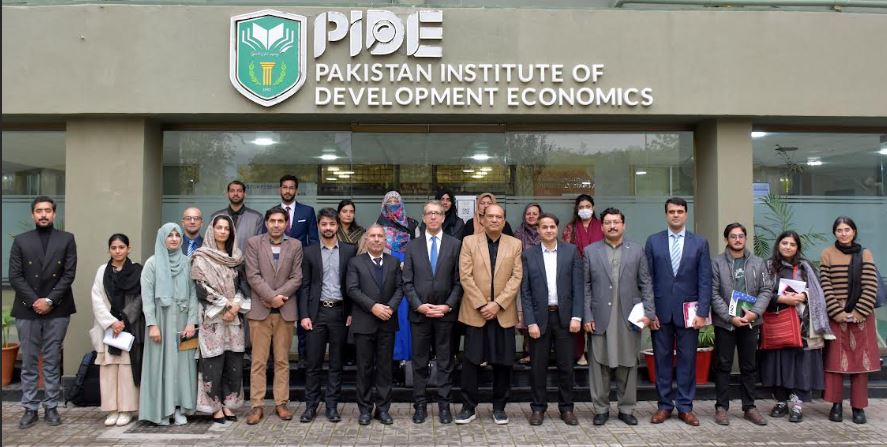
ISLAMABAD, DEC 19 /DNA/ – The Pakistan Institute of Development Economics (PIDE) convened a policy session on the International Monetary Fund’s (IMF) Extended Fund Facility (EFF), focusing on the successful completion of the second review, at its Islamabad office. The session was delivered by Mr. Mahir Binici, Resident Representative of the IMF in Pakistan, marking his first official visit to PIDE. The event brought together faculty members, researchers, students, and policy professionals for an in-depth exchange on Pakistan’s macroeconomic trajectory and reform priorities.
The session was formally inaugurated by Dr. Karim Khan, Dean of Academics at PIDE, who emphasized the importance of informed, evidence-based policy dialogue in addressing Pakistan’s economic challenges. Highlighting PIDE’s role as a platform for rigorous research and policy engagement, Dr. Khan outlined the core objectives of the IMF-supported program, including fiscal sustainability through achieving a primary balance, maintaining a sustainable debt-to-GDP ratio, strengthening macroeconomic prudence, enhancing climate resilience in light of Pakistan’s vulnerability to climate shocks, and reinforcing social protection mechanisms.
In his presentation, Mr. Mahir Binici provided a comprehensive overview of the completion of the second review under Pakistan’s IMF Extended Fund Facility, approved on December 8, 2025. He noted that the 2024 EFF has been designed by incorporating lessons from previous arrangements, with a stronger emphasis on building economic resilience and supporting sustainable growth. The presentation covered key elements of the program, including macroeconomic stabilization, fiscal consolidation and revenue mobilization, inflation dynamics, monetary policy stance, and developments in the external sector and foreign exchange market. While acknowledging recent improvements in economic indicators, Mr. Binici cautioned that macroeconomic vulnerabilities persist, underscoring the need for continued and credible reform efforts.
Highlighting progress under the program, Mr. Binici pointed to reductions in external imbalances, improved functioning of the foreign exchange market, and a gradual easing of pressure on foreign exchange reserves. He stressed that these stabilization gains must be preserved through policy continuity, discipline, and consistency to ensure long-term durability. On fiscal policy, he underscored the importance of consolidation to ensure debt sustainability, identifying tax base broadening, stronger tax administration, and rationalization of untargeted subsidies as key reform priorities necessary to create space for development spending and social protection.
Addressing inflation and monetary policy, Mr. Binici acknowledged the adverse impact of high inflation on households and emphasized the role of a tight and credible monetary policy framework in restoring price stability. He highlighted the importance of central bank independence and anchoring inflation expectations as foundations for sustainable economic growth. On the external sector, he reiterated the value of a market-determined exchange rate in absorbing external shocks, enhancing export competitiveness, and supporting foreign exchange reserve accumulation.
Mr. Binici also emphasized that structural reforms remain central to the IMF-supported program, particularly in the energy sector, state-owned enterprises, and governance and transparency frameworks. He noted that these reforms are critical not only for macroeconomic stabilization but also for strengthening long-term economic resilience. Recognizing the social costs associated with adjustment measures, he stressed the importance of targeted social safety nets to protect vulnerable segments of society from the impact of inflation and reforms.
Concluding his remarks, Mr. Binici underscored the importance of strong domestic ownership and consistent implementation of reforms for the success of the program, noting that nationally driven and well-communicated reforms help build investor confidence and support durable growth. He also appreciated PIDE’s role in facilitating constructive engagement between academia and policymakers, emphasizing that research-driven analysis and informed debate are essential for effective economic policymaking. The session concluded with an interactive question-and-answer segment, reflecting strong academic and policy interest in Pakistan’s ongoing engagement with the IMF.
Related News

APNS, AGM, elections on Tuesday
DNA KARACHI: The Annual General Council of the All Pakistan Newspapers Society will meet onRead More
Mideast crisis: President, PM stress coordinated strategy to tackle challenges
ISLAMABAD: President Asif Ali Zardari and Prime Minister Shehbaz Sharif on Monday stressed the needRead More
Comments are Closed