

Pakistan’s Crisis Is Not Just A Economic: It Is The Crisis Of Decision Making
By Amna Zafar
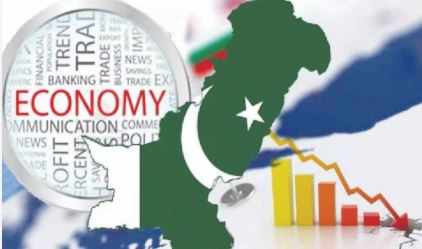
Economic ills are known to return often via familiar indicators:inflation rises, debt increases, and foreign exchange reserves dwindle. These are the figures highlighted by headlines and that dominate public debate, and by most yardsticks, it is reasonable to conclude that the problem with Pakistan is a fiscal one. This, however, is basically a superficial assessment, failing to capture a more prime and persistent predicament: it is not economic scarcity but chronic defects in decision-making that create the recurring cycle of economic crises in Pakistan.
For years, the leadership has been conscious of various key structural vulnerabilities in the economy-from narrow tax bases and energy problems to state-owned enterprises in distress. In spite of this recognition, effective reforms have been slow, uneven, or even reversed under social and political pressures. The governments increasingly resort to short-term palliatives such as price controls, emergency subsidies, or temporary borrowing. Such remedies can alleviate the hardships people face but do nothing to help strengthen the economy over time. Given this pattern of reactive policies and quick fixes, deep-seated systemic issues have been successfully circumvented.
This is the pattern in the history of Pakistan’s reforms. Whenever met with resistance from special interests or unpopular public opinion, governments roll back their intended adjustments. The fiscal deficits remain large, energy crises persist, and institutional inefficiencies show no significant sign of dispersing. Incoherent policy erodes public confidence and dampens foreign and local investment. Effective planning and sustained growth can hardly be achieved in this environment.
But political instability worsens these problems: all too short electoral cycles; the struggle of instituted conflicts among themselves; and chronic changes in government result in hesitation in decisions being taken. Economic governance is essentially reactive because in the best scenario, it would be concerned with the long-term interests of the nation. With the absence of political continuity, reformist efforts cannot surge ahead, no matter how well-intentioned. Instead of structural changes engineered over time, what results is a vicious circle of crisis management.
Weak decision-making also bears considerable social consequences. For many, economic hardship has become the new normal, easing the pressure on the government to pursue genuine reforms. As opportunities and living standards decline, so do the public’s expectations of governance. This gradual accommodation to the crisis clearly diminishes accountability, perpetuating the possibility of inertia in policymaking and maintaining a status quo of unresolved systemic problems.
The decisionmaking dilemma in Pakistan is also underscored by the pattern of its dealings with foreign financial institutions. The support from abroad is perceived as an expedient rather than an opportunity for genuine reform. Once short-term relief is attained, commitments agreed to in international pressure often lose momentum, thus maintaining the vicious circle of vulnerability and dependency. Even reforms that have some backing from outside sources generally cannot result in long-lasting effects without adequate persistent domestic leadership and clear long-term plans.
Economic challenges include an excessive reliance on short-term solutions. Temporary borrowings, price controls, and emergency subsidies may bring about immediate relief, but they also distort market signals and undermine the solid bases of a sound economy. Long-term projects, essential infrastructure investments, and structural adjustments are usually sacrificed and replaced with continuous shortages, financial disequilibria, and increasing social unrest.
Ultimately, the economic crisis in Pakistan is one of lacking political will rather than resources or knowledge. Everything needed for reform is available to the country, including frameworks, expertise, and resources; what is persistently missing is governance with a resolve to address the situation. The prioritization of long-term national interests over short-term political gains remains key but is absent. Without it, economic stability will remain uncertain. A sustained recovery has to be based on policy continuity, strategic planning, and the political courage to take difficult but essential decisions, even when they might not enjoy immediate popularity.
Related News

When War Theories Go Viral
Zaryab Zaib A short video, reportedly circulating on Chinese social media, has stirred a familiarRead More

A Test of Global Order and Pakistan’s Resolve
By Muhammad Mohsin Iqbal There was a time when the world, weary of war andRead More
Comments are Closed