

Pakistan orders strict screening of travellers to stop Nipah virus spread
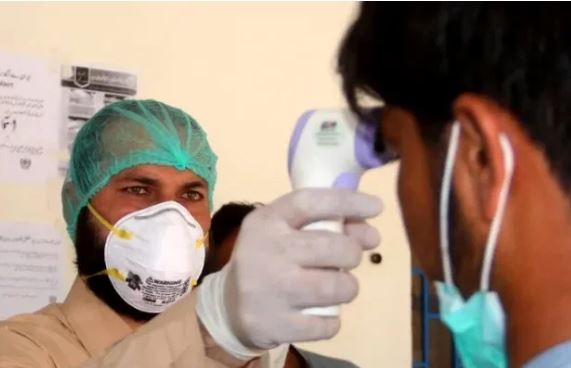
ISLAMABAD, JAN 28: Pakistan has issued strict health screening measures at all entry points after two cases of the deadly Nipah virus were confirmed in India’s West Bengal.
Nipah is classified as a priority pathogen by the World Health Organisation (WHO) because of its ability to spark fast‑moving outbreaks, its fatality rate of 40% to 70%, and the fact that there is no approved vaccine or cure.
In its health advisory, the Ministry of National Health Services, Regulations & Coordination has mandated that no individual will be allowed entry into the country without clearance from Border Health Services – Pakistan.
The ministry stated that the decision comes “in view of the recent regional alert regarding Nipah Virus (NiV), as reported through international and regional public health surveillance mechanisms, including the WHO South-East Asia Region Epidemiological Bulletin (January 2026), which has reported suspected cases of Nipah virus infection in West Bengal, India, and considering the high case fatality rate, zoonotic nature, and potential for human-to-human transmission.”
To prevent cross-border transmission and ensure early detection, the health ministry has ordered enhanced surveillance at all points of entry (POEs), including international airports, seaports, and land crossings.
“No individual is allowed entry into Pakistan without health clearance by Border Health Services–Pakistan,” the advisory said.
The instructions call for 100% screening of all passengers, transit travellers, crew members, drivers, helpers, and support staff. Mandatory verification of country of origin and complete travel history for the past 21 days will be conducted for all travellers, regardless of nationality.
Special attention will be given to individuals arriving from or transiting through Nipah-affected or high-risk areas, with any false declarations to be documented and reported immediately.
“All travellers will undergo thermal screening and clinical assessment at the POE. Screening staff have been instructed to remain alert for symptoms including fever, headache, respiratory issues, and neurological signs such as confusion or drowsiness,” it stated.
The advisory said that suspected cases will be isolated and managed according to infection prevention and control (IPC) protocols, and referred to designated isolation facilities or tertiary care hospitals. Affected conveyances and surrounding areas will be disinfected as per approved SOPs.
Airport health authorities wearing protective masks monitor passengers from international flights arriving at Suvarnabhumi International Airport in Bangkok, Thailand, January 25, 2026. — Reuters
Airport health authorities wearing protective masks monitor passengers from international flights arriving at Suvarnabhumi International Airport in Bangkok, Thailand, January 25, 2026. — Reuters
The health ministry emphasised strict compliance with IPC measures, including the use of PPE, hand hygiene, and environmental sanitation, warning that any lapse will be considered serious negligence.
“Daily reports from all POEs will be recorded in the BHS-P system and shared with the National Command and Operation Centre (NCOC) and the National IHR Focal Point. The measures will remain in force until further notice,” it said.
Meanwhile, authorities across Singapore, Hong Kong, Thailand and Malaysia have taken urgent steps to stop the highly lethal and epidemic‑prone Nipah virus from spreading beyond India, rolling out airport temperature checks and other screening measures.
What is Nipah virus?
Nipah is a rare viral infection that spreads largely from infected animals, mainly fruit bats, to humans. It can be asymptomatic but it is often very dangerous, with a case fatality rate of 40% to 75%, depending on the local healthcare system’s capacity for detection and management, the World Health Organisation says.
However, while it can also spread from person to person, it does not do this easily, and outbreaks are usually small and fairly contained, according to experts and the European Centre for Disease Prevention and Control. Candidate vaccines are under development, although none have been approved yet.
How common is it?
Nipah was first identified in Malaysia in 1999. Since then, there have been small outbreaks almost every year, mostly in Bangladesh. India also sees sporadic outbreaks. According to the Coalition for Epidemic Preparedness Innovations, a group that tracks emerging disease threats and funds the development of medical tools to protect against them, as of December 750 cases had been recorded in all, and 415 of the patients died.
Reuters traced the spread of Nipah in a 2023 series, Bat Lands.
How does it spread?
When first identified in Malaysia, Nipah spread largely through direct contact with sick pigs or contaminated tissues. Since then, it more commonly spreads from contact with what scientists say is its natural host: fruit bats.
More specifically, the consumption of fruit or fruit products – like raw date palm juice – containing urine or saliva from infected fruit bats has been the most likely source of infection, the WHO says. Human-to-human spread has been found, mainly after close contact between a sick patient and their family or caregivers.
What are the symptoms?
The initial symptoms of Nipah such as fever, headaches and muscle pain are not specific and can be confused with other diseases. These can then be followed by neurological signs indicating acute encephalitis, or inflammation of the brain, and some people experience severe respiratory problems. Seizures occur in severe cases, progressing to a coma in days. Most people who get better make a full recovery, but some experience long-term neurological problems.
How worried should we be?
While Nipah is a dangerous disease with a high fatality rate, it has not yet shown signs of becoming more transmissible among humans or spreading easily worldwide, scientists say.
However, it remains a significant public health concern, according to the WHO, particularly in countries where outbreaks are more common. It can also lead to the mass culling of farm animals such as pigs that are susceptible to the virus.
Scientists say, however, that it is unlikely to spread globally – and also point out that airport screening may be ineffective as the virus has a long incubation period.
What vaccines or treatments are available?
There are currently no approved vaccines or treatments for Nipah, although a number of candidates are undergoing testing, including one developed by the Oxford University scientists involved in developing one of the COVID-19 vaccines.
Their Nipah vaccine uses the same technology and began phase II testing in Bangladesh in December in collaboration with the International Centre for Diarrhoeal Disease Research, Bangladesh, and with funding from CEPI.
— With additional input from Reuters
Related News

MedExpo Kyrgyzstan 2026: 90 companies take part in healthcare exhibition
Bishkek, Mar 31: The international healthcare exhibition MedExpo Kyrgyzstan 2026 is taking place in BishkekRead More

Early detection key as childhood heart issues increase, awareness crucial
ISLAMABAD, Mar 27: Executive Director of the National Institute of Cardiovascular Diseases (NICVD) in Karachi,Read More
Comments are Closed