

Pakistan faces diplomatic dilemma over Gaza governance boards
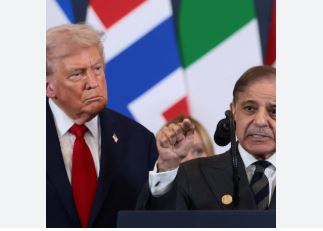
Without Palestinian representation at the highest levels, any international effort risks being seen as imposed rather than inclusive a perception that could undermine its effectiveness in the long run
Asnar Mahmood Bhatti
ISLAMABAD, JAN 19 /DNA/ – The unveiling of two senior boards tasked with shaping the future governance of Gaza has sparked intense debate across the region. While the initiative is being presented as a step toward stabilizing Gaza and attracting international investment, the composition of these boards has raised serious concerns—particularly in Pakistan, which has been invited to participate alongside Qatar, Türkiye, and the United Arab Emirates (UAE).
So far, no Palestinian names have been included on the two separate senior boards. The first, called the Founding Executive Board, is designed to focus on high-level investment, diplomacy, and strategic direction. The second, the Gaza Executive Board, is responsible for overseeing the on-the-ground work of the National Committee for the Administration of Gaza (NCAG).
The NCAG itself is composed of technocratic, apolitical Palestinians, led by Dr. Ali Shaath, a civil engineer by training who has previously held ministerial positions within the Palestinian Authority. While this committee is meant to provide local legitimacy, its limited scope and lack of political representation have raised eyebrows among observers.
Despite the existence of the Gaza Executive Board and NCAG, analysts note that the real power lies with the Founding Executive Board. Of its seven members, six are Americans, including US Secretary of State Marco Rubio, Trump’s son-in-law Jared Kushner, and Steve Witkoff, the US Special Envoy to the Middle East and a close friend of President Trump. The only non-American member is former UK Prime Minister Tony Blair, who has long been involved in Middle East diplomacy.
The absence of Palestinian representation on this powerful board has been described as a glaring omission, raising questions about the credibility of the governance structure. Critics argue that decisions about Gaza’s future are being made without the direct involvement of Palestinians themselves.
President Trump has extended invitations to Pakistan, Qatar, Türkiye, and the UAE to engage with the boards. However, Saudi Arabia’s name is conspicuously missing. For Pakistan, this presents a diplomatic dilemma.
Islamabad’s foreign policy interests are closely tied to Riyadh, both economically and strategically. Saudi Arabia has historically been a major source of financial support, energy cooperation, and political backing for Pakistan. Any move by Pakistan to participate in a US-led initiative without Saudi involvement risks straining this critical relationship.
Diplomatic sources suggest that Pakistan will need to tread carefully, consulting not only with Saudi Arabia but also with Türkiye and Qatar, who have their own stakes in Gaza’s future. The UAE’s inclusion adds another layer of complexity, given its evolving ties with Israel and the United States.
Beyond the diplomatic balancing act, the structure of the boards themselves has drawn criticism. The fact that six of the seven members of the Founding Executive Board are Americans, with no Palestinian representation, has fueled concerns about legitimacy.
Observers warn that decisions made by a board dominated by US officials and business figures may prioritize investment and geopolitical interests over the needs of ordinary Palestinians. The presence of Tony Blair, while adding international credibility, does little to address the absence of Palestinian voices at the highest level.
Pakistan’s decision will likely hinge on consultations with Saudi Arabia, Türkiye, and Qatar. While Islamabad may be tempted to accept the invitation as a way to enhance its diplomatic profile, it cannot afford to alienate Riyadh.
Foreign policy experts argue that Pakistan should push for greater Palestinian representation on the boards before committing to participation. Doing so would not only strengthen the legitimacy of the governance structure but also provide Islamabad with a principled justification for its involvement.
At the same time, Pakistan must weigh the potential benefits of engaging with the US-led initiative, including opportunities for investment and diplomatic influence. However, any such engagement will need to be carefully calibrated to avoid undermining its long-standing ties with Saudi Arabia.
The unveiling of the Gaza governance boards has opened a new chapter in Middle Eastern diplomacy, but one fraught with challenges. For Pakistan, the invitation to join comes with both opportunities and risks. The absence of Saudi Arabia from the initiative complicates Islamabad’s decision, forcing it to balance its strategic interests with its alliances.
Ultimately, Pakistan’s path forward will depend on careful consultation with regional partners and a clear-eyed assessment of the legitimacy of the governance structures being proposed. Without Palestinian representation at the highest levels, any international effort risks being seen as imposed rather than inclusive a perception that could undermine its effectiveness in the long run.
Related News

Ishaq Dar announces Pakistan ready for US-Iran dialogue
ISLAMABAD, MAR 29 /DNA/ – Deputy Prime Minister and Foreign Minister Ishaq Dar on SundayRead More
Saudi Foreign Minister meets Prime Minister Shehbaz
ISLAMABAD, MAR 29: /DNA/ – Prince Faisal bin Farhan Al-Saud, Foreign Minister of Saudi Arabia,Read More
Comments are Closed