

Iran vs U.S.: When Demands Collide, Can Peace Survive?
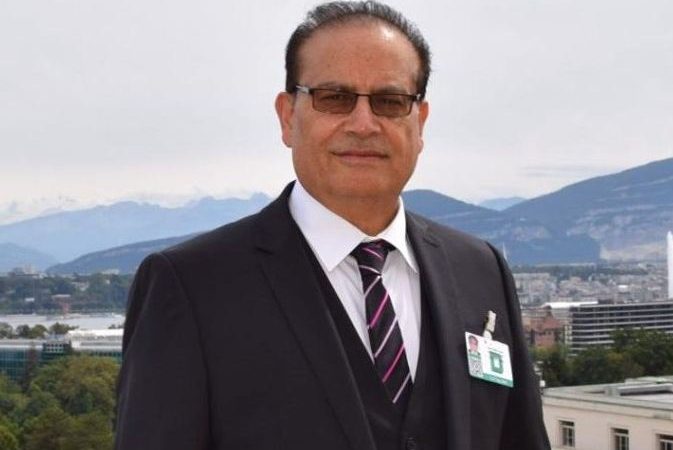
Qamar Bashir
The Middle East today is not witnessing a single war, but a convergence of multiple battlefields—each feeding into the other and pushing the region toward a dangerous tipping point. What began as a confrontation between Iran, Israel, and the United States has now expanded into a multi-front conflict involving Lebanon, Yemen, the Gulf states, and beyond. The war is no longer linear; it is layered, interconnected, and increasingly uncontrollable.
One of the most intense theaters of this conflict is southern Lebanon, where Israeli operations have escalated dramatically. Infrastructure—bridges, homes, businesses—has been systematically targeted under the justification of creating a “buffer zone” to prevent missile threats. The humanitarian cost has been devastating: over a thousand civilians killed and more than a million displaced, forced into survival conditions that resemble a humanitarian catastrophe.
This front is deeply linked with the broader Iran-Israel confrontation. Analysts like Scott Ritter argue—controversially—that Lebanon’s political leadership has failed to defend its sovereignty, enabling external aggression. While such claims remain debated, they reflect a growing perception of state fragility in the region.
Ritter also warns that if Israel commits to a ground invasion, it risks repeating its past miscalculation, when Hezbollah forced Israeli withdrawal from southern Lebanon. In that sense, Lebanon could become a strategic trap—just as Iraq and Afghanistan became prolonged quagmires for the United States.
Against this volatile backdrop, Iran has articulated a five-point framework for negotiation. This proposal comes in direct response to what Tehran considers a “one-sided” and “maximalist” U.S. plan that demands strategic capitulation.
The first Iranian demand is simple and fundamental: an immediate cessation of attacks by the United States and Israel. From Tehran’s perspective, no negotiation can take place under active bombardment.
The second demand, however, is the most critical—and the most transformative. It calls for binding guarantees that Iran will not be attacked again. On the surface, this appears reasonable. But its implicit meaning is far deeper and far more consequential.
Iran is not asking for verbal assurances—it is demanding structural change. In essence, this demand implies that the United States must dismantle the very infrastructure that makes repeated attacks possible. This includes the network of U.S. military bases spread across the Middle East—particularly in the Gulf Cooperation Council countries and other regional states—that have historically been used to project power toward Iran.
From Tehran’s perspective, as long as these bases exist, any promise of peace is hollow. A missile launched from a distant continent is one thing; a missile launched from a nearby base is an immediate existential threat. Therefore, Iran’s logic is uncompromising: peace cannot coexist with a permanent war infrastructure positioned at its doorstep.
This makes the second demand the cornerstone of Iran’s entire proposal. It is not just about security—it is about redefining the regional balance of power. Accepting it would require the United States to rethink decades of military strategy in the Middle East, potentially withdrawing or significantly reducing its forward presence.
For Washington, this is a strategic red line. Its military bases are not only about Iran but about securing energy routes, maintaining alliances, and projecting global influence. Removing them would reshape the geopolitical order of the region.
This is why this clause is likely to become the breaking point in negotiations. It is binary—either the infrastructure of threat is removed, or it remains. There is little room for compromise. And if it remains, Iran believes that history will repeat itself: negotiations will occur, promises will be made, and attacks will follow.
The third demand introduces an economic dimension. Iran seeks recognition of its rights over the Strait of Hormuz—one of the most critical energy corridors in the world. Tehran proposes imposing transit or security fees on ships passing through, arguing that such a mechanism would help it recover war-related losses and assert sovereign control.
The fourth demand focuses on reparations. Iran calls for compensation for civilian casualties and infrastructure destruction, proposing an international mechanism to assess damages and enforce payments. This reframes Iran not as an aggressor, but as a state seeking justice under international law.
The fifth demand expands the scope of peace. Iran insists that Israel must cease attacks not only on Iran but also on regional actors aligned with it—in Lebanon, Syria, Iraq, and Yemen. This reflects Iran’s broader strategic vision: that regional peace cannot be achieved through isolated agreements but requires a comprehensive de-escalation.
When compared with the United States’ 15-point plan—which includes dismantling Iran’s nuclear program, restricting its missile capabilities, and ending its regional alliances—the gap becomes stark. The U.S. framework seeks to limit Iran’s power; Iran’s framework seeks to remove threats against it.
Both sides are effectively boxed into opposing paradigms. For the United States, compromise risks weakening its strategic dominance. For Iran, compromise risks surrendering sovereignty and deterrence.
In this rigid standoff, any concession by either side would be perceived not as compromise but as capitulation. This is precisely why diplomacy has stalled and why the risk of escalation continues to intensify. This evolving reality also reflects a broader and more troubling pattern in U.S. strategic behavior.
From the prolonged engagement in the Vietnam War, to nearly a decade of conflict following the Iraq War, and two decades of entanglement in the War in Afghanistan, the United States has repeatedly found itself embedded in extended conflicts. Now, with Afghanistan no longer serving as a theater of engagement, a new front appears to be taking shape—one that risks drawing Washington into another prolonged and complex confrontation. This raises a critical question: whether sustained geopolitical engagement through conflict has become an embedded feature of U.S. strategic doctrine, where controlled instability in key regions is perceived as serving long-term national interests, even if those interests are not always clearly articulated.
At this critical juncture, what is required is not conventional diplomacy, but a deliberate, sincere, and strategically articulated effort to bring both parties out of their entrenched positions. A meaningful resolution will not emerge from forcing one side to surrender, but from crafting a mutually acceptable, win-win framework—one that preserves sovereignty while addressing security concerns.
Without this shift, the trajectory is clear. The war will expand, new fronts will open, and the region will descend deeper into instability. The pattern is not new. From Vietnam to Iraq to Afghanistan, history has shown that wars born out of strategic rigidity often evolve into prolonged quagmires. The danger now is that the Middle East is on the verge of becoming the next chapter in that pattern.
And while states negotiate, calculate, and posture, it is the civilians—from Lebanon to Iran and beyond—who continue to pay the price.
In the end, this is not just a war of missiles and military might. It is a war of narratives, perceptions, and strategic visions. And unless those visions can be reconciled through genuine diplomacy, the region risks remaining trapped in a cycle of conflict with no clear end.
Qamar Bashir
Press Secretary to the President (Rtd)
Former Press Minister, Embassy of Pakistan to France
Former Press Attaché to Malaysia
Former MD, SRBC | Macomb, Michigan
Related News

Iran vs U.S.: When Demands Collide, Can Peace Survive?
Qamar Bashir The Middle East today is not witnessing a single war, but a convergenceRead More

The Peacemaker Who Played with Power
by Muhammad Mohsin Iqbal On a hushed night in the year 2060, when the cityRead More
Comments are Closed