

GCC-Pakistan free trade agreement hailed
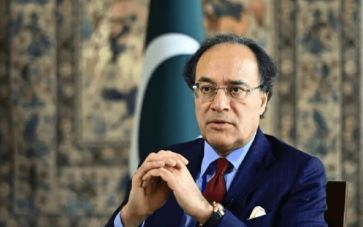
- Finance Ministers of Pakistan and Qatar Call for Diversification, Resilience and Technological Collaboration
- Qatar Describes Pakistan as ‘Brother Country’ as Both Nations Chart Future Trade and Technology Pathways
ISLAMABAD, DEC 6 /DNA/ – Federal Minister for Finance and Revenue Senator Muhammad Aurangzeb participated earlier today as a distinguished speaker on a high-level panel at the 23rd edition of the Doha Forum, held on December 6–7, 2025, at the Sheraton Grand, Doha today.
The Minister was invited jointly by the Doha Forum, the Ministry of Finance of the State of Qatar, and the International Monetary Fund to contribute to the session titled “Global Trade Tensions: Economic Impact and Policy Responses in MENA,” a timely conversation examining how escalating trade disputes, protectionist policies, and shifting global supply chains are reshaping economic trajectories across the Middle East and North Africa region.
The session brought together senior policymakers and global economic leaders to discuss how MENA economies can navigate an era marked by heightened uncertainty, growing geo-economic rivalry, and emerging opportunities for deeper cooperation and diversification.
In his remarks, Senator Muhammad Aurangzeb highlighted Pakistan’s progress in achieving macroeconomic stability following the Extended Fund Facility programme with the IMF and underlined the importance of sustained structural reforms in taxation, energy, state-owned enterprises, and private-sector development.
Discussing the global trade environment, he noted that Pakistan had engaged constructively with the United States to manage new tariff measures and had secured a comparatively favorable 19 percent tariff on key textile exports.
He emphasized that the environment of shifting trade dynamics had encouraged Pakistan to accelerate product diversification particularly the rapid rise of IT services exports, expected to reach nearly USD 4 billion this year as well as geographical diversification, expanding trade engagement with Gulf countries and Central Asian republics including Azerbaijan, Turkmenistan, and Kazakhstan.
The Minister observed that while Pakistan had not yet experienced severe downside risks from global trade frictions, the evolving situation underscored the need for continual adaptability and forward-looking policy responses.
Responding to questions on Pakistan’s fiscal resilience and capacity to absorb external shocks, the Minister stated that Pakistan had rebuilt fiscal buffers, with both the primary fiscal balance and current account returning to surplus, supported significantly by strong remittance inflows of USD 18–20 billion annually from the MENA and GCC region. He reaffirmed that while Pakistan remained vigilant in the face of geopolitical uncertainty, the more pressing existential risks were climate change and demographic pressures.
Senator Aurangzeb noted that severe flooding in Pakistan had shaved at least 0.5 percent off GDP growth this year alone, calling for urgent climate financing and investment in resilient infrastructure. He reiterated Pakistan’s commitment to continuing structural reforms to transition sustainably from stabilization to growth.
H.E. Ali Bin Ahmed Al Kuwari, Minister of Finance of the State of Qatar, spoke at length about Qatar’s strong and expanding partnership with Pakistan, describing Pakistan as a “brother country” and underscoring the depth of bilateral trade relations, particularly in LNG supply as well as Qatari imports of agricultural and textile goods.
He announced that the recently concluded Free Trade Agreement between Pakistan and the Gulf Cooperation Council, GCC’s first FTA in many years, represented a major milestone that would significantly expand trade flows and cooperation between Pakistan and Gulf economies.
He commended Pakistan’s potential in emerging sectors, including artificial intelligence, digital technologies, and downstream applications that could benefit both countries as the global race for AI leadership accelerates.
H.E. Al Kuwari highlighted Qatar’s keen interest in collaborating with Pakistan on AI strategy and capability development, noting the importance of Pakistan’s growing talent base and the complementarities between the two economies. He affirmed that Qatar’s relationship with Pakistan was strong, multifaceted, and poised for deeper expansion with the FTA now in place.
Mr. Bo Li, Deputy Managing Director of the International Monetary Fund, praised Pakistan’s reform trajectory and resilience-building efforts, calling Pakistan “a very good example of embarking on the right path of reform and resilience.”
He highlighted that in addition to the USD 7 billion stabilization programme, the IMF was extending USD 1.3 billion to Pakistan under the Resilience and Sustainability Facility (RSF), aimed at strengthening fiscal, financial, and physical resilience to climate-related risks.
He elaborated that the programme would support Pakistan in advancing green budgeting, integrating climate-risk assessments into financial regulation, improving climate-related data disclosure, and enhancing climate-resilient infrastructure planning. Mr. Li reiterated the IMF’s strong commitment to supporting Pakistan in its efforts to manage climate vulnerabilities and build long-term resilience.
The discussion also touched on Pakistan’s evolving relationships with both China and the United States. Senator Aurangzeb reaffirmed that Pakistan’s approach remained pragmatic and nationally focused, emphasizing that Pakistan viewed its partnerships with both major powers as complementary.
He noted the ongoing transition to CPEC Phase 2.0, shifting from government-to-government infrastructure to business-to-business investment, and highlighted emerging collaboration with the United States in minerals and mining as well as digital technologies including AI, blockchain, and Web 3.0. On the digital front, the Minister noted Pakistan’s establishment of a crypto council and its efforts to develop a regulatory framework for virtual assets that mitigates risks such as capital flight and strengthens anti–money laundering safeguards.
Discussing Pakistan’s significant youth demographic and its vibrant freelancer community being the third largest in the world, the Minister underscored that upskilling in blockchain, AI, and advanced digital competencies could rapidly expand opportunities for Pakistani youth, enabling them to move from earning USD 10–12 per hour in basic coding to USD 60–250 per hour in specialized fields. He emphasized that this transition represented a major economic opportunity for Pakistan’s future growth.
Later in the day, Senator Muhammad Aurangzeb and Qatar’s Finance Minister H.E. Ali Bin Ahmed Al Kuwari held a bilateral meeting after the panel to advance the areas of cooperation highlighted during the discussion. Both sides reaffirmed their commitment to strengthening economic ties, particularly by maximizing opportunities created through the newly concluded GCC–Pakistan Free Trade Agreement, expanding trade flows, and deepening energy cooperation, including long-term LNG collaboration.
The two ministers also agreed to enhance partnership in emerging technologies, especially artificial intelligence, where Qatar aims to build advanced capabilities and views Pakistan’s growing digital talent as a key asset. They discussed collaboration on digital infrastructure, skills development, and regulatory reform, and agreed to establish structured mechanisms to carry forward joint work in trade diversification, technology, climate resilience, and investment facilitation. Both expressed confidence that Pakistan–Qatar relations are entering a new phase of strategic growth.
Related News
Govt preparing targeted relief package for vulnerable segments: FinMin
ISLAMABAD, MAR 22: Finance Minister Muhammad Aurangzeb on Sunday announced that the government was preparingRead More
Islamabad summit prescribes reforms to drive economic growth
ISLAMABAD, MAR 18 /DNA/ – The Pakistan Investment Potential Summit concluded with a strong consensusRead More
Comments are Closed