

Gandhara can put Pakistan on the Global Buddhist tourism map: Imran Shauket
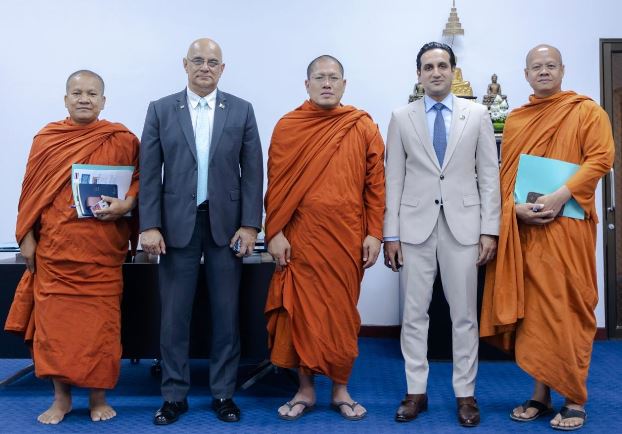
Tasked to turn Gandhara heritage into a global Buddhist destination
STAFF REPORTER
ISLAMABAD, SEP 5 /DNA/ – Pakistan is preparing to transform its ancient Gandhara heritage into a major global destination for Buddhist pilgrims and tourists, with the newly constituted Prime Minister’s Task Force on Gandhara focusing on the steps such as promotion, easier visas, freedom of movement, infrastructure development and involvement of local communities.
Imran Shauket, Coordinator of the Prime Minister’s Task Force on Gandhara, said the initiative aimed to present Pakistan’s Gandhara civilisation to millions of Buddhists worldwide and unlock its enormous cultural, religious and economic potential.
Prime Minister Muhammad Shehbaz Sharif recently constituted the task force under the Ministry of National Heritage and Culture, with Federal Minister Aurangzeb Khan Khichi as its chair and Shauket as coordinator.
The task force includes senior representatives of the relevant federal ministries and provincial departments, particularly Punjab and Khyber Pakhtunkhwa, which are the principal custodians of Gandhara heritage.
In Imran Shauket’s views, Gandhara holds extraordinary spiritual significance for the Buddhists and had the potential to become one of the world’s leading Buddhist tourism destinations.
“Gandhara is to Buddhists what Mecca and Medina are to Muslims in terms of spiritual significance,” he said, stressing that Pakistan had yet to fully recognise and present this heritage to the world.
He acknowledged that previous attempts to promote Gandhara tourism had faced difficulties but said the new approach was designed to avoid conflict over provincial jurisdiction. Archaeology and tourism are provincial subjects under the Constitution, particularly following the 18th Amendment.
“The task force has deliberately been designed to coordinate and facilitate, not implement,” he said, adding that the federal government was not seeking to take over the responsibilities of provinces or relevant ministries.
The task force’s immediate priorities include establishing a “Patrons of Gandhara Sangha” comprising 15 to 20 senior Buddhist monks from different countries.
These influential religious figures would serve as ambassadors and promoters of Gandhara among Buddhist communities around the world.
Another major proposal is to introduce a distinct Buddhism category in Pakistan’s visa system and eventually facilitate multi-year, multiple-entry visas for Buddhist monks and senior leaders.
Shauket also called for a more streamlined internal travel and NOC regime, arguing that Pakistan should be open to visitors by default, with restrictions imposed only where there are genuine and clearly communicated security concerns.
Infrastructure and human resource development are also central to the plan. The task force is considering earmarking five to 10 acres around selected Gandhara sites where Buddhist institutions could establish study and meditation centres, enabling visitors to stay longer.
Local communities, he said, must be among the primary beneficiaries of the initiative. Residents around Gandhara sites could be trained in hospitality, food services, handicrafts, guiding, transport and homestays.
The government is already planning several milestones. An International Gandhara Conference is scheduled for November, while delegations from Bangladesh and Sri Lanka are expected in October and November respectively. Pakistan Day is also planned in Bangkok in October in partnership with Ambassador Saadia Qazi.
Shauket said the long-term economic potential was substantial. If Pakistan could attract just one percent of the world’s Buddhist population, estimated at around five million pilgrims annually, and visitors stayed for approximately two weeks while spending around $200 a day, the potential economic impact could reach roughly $14 billion annually in today’s terms.
He stressed, however, that the figure was a target rather than a promise and would depend on improvements in visas, security, infrastructure and trained human resources.
He cited the Kartarpur Corridor as an example of Pakistan’s ability to welcome a global faith community in an organised and dignified manner, saying Gandhara could similarly contribute to interfaith harmony.
Shauket said his own engagement with Gandhara began nearly a decade ago after he was asked to host a visiting Buddhist monk and delegation. Since then, he has been involved in more than 100 Gandhara-related initiatives, including hosting monks, engaging investors and promoting the heritage in Thailand, Taiwan, Malaysia, Cambodia and the United States.
He said Pakistan should regard itself as a guardian and custodian of Gandhara rather than merely a country possessing its ruins.
“We invite Buddhist leaders, monks and pilgrims to come to Pakistan, experience Gandhara and help us build this vision with them, rather than simply for them,” he said.
Related News

Two Pak soldiers embraced Shahadat in intense Dera Ismail Khan firefight
RAWALPINDI, OCT 25 /DNA/ – Security Forces conducted an intelligence based operation in general areaRead More

From mobile screens to snow: Digital tourism sparks new craze for Galiyat’s winter wonderland
NATHIAGALI, Oct 25 (DNA):The first snowfall of winter on weekend transformed the picturesque Galiyat andRead More
Comments are Closed