

EU-India Partnership Blossoms
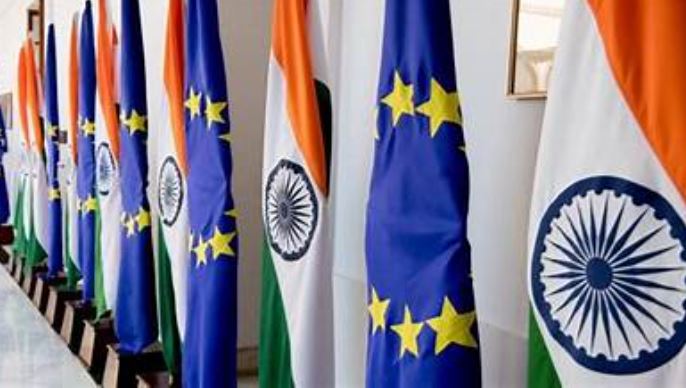
In a vibrant display of diplomatic synergy, European Union leaders Ursula von der Leyen, President of the European Commission, and António Costa, President of the European Council, graced India’s 77th Republic Day celebrations as chief guests.
Their presence at the grand parade on Kartavya Path symbolized a deepening strategic alliance between the EU and India, culminating in the anticipated signing of a long-awaited Free Trade Agreement (FTA) tomorrow at the EU-India Summit.
This milestone is poised to elevate bilateral relations to new heights, fostering economic growth and mutual prosperity in an era of global uncertainties. The FTA, negotiated over nearly two decades with renewed vigor since 2022, represents a triumph for free trade advocates. It aims to slash tariffs significantly – including India’s reduction on EU cars from up to 110% to 40% – while addressing barriers in services, investments, and digital trade.
Experts hail it as the “mother of all deals,” especially amid rising U.S. tariffs under recent administrations, positioning the EU and India as counterweights in global commerce. The agreement is expected to boost trade volumes, create jobs, and enhance supply chain resilience, with projections of substantial cost reductions and expanded market access for both sides.
Bilateral trade between India and the EU already stands as a robust foundation for this partnership. In fiscal year 2024-25, merchandise trade reached approximately $136 billion, with EU exports to India at around $71 billion and imports at $65 billion. Adding services, the total hovers near $200 billion annually, encompassing sectors like IT, pharmaceuticals, and engineering.
This figure underscores India’s growing role as a key EU partner, surpassing many regional ties and reflecting a decade of steady growth. India’s proactive trade diplomacy extends beyond Europe, exemplifying its strategy to diversify partnerships and amplify exports. A prime example is the Comprehensive Economic Partnership Agreement (CEPA) with the United Arab Emirates, formalized in 2022 but invigorated through high-level visits. Prime Minister Narendra Modi’s trips to the UAE have catalyzed deals in energy, infrastructure, and fintech.
Recently, during UAE President Sheikh Mohamed bin Zayed Al Nahyan’s visit to India, both nations inked a 10-year LNG supply agreement and set an ambitious target of $200 billion in bilateral trade by 2032.
These moves align with India’s broader push to reduce dependence on traditional markets, mitigate geopolitical risks, and position itself as a manufacturing hub under initiatives like “Make in India.
” In stark contrast, Pakistan’s economic engagements with the EU and the United States reveal persistent challenges. EU-Pakistan trade totaled about €12 billion ($13 billion) in 2024, with a €4.6 billion deficit for the EU, primarily in textiles and apparel.
Similarly, Pakistan-U.S. trade stood at $10.1 billion, dominated by exports like garments but showing limited growth despite historical alliances.
These volumes pale in comparison to India-EU figures, highlighting untapped potential amid strained relations. Foreign investment in Pakistan faces formidable barriers. European companies cite rampant corruption, bureaucratic red tape, and political instability as deterrents.
The IMF and World Bank reports emphasize how these issues erode investor confidence, with corruption perceptions ranking Pakistan low globally. Security risks, weak judicial systems, and infrastructure deficits further exacerbate the exodus of multinationals, with few American firms committing significant capital.
U.S. investments remain minimal, reflecting broader hesitancy tied to governance concerns. Europe’s skepticism extends to Pakistan’s democratic processes. EU election observers have consistently flagged anomalies in polls, such as irregularities in vote counting and transparency lapses, straining bilateral ties. Reports from 2024 elections highlighted “glaring irregularities,” prompting calls for reforms.
Pakistani authorities often contest these findings, viewing them as interference, yet they underscore Europe’s emphasis on fair electoral systems as a prerequisite for deeper cooperation. Despite these hurdles, the EU has maintained Pakistan’s Generalized Scheme of Preferences Plus (GSP+) status since 2014, granting duty-free access for key exports.
This decision, primarily political, aims to promote economic stability, human rights compliance, and good governance in vulnerable nations. It has boosted Pakistan’s exports by 46% since inception, but ongoing scrutiny over conventions on labor and rights keeps the status under review.
The EU-India FTA and Republic Day festivities signal a pivotal shift in global trade dynamics, where strategic alignments reward stability and reform. For South Asia, this dichotomy underscores the dividends of robust governance: India’s ascent as a trade powerhouse versus Pakistan’s struggles with systemic reforms.
Pakistan’s top leadership is expected to visit the UAE to explore prospects for future business endeavors. The visit is also likely to focus on the Gaza Peace Board. Similarly, Pakistan is anticipated to play a role in defusing tensions between Saudi Arabia and the UAE, stemming from the UAE’s proximity to Israel.
As leaders toast to new beginnings, the region watches how these partnerships reshape economic landscapes.
Related News

Pakistan’s fuel price fiasco: a betrayal of the common man
In a decision that has sparked nationwide outrage, the Pakistani government has imposed a staggeringRead More
Pakistan’s fuel price debacle: a ruthless assault on the poor
EDITORIAL In a move that has ignited widespread fury across Pakistan, the government has hikedRead More
Comments are Closed