

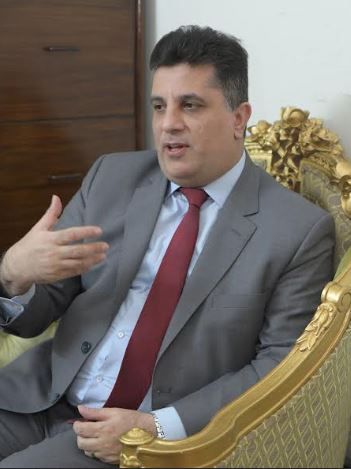
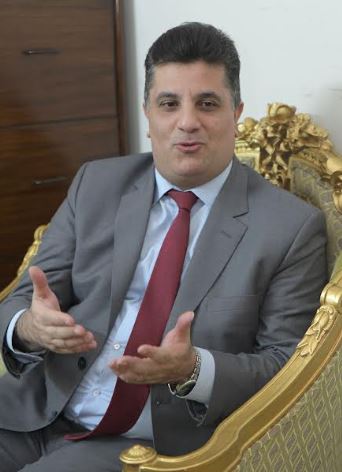
Dr Ramez Alraee: Syria and Pakistan strengthen relations
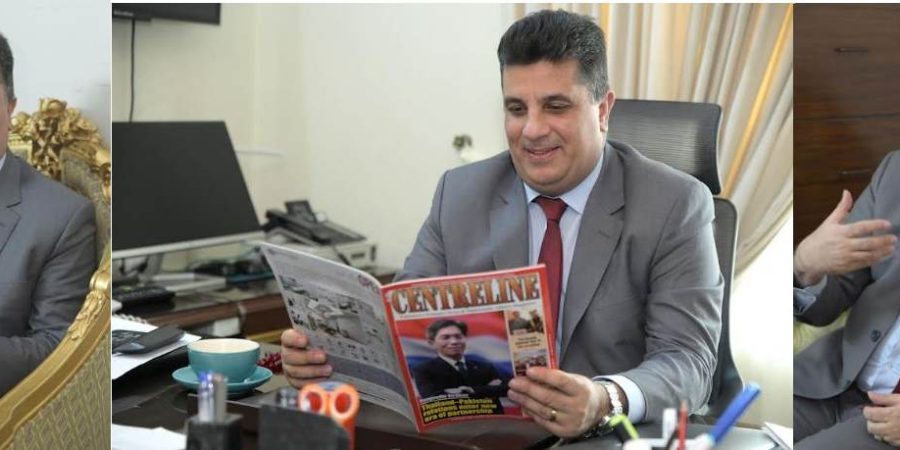
Ansar M Bhatti
1: Your Excellency, thank you for speaking with us. Syria is often described as the cradle of human civilization. How do you explain this unique identity to the world?
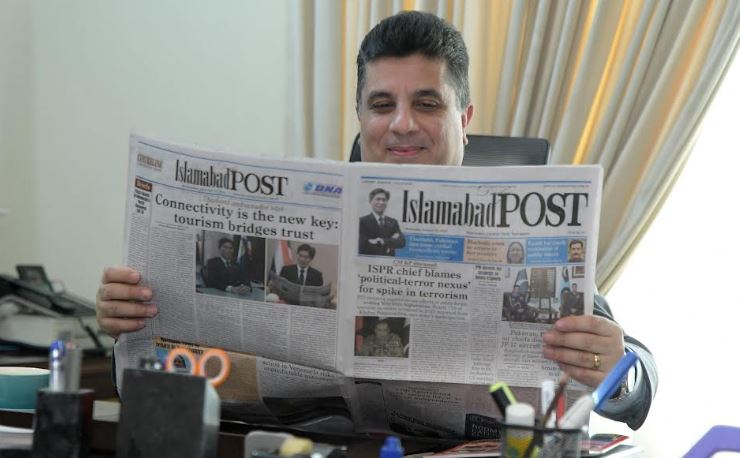
Thank you for having me. Indeed, Syria is not just a country; it is a living archive of human history. Cities such as Damascus and Aleppo are among the oldest continuously inhabited cities in the world, with histories spanning over 11,000 years. Syria has hosted dozens of civilizations — Roman, Greek, Byzantine, Islamic, Umayyad, Ayyubid, and many others. Each left behind its architectural, cultural, and linguistic imprints. This deep heritage is why we proudly call Syria the cradle of civilization.
“Syria is a museum under the open sky.”
2: Damascus is highlighted as one of the oldest cities in human history. What makes it so special?
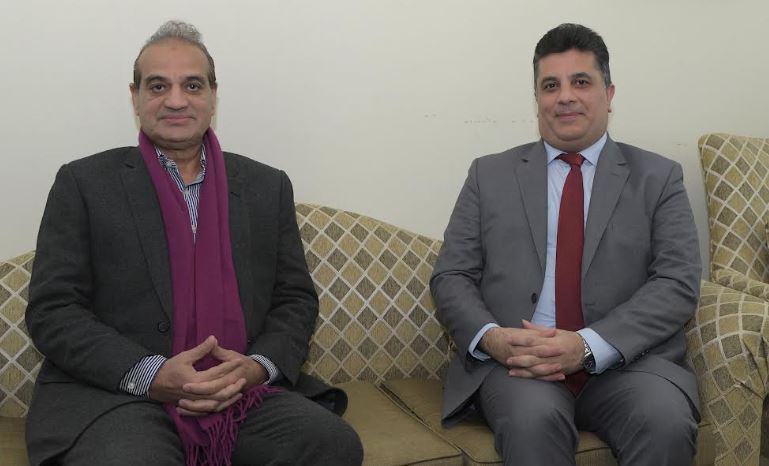
Damascus is often described as a city where time folds in on itself—layers of civilizations stitched together in stone, wood, and light. Designated a UNESCO World Heritage Site in 1979, its Old City holds more than 125 archaeological landmarks within walls that have witnessed Aramean, Roman, Byzantine, and Islamic eras. Step through one of its ancient gates and you pass from modern bustle to a living museum of streets, courtyards, minarets, and markets.
At the heart stands the Umayyad Mosque, a masterpiece of early Islamic architecture. Its vast marble courtyard gleams under the sun; golden and emerald mosaics portray paradisal gardens; and within lies the revered shrine associated with John the Baptist (Prophet Yahya).
Nearby rests the mausoleum of Salah ad-Din (Saladin), a reminder of Damascus’s role on the world stage. The mosque is not merely a monument—it is a breathing center of worship, scholarship, and community life.Radiating from this core are souqs that have hummed for centuries. Hamidiyah Market stretches like a river of sound beneath a perforated iron canopy: the rhythm of cobblers’ hammers, the call of spice merchants, the perfume of cardamom, sumac, and rose. Under its archways, you’ll find hand-beaten copper, Damascene inlay, silk brocade, and the famed pistachio-rolled ice cream at Bakdash. Caravanserais such as Khan As’ad Pasha still stand, their domed halls once sheltering traders from Aleppo, Baghdad, and beyond.
The palatial Al-Azm complex, once home to Ottoman governors, captures Damascene domestic elegance: ablaq stonework in alternating light and dark, carved wooden ceilings, latticed mashrabiya screens, and courtyard fountains ringed with jasmine. Traditional houses turn inward, around cool, shaded patios where citrus trees and water basins temper the desert heat—architecture as climate wisdom and social fabric. Churches and chapels, such as those along the Straight Street (Via Recta) and the Chapel of St. Ananias, speak to the city’s deep Christian heritage; old quarters like Bab Touma and Bab Sharqi keep distinct identities while blending into the whole.From the slopes of Mount Qasioun, the city unfurls in a tapestry of roofs and minarets, with the Barada River and the orchards of the Ghouta plain historically feeding Damascus’s gardens and kitchens.
Food here is culture made edible: herb-laced fattoush, kibbeh in countless regional forms, trays of ma’amoul dusted in sugar, and coffee scented with cardamom—rituals of hospitality that have survived every century’s turn.
Damascus has endured earthquakes, empire shifts, and modern conflict. Yet restoration efforts, the resilience of craftspeople, and the continuity of worship and trade have kept its soul remarkably intact. The Old City is not a relic behind glass; it is a lived-in palimpsest where shopkeepers inherit their stalls, families their courtyards, and artisans their tools and secrets. This is why Damascus feels timeless: its past is not past at all, but present—spoken through stone arcades, whispered in jasmine-scented evenings, and echoed in the rhythms of its markets and prayers.
3: Syria’s other cities, such as Aleppo and Homs, are also historically significant. Could you elaborate?
Aleppo’s story stretches to the second millennium BC, layered with Hittite, Hellenistic, Roman, Byzantine, and Islamic legacies. Crowned by its hilltop Citadel—an Ayyubid-Mamluk masterpiece with a monumental bent entrance, bridge, and gatehouse—the city radiates through quarters once lined by khans, hammams, and the vaulted Souq al-Madina.
The Great Mosque of Aleppo, caravanserais like Khan al-Wazir, and delicate stone façades attest to a mercantile metropolis on the Silk Road. Despite the scars of recent conflict, conservation has revived alleys, workshops, and spice-laden stalls, restoring the cadence of a city long renowned for craft, cuisine, and music.Homs, by contrast, is a crossroads of Syria’s religious and ethnic mosaic.
Its skyline is marked by the Mosque of Khalid ibn al-Walid, whose twin minarets and domed sanctuary house the revered companion’s shrine, drawing pilgrims and students alike. Westward rises Krak des Chevaliers (Qal‘at al-Hosn), a UNESCO-listed crusader stronghold commanding the Homs Gap. With concentric walls, arrow slits, and a formidable donjon, it is a textbook of medieval military architecture, later adapted by Mamluk hands. Together, Aleppo and Homs embody Syria’s endurance: urban centers where markets, mosques, churches, and fortresses narrate a civilization that survives, restores, and remembers. Their stones hold memory and meaning.
4: Palmyra holds special importance. How would you describe its global relevance?
Palmyra is a world treasure. Located in the heart of the Syrian desert, it served as a major caravan stop between East and West from 44 BC to 272 AD. Its Roman temples, the Great Colonnaded Street, the theater, tombs, and the famous Fakhr al-Din al-Maani Castle have made it a UNESCO World Heritage Site since 1980. Palmyra is a testimony to the grandeur of ancient Syrian civilization.
5: Syria is home to remarkable religious sites, both Islamic and Christian. How important is this aspect?
Our religious heritage is a symbol of coexistence. The Umayyad Mosque in Damascus stands not only as an architectural masterpiece but also as a cultural symbol where different faiths intersect. Nearby is the shrine of Sayyida Ruqayyah. A few kilometers away lies the revered shrine of Sayyida Zainab, visited by hundreds of thousands of pilgrims from Pakistan, Iran, Iraq, India, and beyond.
Christians also find deep roots in Syria. From the Church of Saint Simon the Stylite and the ancient monasteries of Maaloula and Saydnaya, to the earliest-known house-church of Dura-Europos — Syria is integral to early Christian history.
6: How do you evaluate Syria’s relationship with Pakistan?
Pakistan is not just a friendly nation—it is a brotherly partner with whom Syria shares deep-rooted cultural, historical, and political ties. The warmth and goodwill consistently shown by the Pakistani people toward Syria reflect a relationship built on mutual respect, solidarity, and shared values.
We hold in high regard Pakistan’s unwavering support for Syria’s sovereignty, unity, and territorial integrity. This principled stance has reinforced the trust and affection between our peoples, reminding us that true friendship is tested and proven in times of challenge.
Looking ahead, Syria is committed to expanding cooperation with Pakistan across diverse fields:
Tourism: Facilitating easier travel for Pakistani visitors to Syria’s sacred sites and historic landmarks, while encouraging Syrians to explore Pakistan’s natural beauty and cultural richness.
Education: Promoting academic exchanges, scholarships, and joint research programs to strengthen intellectual and scientific collaboration.
Culture: Organizing festivals, exhibitions, and artistic exchanges to celebrate the shared heritage and creativity of our nations.
Archaeology: Partnering in the preservation and study of ancient civilizations, recognizing the importance of both countries as custodians of world history.
Trade: Expanding economic ties, encouraging investment, and opening new markets to benefit both nations.
Pakistanis have always shown deep affection for Syria’s holy sites, including revered shrines and places of worship, as well as its rich cultural history. This spiritual and cultural connection forms a strong foundation for people-to-people ties, which we are determined to strengthen further.
By facilitating easier travel, encouraging cultural exchanges, and deepening academic cooperation, Syria and Pakistan are laying the groundwork for a future of even closer partnership. Together, we aspire to build bridges of understanding, prosperity, and solidarity that will serve generations to come.
7: What message would you like to convey to Pakistani tourists, students, and researchers?
I warmly invite the people of Pakistan to visit Syria — a land where every stone speaks history, and every city tells a timeless story. Syria is not only a country of resilience, but also a cradle of civilizations, faith, and culture.
From the ancient streets of Damascus, the world’s oldest continuously inhabited capital, to the majestic ruins of Aleppo, from the legendary temples of Palmyra to the serene waters of Hama, Syria offers a journey through centuries of human achievement. The coastal charm of Tartus and Latakia, the spiritual depth of Suwayda, the vibrant heritage of Homs, and the historical richness of Deir ez-Zor together form a mosaic of experiences awaiting discovery.
Syria today is rebuilding and revitalizing its heritage. Our monuments, mosques, churches, and archaeological treasures are being restored with care, ensuring that visitors can witness both the grandeur of the past and the promise of renewal.
Above all, Syria welcomes visitors with the warmth of its people. Syrian hospitality is legendary — guests are treated not as strangers but as family. We look forward to embracing our Pakistani brothers and sisters, strengthening bonds of friendship, and sharing with them the beauty of Syria’s soul.
8 : Your Excellency, how do you view Syria’s new path of economic development as we approach the year 2026, when Syria will host the largest international textile exhibition in the region starting on April 1, 2026, and engage with global markets?
Answer: To begin, I would like to point out that the Syrian Arab Republic has suffered in recent years from a deteriorating economic situation that was unsuitable for the Syrian state and the Syrian people due to previous economic sanctions. However, by the end of last year and the start of the new year, the new Syrian leadership began to take action in various fields, particularly at the international level, to lift the sanctions on Syria. Through numerous visits carried out by the new leadership, and with the support of many countries around the world standing by Syria and the Syrian people, part of the economic sanctions imposed on Syria has been lifted, and we hope that the remaining sanctions will be lifted soon. From here began the movement of organizing international exhibitions and advancing economic development in Syria, so that the country could play its role through these international exhibitions held on Syrian soil. They represent a major opportunity for businessmen from the friendly Islamic Republic of Pakistan, as well as entrepreneurs from all over the world, to participate in these international exhibitions in Damascus. This, in turn, forms a strong bridge for fostering and expanding cooperation between Syria and the rest of the world. The International Textile Exhibition is one of the most important of these events, scheduled to take place from April 1 to 4, 2026. We have invited Pakistani companies, institutions, and businessmen to participate, given that Syria is a pioneer in the textile sector, and likewise, our sister country Pakistan is also a leader in textile manufacturing.
9 : How will the “NASTEX 2026” exhibition serve as a valuable platform for Pakistan’s textile and industrial sector to enhance cooperation between the two sides?
Answer: As I mentioned earlier, this exhibition to be held in Damascus is one of the most important economic and industrial events that will take place at the Damascus Fairgrounds, and it will enjoy international participation. Since Syria is a global leader in the textile sector, and likewise Pakistan is also a leader in textile manufacturing, this represents a major opportunity for Pakistani participation in the exhibition. It will enable direct engagement with Syrian institutions, companies, and businessmen, which will positively contribute to developing economic and trade relations between Syria and Pakistan across various sectors, foremost among them cooperation in textile industries and other related activities and events. Therefore, we once again warmly welcome our brothers in Pakistan—textile companies, businessmen, and various entities—to participate in this exhibition.
10: Your concluding remarks?
Syria is a nation that has stood the test of time. For thousands of years, it has endured wars, invasions, and natural challenges, yet it continues to rise with dignity and strength. The true power of Syria lies not only in its ancient monuments and historic cities, but in its people — a community bound by culture, faith, and an unshakable spirit of resilience.
Today, Syria stands as a living testament to perseverance. We are determined to preserve our heritage, safeguard our traditions, and build a peaceful future for generations to come. Every stone in Syria tells a story, every city carries the memory of civilizations that shaped the world, and every visitor becomes part of this timeless journey.
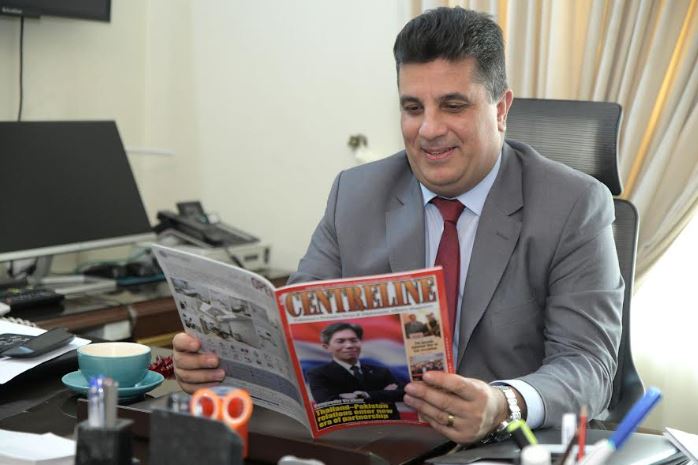
To our brothers and sisters in Pakistan, readers of Daily Islamabad Post and Centreline, we extend a heartfelt invitation: come and rediscover Syria, the land where history began. Walk through the ancient streets of Damascus, marvel at the grandeur of Palmyra, feel the spirit of Aleppo, and witness the rebirth of a nation that continues to inspire.
Syria is not only rebuilding its cities and monuments, but also revitalizing its cultural and spiritual life. We welcome scholars, pilgrims, tourists, and explorers alike to experience Syrian hospitality warm, generous, and deeply rooted in tradition.
Let Syria be your destination for discovery, reflection, and connection. In visiting Syria, you will not only witness history, but also share in the hope of a nation determined to shape a brighter tomorrow.
Related News

Dr Ramez Alraee: Syria and Pakistan strengthen relations
Ansar M Bhatti 1: Your Excellency, thank you for speaking with us. Syria is oftenRead More

Thailand-Pakistan ties move from friendship to action
Exclusive Interview: H.E. Rongvudhi Virabutr, Ambassador of Thailand to Pakistan. The first part of theRead More
Comments are Closed