

Crossroads of crisis: Can Pakistan reset its course?
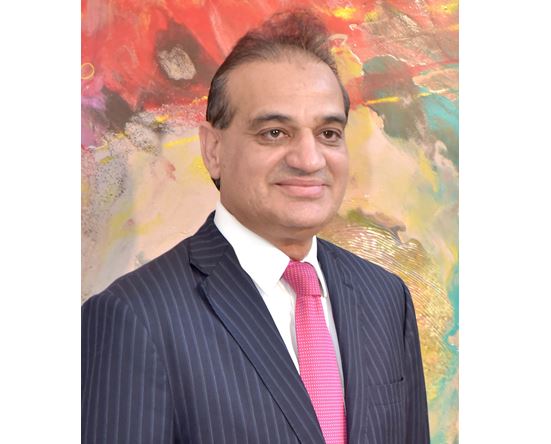
Ansar Mahmood Bhatti
Pakistan today stands at a defining moment in its turbulent history. The challenges confronting the country are neither new nor unexpected, yet their intensity has deepened to a level that demands urgent introspection. Poverty is increasing, corruption remains entrenched, governance indicators are slipping, and public trust in institutions continues to erode. According to the latest reports by the World Bank and Transparency International, Pakistan faces mounting economic strain alongside persistent governance and corruption challenges. These are not abstract statistics; they represent the lived realities of millions of citizens.
Punjab, the country’s largest province, mirrors these national anxieties. Education remains in crisis. Official data and independent assessments over the years have repeatedly shown millions of children out of school nationwide, with Punjab accounting for a significant share. Even if one takes conservative figures, the scale of the problem is staggering. A country aspiring to compete in a knowledge-based global economy cannot afford such neglect. Each child out of school is a lost opportunity, a diminished future, and a potential contributor to social instability.
Equally distressing is the continued lack of access to clean drinking water. In many rural and urban areas, safe water remains a luxury rather than a basic right. Health experts have long linked contaminated water to widespread diseases, burdening already strained healthcare systems. The contradiction is painful: while citizens struggle for fundamental necessities, those in power often appear insulated from such hardships.
The policing system, once envisioned as a pillar of public safety and rule of law, has deteriorated further. Public complaints of inefficiency, politicization, and lack of accountability are common. Trust between citizens and law enforcement is thin. Without institutional reform, rule of law cannot prevail, and without rule of law, economic progress and social cohesion remain elusive dreams.
Amidst these challenges, controversy has erupted over the reported purchase of an expensive aircraft for the ‘personal use’ of the Chief Minister of Punjab. Reports suggest the aircraft’s cost runs into billions of rupees. At a time when the country is battling fiscal deficits and seeking loans and deposits from friendly countries to stay afloat, such spending sends a troubling message. Pakistan’s economy is heavily dependent on assistance from institutions like the International Monetary Fund and financial support from allies including UAE and Saudi Arabia. In such circumstances, lavish expenditures appear politically damaging.
Leadership, especially in difficult times, demands example. Citizens tighten their belts when they see their leaders doing the same. Conversely, when austerity is preached but extravagance practiced, cynicism deepens. The ruling party in Punjab, Pakistan Muslim League (N) (PML-N), is already confronted with a challenging political landscape. The optics of an aircraft purchase could further dent its standing, particularly in Punjab, its traditional stronghold. This becomes even more significant given that the current Chief Minister is widely seen as a potential future candidate for the prime minister’s office. Political miscalculations at this juncture could have long-term consequences, possibly eclipsing broader ambitions.
On the foreign policy front, the government finds itself under scrutiny over its stance on Gaza. While it is commendable that the government decided not to send military troops abroad, reports that police personnel might be considered instead could prove equally counterproductive. Pakistan’s internal security environment remains fragile. Diverting manpower externally may not only strain domestic capacities but also complicate diplomatic positioning. Prudence demands avoiding any such move.
Economic diplomacy presents another pressing test. Pakistan must meet the conditions attached to the European Union’s GSP+ trade scheme, granted by the European Union. GSP+ status provides critical trade concessions, especially for textile exports. However, the scheme is contingent upon compliance with international conventions, including those related to human rights. Reports of human rights violations have drawn concern from European quarters. The recent case of Imaan Mazari has reportedly attracted attention in European forums. While it is possible that relief in high-profile cases may be considered ahead of review processes, the broader question remains: will isolated measures translate into systemic reform? Sustainable compliance requires long-term institutional change, not temporary adjustments.
Pakistan’s internal cohesion is equally critical. With tensions persisting on both eastern and western borders, national unity is not a luxury but a necessity. Political polarization has weakened the national fabric. The significant opposition force, Pakistan Tehreek-e-Insaf (PTI), led by Imran Khan, continues to command significant public support despite political setbacks. There are indications of growing realization within establishment circles that PTI cannot be permanently sidelined. Yet bringing it into a constructive political framework is easier said than done.
Any perceived softening towards PTI risks alienating ruling coalition partners, including PML-N and the Pakistan Peoples Party (PPP). The political chessboard is complex. However, the alternative perpetual confrontation is far more damaging. Economic recovery, institutional reform, and national security cannot advance amid continuous political warfare.
Perhaps the only viable path forward is the formation of a broad-based government of national consensus. Such an arrangement would require extraordinary statesmanship. It would mean prioritizing national survival over partisan gain. It would demand dialogue among rivals who currently view each other with suspicion and hostility. Yet history shows that nations facing existential crises often find renewal through inclusive political settlements.
Pakistan’s crises are interlinked. Poverty fuels instability; corruption undermines development; political fragmentation weakens governance; and external vulnerabilities compound internal fragilities. Piecemeal solutions will not suffice. What is needed is a comprehensive reset one that addresses economic reform, social investment, institutional accountability, and political reconciliation simultaneously.
The people of Pakistan have shown resilience through decades of upheaval. What they now require is leadership that mirrors that resilience with integrity and foresight. Symbolic gestures of austerity, genuine commitment to reform, respect for human rights, and inclusive political dialogue could collectively begin restoring public confidence.
Without a shift in direction, Pakistan risks remaining mired in cycles of crisis management. With courage and consensus, however, it can still chart a path toward stability and progress. The crossroads is real. The choice, ultimately, lies with those entrusted to lead.
Related News
A diplomatic convergence: a positive signal for ME peace
At the same time, there is another dimension that cannot be ignored. Iran’s policy ofRead More
Iran’s decapitation myth and Pakistan’s tightrope
Ansar Mahmood Bhatti The specter of a widening regional war has brought the world perilouslyRead More
Comments are Closed