

China responds to Pakistan PM visit to Afghanistan for peace talks
BEIJING, APR 09 (DNA) – China on Monday said it “firmly supports” the recent visit of Prime Minister Shahid Khaqan Abbasi to Afghanistan.
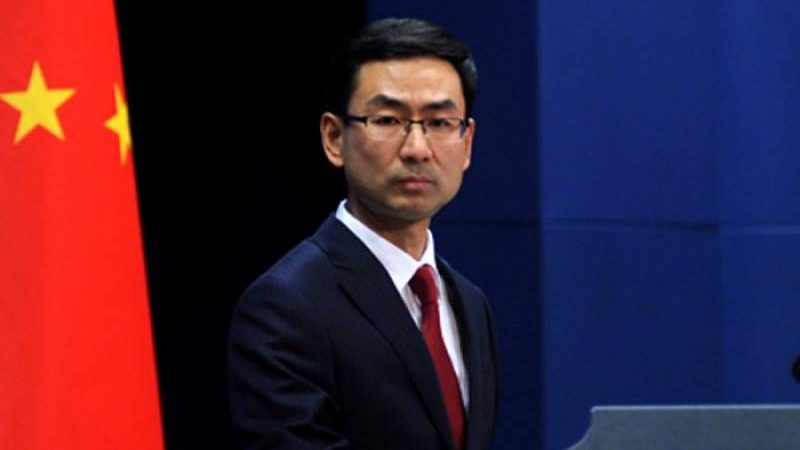
“China highly appreciates and firmly supports Prime Minister Shahid Khaqan Abbasi’s visit to Afghanistan,” China’s Ministry of Foreign Affairs spokesperson Geng Shuang said during his regular press briefing.
“It is an important step towards improving relations between the two countries and also demonstrated the sincere wishes and firm resolution of Pakistan and Afghanistan to enhance dialogue and cooperation,” Shuang added.
The Chinese Ministry of Foreign Affairs spokesperson further said, “It is noted that both countries have reached consensus on promoting the Afghan peace process and enhancing regional inter-connectivity.”
The spokesperson said the Pakistani premier’s visit is very important and encouraging for the early achievement of peace and development in Afghanistan.
Responding to a question, Shuang said, “As a friend and neighbour of Pakistan and Afghanistan, China is willing to play a constructive role in improving relations between the two countries and actively promoting China , Afghanistan and Pakistan trilateral cooperation.”
PM Abbasi visited Kabul on the invitation of Afghan President Ghani on April 6. During the day-long visit, the two countries agreed on Afghanistan–Pakistan Action Plan for Peace and Solidarity.
On Sunday, PM Abbasi arrived in China to represent Pakistan at the Boao Forum.
During his three-day visit, PM Abbasi is also expected to hold a series of bilateral meetings with Chinese President Xi Jinping, Secretary-General of the United Nations Antonio Guterres, Chief Executive of Hong Kong and Chairman of Alibaba Jack MA.
Related News
Mecca Defense Alliance officials to meet Iranian leaders in Tehran for de-escalation talks
ISTANBUL, OCT 26: Member states of the Mecca Defense Alliance will meet with Iranian officialsRead More
Qatari mediators reportedly in Tehran in US-coordinated effort to ease tensions
TEHRAN: Qatari mediators were in Tehran on Sunday as part of an effort to de-escalateRead More
Comments are Closed