

China-Pakistan All-Weather Strategic Cooperation Injects Stability into a Turbulent World
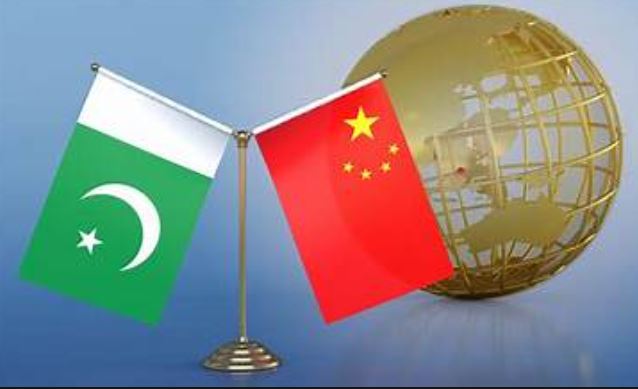
BEIJING, JAN 20 /DNA/ – At the beginning of 2026, the Seventh Round of China-Pakistan Foreign Ministers’ Strategic Dialogue was held in Beijing. Wang Yi, member of the Political Bureau of the CPC Central Committee and Foreign Minister, and Pakistani Deputy Prime Minister and Foreign Minister Ishaq Dar co-chaired the dialogue, marked the beginning of the 75th anniversary celebrations of the establishment of diplomatic relations between the two countries.
For 75 years, China and Pakistan have stood together through thick and thin, their friendship has become a vivid example of friendly coexistence and win-win cooperation between nations. In the current complex international situation, unilateralism and bullying are rampant, and the global governance system is facing severe challenges. Against this backdrop, China and Pakistan, relying on their all-weather strategic cooperative partnership, are deepening coordination and close cooperation at the bilateral, regional, and global levels, providing solid support for the economic and social development of both countries and injecting valuable stability into regional stability and world peace.
Deepening Bilateral Cooperation and Accelerating the Building of a Closer China-Pakistan Community of Shared Future
The distinctive feature of China-Pakistan relations is the all-weather, all-round, and all-domain strategic mutual trust, which stems from both sides’ profound understanding and firm commitment to each other’s core interests. During this strategic dialogue between the foreign ministers, Pakistan reiterated its firm adherence to the One-China Principle, recognizing Taiwan as an inseparable part of China’s territory. Pakistan firmly supports all efforts made by China to achieve national reunification and opposes any form of “Taiwan independence” or any attempt to create “two China” or “one China, one Taiwan.” Pakistan firmly supports China on issues related to Xinjiang, Xizang, Hong Kong, and the South China Sea. China also reiterated its support for Pakistan in safeguarding its sovereignty, security, and national dignity, its support for Pakistan’s resolute fight against terrorism, and its commitment to playing a greater role in international and regional affairs. China and Pakistan have consistently supported each other and shared a sincere bond on major issues, forming a solid foundation for the steady and long-term development of bilateral relations.
Guided by solid strategic mutual trust, pragmatic cooperation between China and Pakistan in various fields continues to deepen. During this dialogue, both sides agreed to implement the action plan for building a China-Pakistan community with a shared future, strive to achieve a number of early results, and promote the construction of the China-Pakistan community with a shared future to be at the forefront of the construction of communities with a shared future in the surrounding region. The two countries are deepening the alignment of their development plans and priority areas, jointly building an “upgraded version 2.0” of the China-Pakistan Economic Corridor (CPEC). Focusing on industry, agriculture, and mining, they are committed to the construction and operation of Gwadar Port, a vital regional gateway, ensuring the smooth flow of the Karakoram Highway, and comprehensively enhancing Pakistan’s sustainable development capabilities. Gwadar Port is currently in a phase of simultaneous operation and development, and its potential as a regional logistics hub and industrial base is increasingly evident. In industrial cooperation, China supports Pakistan in building a complete industrial chain system, expanding cooperation from traditional energy and infrastructure sectors to emerging fields such as manufacturing, information technology, and artificial intelligence, helping Pakistan optimize its industrial structure and enhance economic resilience. In agriculture, China actively shares advanced technologies such as hybrid rice and hybrid rapeseed with Pakistan through technology transfer, cooperative research, and capacity building, helping Pakistan increase grain production and the added value of agricultural products, thus strengthening the foundation of food security. Mining cooperation focuses on jointly developing Pakistan’s advantageous mineral resources, accelerating the transformation of resource endowments into real productivity, and promoting the diversified development of Pakistan’s economy.
The foundation of China-Pakistan friendship lies in its people, and its future lies in its youth. Both governments attach great importance to building a strong public opinion foundation and continue to regard youth exchanges, educational cooperation, and scientific and technological collaboration as important growth points for China-Pakistan relations. In recent years, the scale of student exchanges between the two countries has steadily expanded, and the professionals in engineering, information technology, management, and other fields trained by Chinese universities for Pakistan have played a positive role in Pakistan’s national development. Taking the 75th anniversary of the establishment of diplomatic relations between China and Pakistan in 2026 as an opportunity, both sides will carry out a series of cultural and people-to-people exchange activities to further strengthen the emotional ties between the two peoples and promote the enduring friendship between China and Pakistan.
Expanding Regional Cooperation to Play a Constructive Role in South Asia’s Stability and Development
South Asia is currently at a critical stage of political and economic transformation, with all countries facing multiple challenges in development and governance. Traditional and non-traditional security risks are intertwined, and the complexity and spillover effects of regional conflicts are becoming increasingly prominent. China and Pakistan deeply recognize that regional peace, stability, and prosperity are in the common interest of all countries and are the universal expectation of their peoples. In this strategic dialogue, both sides unanimously emphasized that the South Asian regional order should be built based on the purposes and principles of the UN Charter and the basic norms of international relations, advocating for the resolution of disputes through dialogue and consultation, and opposing any unilateral actions that escalate tensions. A solid and robust China-Pakistan relationship has always been an important constructive force in maintaining peace and stability in South Asia and promoting regional development cooperation.
South Asia is an important component of China’s neighborhood diplomacy and a key direction for China’s efforts to build a community of shared future in its surrounding region. China has always adhered to the principle of good-neighborliness and partnership, placing its neighborhood at the forefront of its overall diplomacy and regarding the promotion of peace, stability, and development in the region as its own responsibility. Guided by this policy, China has actively promoted the establishment of the China-Afghanistan-Pakistan trilateral foreign ministers’ dialogue mechanism, which has become an effective multilateral platform for coordinating regional affairs and enhancing mutual trust among the three parties. The mechanism has successfully held six meetings, achieving practical results in supporting Afghanistan’s peace and reconstruction, improving Afghan-Pakistani relations, strengthening counter-terrorism and security cooperation, and promoting Afghanistan’s integration into regional economic connectivity. During this dialogue, both China and Pakistan expressed their willingness to further deepen this mechanism and promote its continued progress.
Meanwhile, China-Bangladesh-Pakistan trilateral cooperation is also steadily advancing. In June 2025, a trilateral vice-ministerial/foreign secretary meeting was held in Kunming, Yunnan Province, marking the official launch of institutionalized cooperation among the three countries. As important members of the Global South and key countries in the region, China, Bangladesh, and Pakistan uphold the principles of good-neighborliness, equality and mutual trust, openness and inclusiveness, common development, and win-win cooperation, focusing on economic development and improving people’s livelihoods, and are committed to promoting unimpeded trade, supply chain connectivity, and industrial synergy in the South Asian sub-region, injecting new impetus into regional integration.
China and Pakistan have joined hands to advance regional multilateral cooperation, deepening bilateral strategic coordination, expanding space for common development, and exploring practical paths to promote regional stability and prosperity, demonstrating the responsibility and constructive role of responsible regional countries.
Strengthening international cooperation and promoting a more just and equitable global governance system.
Faced with the rise of unilateralism and protectionism and the resurgence of Cold War mentality, the coordination and cooperation between China and Pakistan, as important emerging market countries and major developing countries, on the international multilateral stage has strategic significance that transcends bilateral relations. President Xi Jinping pointed out that China-Pakistan relations extend far beyond the bilateral scope. Faced with a highly uncertain world, both sides must stand on the right side of history, uphold genuine multilateralism, safeguard international fairness and justice, and protect the common interests of developing countries. This was fully reflected in this strategic dialogue. China and Pakistan agreed to firmly uphold the achievements of the victory in World War II, adhere to the purposes and principles of the UN Charter, resist attempts to distort historical facts, oppose the resurgence of fascism and militarism, and support the post-war international order established by relevant international legal documents and principles such as the Cairo Declaration and the Potsdam Proclamation, as well as the maintenance of world peace and security, historical truth, and international justice. For a long time, China and Pakistan have maintained close cooperation within multilateral mechanisms such as the United Nations and the Shanghai Cooperation Organization, jointly safeguarding the legitimate rights and interests of developing countries and becoming a mainstay force in the international community for upholding fairness and justice and promoting development and prosperity.
On international hotspots and global issues, China and Pakistan share highly compatible positions and coordinate their actions closely. Both sides consistently adhere to resolving disputes peacefully through dialogue and consultation, opposing the abuse of unilateral sanctions and “long-arm jurisdiction”; jointly advocating and practicing genuine multilateralism, committed to enhancing the representation and voice of developing countries in global governance; working together to safeguard an open and inclusive world economic system, supporting multilateralism and free trade, opposing “small circles” and bloc confrontation, and opposing “decoupling” and technological blockades. The current sudden change in the situation in Venezuela has drawn significant international attention. Wang Yi emphasized that we have never believed that any country can act as the international police, nor do we agree that any country can claim to be an international judge. The sovereignty and security of all countries should be fully protected by international law.” On the Middle East issue, both sides called for an unconditional and comprehensive permanent ceasefire in Gaza, reiterated their support for the Palestinian people’s right to self-determination, and supported the implementation of the “Two-state solution” and the establishment of an independent Palestinian state. China and Pakistan expressed their willingness to work with the international community to make unremitting efforts to promote peace and stability in the Middle East.
Pakistan highly recognizes and actively participates in the Global Development Initiative, Global Security Initiative, Global Civilization Initiative, and Global Governance Initiatives, believing that these initiatives profoundly address the challenges of our time and provide important international public goods for improving the global governance system and promoting common development. As a founding member of the “Group of Friends of the Global Development Initiative” and a priority partner of the initiative, Pakistan has deepened project alignment with China in key areas such as sustainable development, capacity building, and improving people’s livelihoods, promoting the solid implementation of the initiatives and continuously revitalizing China-Pakistan cooperation.
The outcomes of the Seventh Round of China-Pakistan Foreign Ministers’ Strategic Dialogue once again demonstrate the contemporary value of the all-weather strategic cooperative partnership between the two countries. Faced with the complex situation of intertwined deficits in world peace, development, security, and governance, China and Pakistan will continue to focus on common development under the guidance of high-level strategic cooperation, properly address various risks and challenges, and promote the continuous deepening and steady development of bilateral relations, injecting more stability and positive energy into a turbulent and changing world, and making new and greater contributions to building a community with a shared future for mankind.
Related News

China welcomes Pak-Afghan temporary ceasefire
BEIJING, Mar 20: China welcomes the temporary ceasefire agreement reached by Pakistan and Afghanistan, foreignRead More
CM Maryam meets newly-appointed Chinese envoy
ISLAMABAD, MAR 18 /DNA/ – Chief Minister Punjab Maryam Nawaz Sharif had a meeting withRead More
Comments are Closed