

Army deployment in Rawalpindi a preemptive move
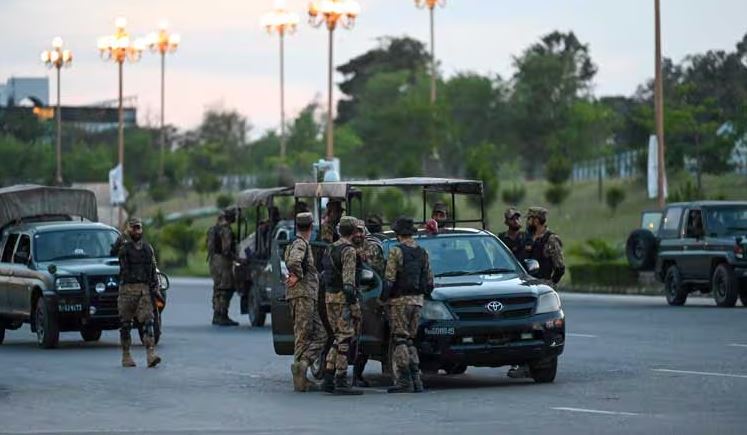
The government has historically relied on military presence during large-scale political demonstrations, not to confront marchers directly but to safeguard national assets such as government buildings, sensitive installations, and communication hubs
Ansar M Bhatti / DNA
ISLAMABAD: The deployment of the Pakistan Army in Rawalpindi has sparked debate, coinciding with Pakistan Tehreek-e-Insaf’s (PTI) announcement of a long march towards Rawalpindi and Islamabad. Sources have revealed that the move is purely precautionary, aimed at maintaining law and order, rather than serving any hidden agenda.
Rumors and conspiracy theories have circulated suggesting that the army was deployed to protect specific individuals. However, these claims appear unfounded. Security experts emphasize that the primary reason is to prevent unrest during PTI’s mobilization. The government has historically relied on military presence during large-scale political demonstrations, not to confront marchers directly but to safeguard national assets such as government buildings, sensitive installations, and communication hubs.
Another theory speculates that the deployment is linked to potential threats from militant groups, including the Taliban. Yet, officials have dismissed this as unlikely, noting that no credible intelligence has indicated an imminent attack. The timing of the deployment, closely aligned with PTI’s march announcement, suggests the move is more about political management than counterterrorism.
Observers point out that similar measures were taken during PTI’s past long marches. The army’s role then, as now, was to act as a stabilizing force, ensuring that protests did not spiral into violence or damage critical infrastructure. Analysts argue that the presence of troops serves as a deterrent, signaling to PTI and its supporters that the state is prepared to enforce boundaries without direct confrontation.
Critics, however, interpret the deployment as a subtle form of pressure on PTI, discouraging the party from escalating its protest strategy. While the government insists the army is neutral, the optics of military involvement in political demonstrations inevitably fuel speculation.
The deployment in Rawalpindi reflects a familiar pattern in Pakistan’s political landscape: the army stepping in during moments of heightened tension to preserve order. Whether this move succeeds in preventing unrest or further intensifies political friction remains to be seen, but for now, sources maintain that the sole purpose is to ensure stability during PTI’s planned march.
Related News

New Azerbaijani ambassador meets Jordanian counterpart in Islamabad
ISLAMABAD, OCT 16 /DNA/ — Newly appointed Ambassador of Azerbaijan to Pakistan, Irfan Shakiroglu Davudov,Read More

Pakistan to assume chairmanship of WBG, IMF boards in 2027
ISLAMABAD, Oct 16 (DNA): Pakistan will assume the chairmanship of the Boards of GovernorsRead More
Comments are Closed