

Pakistan hosts 8th UNODC anti-trafficking experts meeting
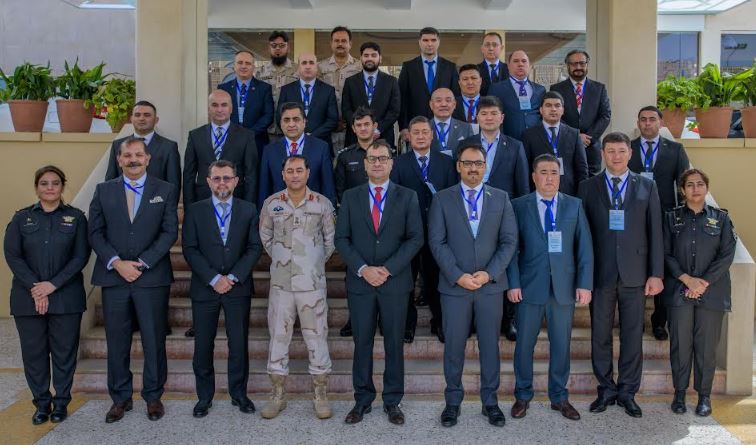
KARACHI, APR 10 /DNA/ – The United Nations Office on Drugs and Crime (UNODC) Country Office for Pakistan in collaboration with Pakistan Customs and Anti Narcotics Force hosted the 8th Expert-Level Meeting of the Inter-Regional Network of Customs Authorities and Port Control Units (IREN) in Karachi, marking a significant milestone under the Global Passenger and Cargo Control Programme (PCCP).
The four-day meeting is focusing on enhancing intelligence-sharing, improving risk-based targeting, addressing evolving trafficking threats, and further finetuning of the practical interregional collaboration. It brought together international experts, customs officials, and law enforcement agencies from eight IREN member countries to strengthen cooperation against illicit trafficking and transnational organized crime.
Welcoming the participants, Syed Shakeel Shah, Member Customs (Operations) Pakistan Customs Service, said, “It is a matter of great pleasure and privilege for Pakistan to host the 8th Inter-Regional Experts Meeting under the auspices of UNODC and the World Customs Organization. This meeting holds special significance as the first experts-level IREN forum being convened in Pakistan. We deeply value this opportunity to bring together regional and international partners committed to strengthening cooperation, operational coordination, and mutual trust. Pakistan remains committed to working closely with UNODC, WCO, and participating countries to advance intelligence-led border management, address evolving trafficking threats, and promote secure and lawful trade across the region.”
Arsalan Malik, Criminal Justice Advisor, United Nations Office on Drugs and Crime emphasized the urgency and coordinated action, “In today’s interconnected world, organized crime moves faster than ever across borders. Strengthening cooperation and intelligence-sharing is no longer optional, it is essential.”
Svetlan Savov, international expert, World Customs Organization highlighted the importance of balancing security and trade, “Customs administrations play a critical role in securing global supply chains while ensuring the smooth flow of legitimate trade.”
Pakistan, as one of the pilot countries of the programme since 2007, has played a central role in regional cooperation in advancing the PCCP, from establishing its first Port Control Unit in Karachi in 2008 to becoming a regional training hub, Pakistan continues to lead capacity-building and operational cooperation and has since evolved into a regional training center. Pakistan coordinated the IREN Operation on Synthetic Drugs in 2024, demonstrating its leadership in tackling emerging drug threats.
Background: A Network Built on Cooperation
The IREN network, established in 2019 through a Memorandum of Understanding among participating countries, enables real-time information exchange to combat trafficking across regions. Today, it covers 36 port and airport control units and targeting centres in 9 countries, with over 160 trained officers, strengthening coordinated responses to illicit trade.
Through the PCCP, implemented by UNODC in partnership with the World Customs Organization, International Civil Aviation Organization, and INTERPOL, countries are strengthening inter-agency cooperation and interregional practical collaboration to prevent the abuse of legitimate trade and transport corridors through intelligence-led and risk-informed detection of high-risk shipments and interception of illicit goods, including drugs, precursor chemicals, and other prohibited items.
In Pakistan, these efforts have led to significant enforcement results, including the seizure of 1.7 tons of methamphetamine in 2024, 1.3 tons of methamphetamine and 2.6 tons of opium in 2025, along with over 14 tons of Red Phosphorus, approximately 100 kg of cocaine, and tons of psychotropic substances, heading to outer world.
Discussions during the 8th Expert-Level Meeting capitalized upon key issues including emerging trafficking trends, balancing trade facilitation with enforcement, and the use of digital tools and artificial intelligence in border risk management. The programme also included practical workshops and a site visit to Karachi’s seaport facilities to demonstrate operational practices.
The meeting reaffirmed a shared commitment among participating countries to enhance cooperation, strengthen border security, and disrupt organized crime networks. The agenda reflected the growing complexity of global trade and crime. Discussions were focused on the emerging trafficking trends and regional threat environments; balancing trade facilitation with enforcement; digitalization and the use of AI in risk management; and strengthening coordinated border controls and one-stop inspections. These practical components ensure that discussions translate into actionable strategies.
Related News
Maldives President Muizzu arrives in Islamabad on three-day state visit
ISLAMABAD, OCT 20 /DNA/ – The President of the Republic of Maldives, Dr. Mohamed Muizzu,Read More
Maldives President arrives in Pakistan
Saifullah Ansar ISLAMABAD: Maldives President Dr Mohamed Muizzu arrived in Pakistan on Tuesday for aRead More
Comments are Closed