

Make America Go Away
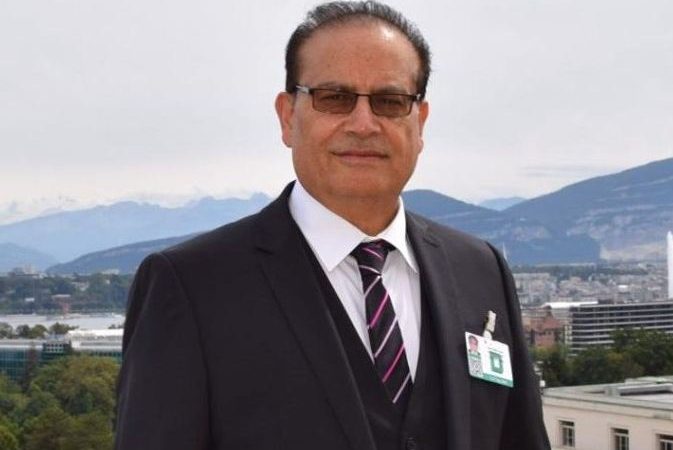
Qamar Bashir
The red caps were impossible to miss. In Copenhagen’s winter chill, protesters gathered waving Danish and Greenlandic flags, their message stitched in bold white letters across crimson fabric: “Make America Go Away.” What began as a satirical play on Donald Trump’s “Make America Great Again” slogan has become something more serious — a symbol of European unease, even defiance, in the face of escalating rhetoric over Greenland.
The hats were created by Danish vintage shop owner Jesper Rabe Tonnesen. Initially a novelty, they gained traction only after Washington intensified its language about Greenland’s strategic value and potential American control. What might once have been dismissed as political theatre began to feel real. “This isn’t reality TV,” Tonnesen remarked. “It’s actually reality.” Within a single weekend, thousands of caps were ordered. Protest signs at Copenhagen’s city hall declared “No Means No” and “Make America Smart Again,” combining humor with unmistakable political intent.
The symbolism extended beyond Denmark. At the Winter Olympics opening ceremony in Milan, Vice President JD Vance was met with audible boos when his image appeared on stadium screens during the Parade of Nations. The U.S. delegation of athletes received cheers, but the mood shifted when the camera cut to the American political contingent. Italian protesters had already marched earlier that day against reports of U.S. Immigration and Customs Enforcement personnel advising on Olympic security. For many Europeans, the moment crystallized a broader frustration — not necessarily with the American people, but with Washington’s posture.
The episode in Milan was not isolated. It came amid growing debate in Europe over U.S. foreign policy choices, including the controversial military operation that resulted in the capture of Venezuelan President Nicolás Maduro, heightened tensions with Iran, and Washington’s unwavering alignment with Israel during the Gaza conflict. Each event, viewed individually, can be defended by American policymakers as a matter of national security or strategic necessity. But collectively, they are reshaping perceptions abroad.
Greenland, long considered a peripheral issue outside diplomatic circles, has suddenly become central to Arctic geopolitics. Its vast mineral reserves, strategic location, and proximity to new shipping lanes have elevated its importance in a world defined by great-power competition. Yet the tone of Washington’s overtures — seen by many in Denmark as coercive — has triggered a backlash. European governments have publicly reaffirmed Denmark’s sovereignty and emphasized that territorial integrity is non-negotiable. The Arctic, once framed as a zone of cooperation, now risks becoming a theatre of suspicion.
Relations with Canada have been further strained by controversy surrounding the Gordie Howe International Bridge, a $6.4 billion infrastructure project linking Detroit, Michigan, and Windsor, Ontario. The bridge—expected to open in 2026—is jointly owned on a 50/50 basis by the State of Michigan and the Government of Canada. Notably, Canada financed the entire construction cost after Michigan lawmakers declined to contribute upfront funding. However, in January 2026, Trump threatened to block the bridge’s opening unless the United States was “fully compensated,” suggesting America should own “at least one half” of the asset—despite the existing equal ownership structure. The dispute underscores how a project designed to strengthen bilateral trade—facilitating approximately 25% of total U.S.-Canada goods trade that crosses the Detroit River corridor—has become entangled in broader trade tensions and political leverage, raising concerns about the reliability of cross-border economic cooperation.
Meanwhile, the operation in Venezuela has set a dangerous precedent for unilateral intervention and raised questions about international law. Latin American leaders voiced alarm at the optics of a powerful nation apprehending a sitting head of state. Whether justified or not, the event reinforced a perception among some allies that Washington is increasingly comfortable acting alone.
Soft power — the intangible currency of legitimacy, cultural attraction, and moral authority — depends less on force and more on trust. The United States has historically wielded enormous soft power, built on alliances, democratic ideals, economic partnerships, and cultural influence. But soft power can erode quietly. It does not collapse in a single moment; it thins through accumulated grievances.
The Gaza conflict has intensified that erosion. While Washington frames its position as support for a longstanding ally, public opinion across Europe has grown sharply critical of Israeli military actions. In cities from Berlin to London to Copenhagen, demonstrations have linked U.S. policy directly to the humanitarian crisis. Israel itself has faced a steep reputational decline internationally, and by extension, so has the United States as its principal backer.
At home, polarization further complicates America’s global image. Open confrontations between federal and state authorities on immigration, sanctuary policies, and law enforcement create the impression of internal instability. For foreign observers, domestic discord weakens diplomatic leverage. Allies prefer predictability. Strategic partnerships rely on continuity.
The war in Ukraine also looms large. What began as a united Western front against Russian aggression has grown more complex. Questions about burden-sharing, fatigue, and long-term commitment circulate in European capitals. If America appears distracted or transactional, doubts multiply.
What the red caps truly signify is not a desire for American disappearance, but a demand for recalibration. Satire often captures what formal diplomacy cannot. “Make America Go Away” is less a literal plea than an expression of frustration — a shorthand for “we feel unheard.”
Power exercised without broad consent becomes expensive. Influence sustained through persuasion endures. If Washington is perceived as substituting pressure for partnership, the cost will not appear immediately in treaties or troop deployments. It will surface in subtle ways: in public opinion polls, in parliamentary debates, in hesitant endorsements at multilateral forums.
The United States does not deserve to be haunted by slogans calling for its departure, nor should its leaders be booed at global celebrations meant to transcend politics. But neither can those moments be dismissed as trivial. They are signals. They reflect accumulated discontent over tone, method, and alignment.
The challenge now is not whether America should go away. It is whether it can pause, reassess, and restore confidence among those who once viewed it as indispensable. The red caps in Copenhagen may fade from fashion. The deeper question is whether the sentiments they represent will fade as well — or whether they mark the beginning of a more profound shift in the transatlantic relationship.
Bridges can connect, or they can become bargaining chips. The choice, ultimately, rests not in slogans, but in statecraft.
Qamar Bashir
Press Secretary to the President (Rtd)
Former Press Minister, Embassy of Pakistan to France
Former Press Attaché to Malaysia
Former MD, SRBC | Macomb, Michigan
Related News

Beyond the Land Front: Pakistan Navy in the 1965 War
BY: Ali Basit The Indo-Pakistan War of 1965 is predominantly remembered for the intense battlesRead More

Has the EU lost its allure?
Khaled Abou Zahr Does the EU still make people and nations dream of joining? FollowingRead More
Comments are Closed