

Uzbekistan, Pakistan poise to deepen ties as President Mirziyoyev plans February visit
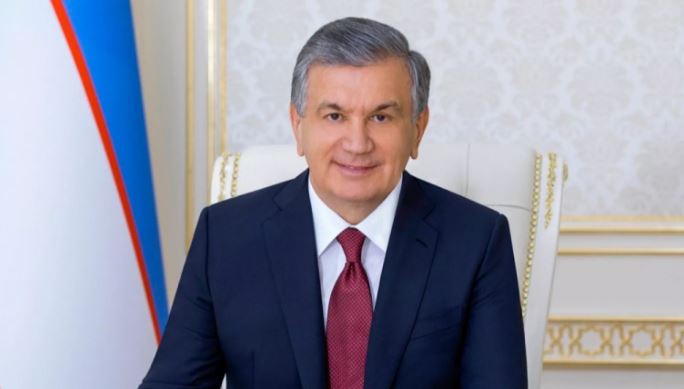
ISLAMABAD, JAN 27 /DNA/ – President Shavkat Mirziyoyev’s upcoming visit to Islamabad in February 2026 is set to mark a major step forward in Uzbek–Pakistani relations, with both sides preparing a slate of initiatives spanning trade, transport, energy, and digital technologies.
Experts and business leaders expect the trip to inject fresh momentum into a partnership that has gained speed in recent years and now aspires to regional impact across Central and South Asia.
Uzbekistan and Pakistan say the visit will not only advance large-scale, strategic projects but also broaden cooperation at the regional and local levels, bringing small and medium-sized enterprises, academia, youth, and civil society more directly into the bilateral agenda, Nigora Sultanova, Chief Research Fellow at the Institute for Strategic and Regional Studies under the President of the Republic of Uzbekistan said in a article.
The aim, according to planners on both sides, is to convert longstanding goodwill and cultural affinity into practical, long-term mechanisms that drive investment, jobs, and innovation.
Strategic Connectivity, trans-Afghan railway in main focus, the transport infrastructure remains a centerpiece and the proposed Trans-Afghan Railway, linking Central and South Asia has emerged as a flagship project, with the potential to reshape regional trade routes.
Stakeholders say the corridor could cut delivery times to 3–5 days and reduce transport costs by 40% or more, dramatically improving competitiveness for exporters across the region.
In 2025, key feasibility components were prepared and intergovernmental talks on routing and financing advanced, underscoring growing confidence in the project’s practical implementation.
For landlocked Central Asian economies, reliable access to ports and markets is viewed as indispensable to long-term growth and integration.
In trade targets and tools the economic cooperation has become the most visible indicator of progress and in 2025, bilateral trade exceeded $440 million is a 12 times higher than in 2016 with Uzbek exports topping $320 million.
The both sides leadership have outlined steps to lift trade to $2 billion “in the near future,” supported by the Preferential Trade Agreement (PTA) that grants customs benefits for 17 categories of goods from each side.
Business links are expanding rapidly, as of October 1, 2025, around 180 companies with Pakistani capital were operating in Uzbekistan, spanning textiles, food processing, construction materials, electrical equipment, and logistics.
At both sides trade facilitation is also accelerating and Uzbekistan opened trade houses in Lahore and Karachi in 2025, while Pakistan plans to set up trade missions in Tashkent and Samarkand practical platforms intended to ease market entry and build business trust. On the investment side, upswing and industrial Partnerships, flows are strengthening in 2024, Pakistani investments of $33 million were utilized in joint projects; from January to July 2025, that figure nearly doubled to around $70 million.
Joint ventures and feasibility studies are underway across textiles, pharmaceuticals, perfumery, and agriculture, with Uzbek companies also exploring production of household appliances, tractors, smart meters, and gas blocks in Pakistan, opening channels for technology transfer and advanced manufacturing.
High-level engagement is reinforcing these trends, following, Prime Minister, Muhammad Shehbaz Sharif’s official visit to Uzbekistan in February 2025, both sides established a High-Level Strategic Partnership Council to institutionalize cooperation.
Praising Uzbekistan’s reform momentum, Sharif said, “miracles are possible only through a clear vision, high dynamism, hard work, and a resolute pursuit of a common goal.”
The energy and digital and the dual engines of growth and the energy cooperation is emerging as a strategic pillar, with potential in geological exploration, oil and gas development, and modernization of processing infrastructure.
The objective is to diversify energy sources, bolster energy security, and underpin industrial growth in both countries.
In the digital sphere, new initiatives are taking shape in software development, public-service IT solutions, and startup ecosystems.
Stakeholders see digital collaboration as a fast-moving frontier that can accelerate modernization, enhance competitiveness, and embed technology across key sectors.
The business forums, exhibitions are deal flow, both sides’ regular meetings of the intergovernmental commission, business forums, and sector-specific exhibitions have become effective deal-making venues and Tashkent hosted the first “Made in Pakistan” International Exhibition and a joint Logistics Forum in 2024, featuring more than 80 leading Pakistani firms.
A national “Made in Uzbekistan” exhibition in Lahore in February 2025 resulted in 181 bilateral trade agreements worth $500 million and these agreements concluded at such platforms already amount to hundreds of millions of dollars, producing tangible returns and laying groundwork for further expansion.
If current momentum holds, on trade targets, transport corridors, and technology partnerships, the Uzbek, Pakistani relationship is positioned to become a central connector in the emerging architecture of regional integration between Central and South Asia.
Related News

Direct FlightsLaunched Between Tashkent and Karachi
DNA KARACHI: Starting from September 3, direct flights between Tashkent and Karachi have been launchedRead More
Afghanistan to host regional meeting of strategic research centers in Kabul
KABUL, JUN 15: The Strategic Studies Center of the Ministry of Foreign Affairs of theRead More
Comments are Closed